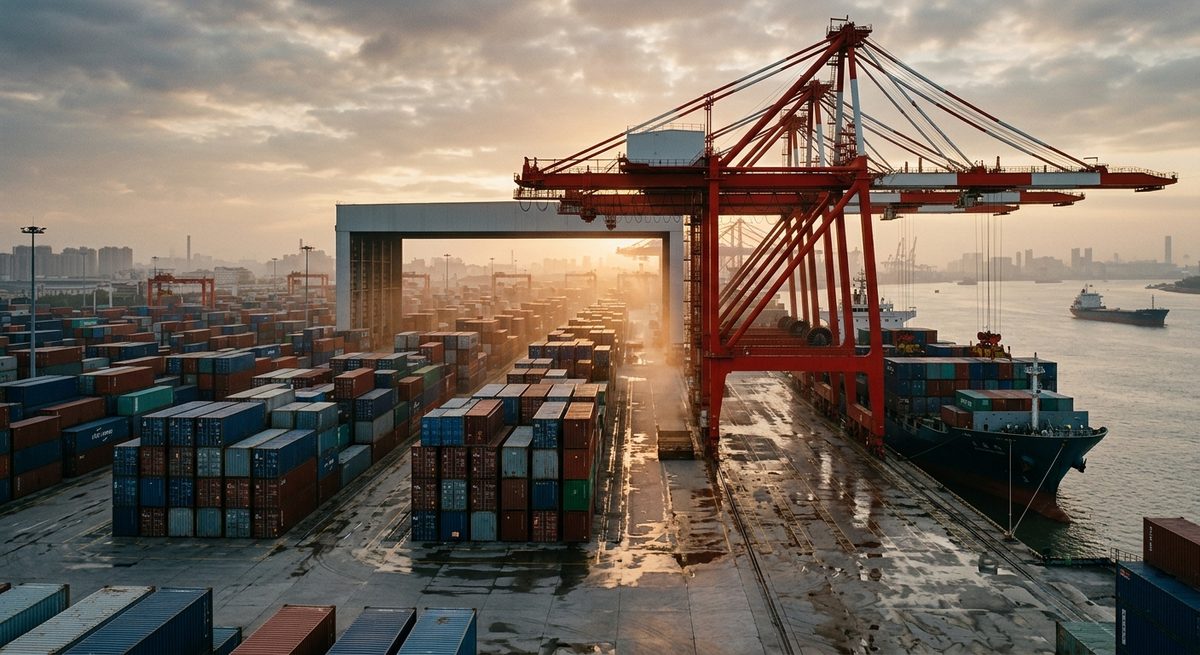
“Just put it on the quickest boat.” A buyer sent us that line last month, and I understood exactly what he meant, even though it’s not really how any of this works. He had a launch date, a cash limit and no interest in becoming a freight expert. Fair enough. The mode question feels technical, but underneath it’s a maths problem with three inputs: what a kilo of your product is worth, when the goods truly must arrive, and how much of your cash you can leave floating on the water. Get those three straight and the answer mostly picks itself.
Start with value per kilo, not with the calendar
Freight cost only matters in proportion to what it’s carrying. A carton of phone accessories worth a lot per kilo barely notices an air bill. A carton of ceramic planters from Chaozhou absolutely does, because the freight can rival the goods’ value. So before comparing quotes, divide the value of your order by its weight. High value per kilo keeps every option open. Low value per kilo quietly rules out air on all but emergencies, whatever the deadline says.
This is why we push back when a client wants to fly cheap, heavy goods to rescue a late order. Sometimes you must. It should still hurt, and you should fix the planning problem that caused it rather than budget for it twice.
What sea freight really involves
Sea is the default for wholesale volumes, and shipping from Guangzhou gives you two working ports within easy trucking distance, Nansha on the city’s edge and Shenzhen’s terminals further east. The choice inside sea freight matters more than most buyers realise.
A container of your own or a shared one
A full container (FCL) is loaded at the factory or depot, sealed, and opened at your end. A shared container (LCL) means your cartons travel with strangers’ cargo, get handled at both ends, and pay a rate per cubic metre that stops being cheap sooner than people think. Once an order fills roughly the bigger half of a container, pricing often tips toward taking the whole box. Ask for both quotes. The gap surprises buyers in both directions.
The weeks nobody advertises
Port to port transit is only part of the story. Add the truck to port, export clearance, waiting for the vessel, and the destination side. A realistic door to door plan for sea runs several weeks longer than the sailing time printed on the schedule. Build your launch dates on the longer number and the shorter one becomes a pleasant surprise instead of a promise.
When air genuinely earns its price
Air makes sense for samples, for the first small batch of a new product you’re testing, for light high value goods, and for topping up stock that sold faster than forecast. There’s a split inside air too: courier services carry door to door with duties often handled along the way, while airfreight proper is airport to airport and needs a broker at your end. Couriers win on small light shipments. Airfreight usually wins once the weight climbs. Your forwarder can show the crossover on your actual numbers in minutes.
One habit worth stealing from experienced buyers: fly a small slice of the order and float the rest. The air portion covers your launch while the sea portion protects your margin. It costs a little coordination and saves a lot of drama.
Rail, the middle road to Europe
For European buyers there’s a third lane: rail services that run from Chinese hubs across to European terminals. Transit commonly lands between sea and air, and so does the price. It suits goods that are too valuable to wait for a vessel but too heavy to fly, and it has bailed out more than one of our clients in a squeezed season. Availability and schedules shift, so treat rail as an option to price on the day rather than a fixed pillar of your plan. Buyers outside Europe can skip this section entirely.
The calendar decides more than the mode
I’ve sat in a forwarder’s office above a logistics yard in Huangpu where the glass wall was covered in marker scrawl, vessel cut-offs on the left, booking deadlines on the right, and a red box around late January. That wall is the real schedule. Space tightens before Chinese New Year and again in the autumn peak, rates move with it, and a booking made ten days earlier can cost meaningfully less than one made in a panic. Whatever mode you choose, choose it early.
The habits that keep clients out of that red box are simple enough to list:
- Ask the factory for a true finish date, then book space against it a couple of weeks out.
- Confirm the cut-off dates in writing and put them in your own calendar, not just the forwarder’s.
- Price two modes on every urgent order, because the answer shifts with the season.
- Keep one buffer week between the goods being ready and the booking you actually made.
If you’re still shaping the whole order, not just the freight leg, our Import from Guangzhou: The Complete Wholesale Buyer Guide walks the full sequence from spec to delivery, and the freight decisions make more sense inside that frame.
Straight answers to the usual three questions
Is sea freight risky for fragile goods?
Handled properly, no more than the alternatives. What breaks ceramics and glass is weak cartons and shared container handling, not the ocean. Pay for proper export cartons, corner protection and palletising, and fragile goods cross fine. We’ve shipped planters and lighting for years this way.
Can I mix modes on one order?
Yes, and it’s often the smartest structure. A slice by air for the launch, the bulk by sea. The goods need separate documents for each leg, which is routine work for any competent forwarder.
Who should book the freight, me or the factory?
For a first order, keep control of the freight yourself or through an agent you chose. Factory arranged freight can be perfectly fine, but you lose visibility, and if anything goes wrong mid route you’re asking the seller to chase their own vendor. The trade-offs are laid out in China Sourcing Agent or Doing It Yourself: Where Orders Slip, which is honest about where each approach leaks time.
We arrange sea, air and rail for clients every week from our office here, and when a buyer visits Guangzhou we’ll happily take you along to the forwarder so you can see the scrawled wall for yourself. Send us the product, the weight and the date you need it, and we’ll lay out the options with real numbers instead of guesses.
Read next
Warehouse Time in Guangzhou: What It Costs and Saves
A week in a warehouse in Guangzhou can trim a freight bill or quietly eat a margin. Our team explains what storage really…
Consolidating Several Suppliers Into One Container
How consolidation in Guangzhou turns deliveries from several suppliers into one clean container: warehouse checks, loading…
How Money Actually Moves to a Chinese Supplier
What paying a factory in China really involves: deposits and balances, bank details done properly, currency choices, and…