
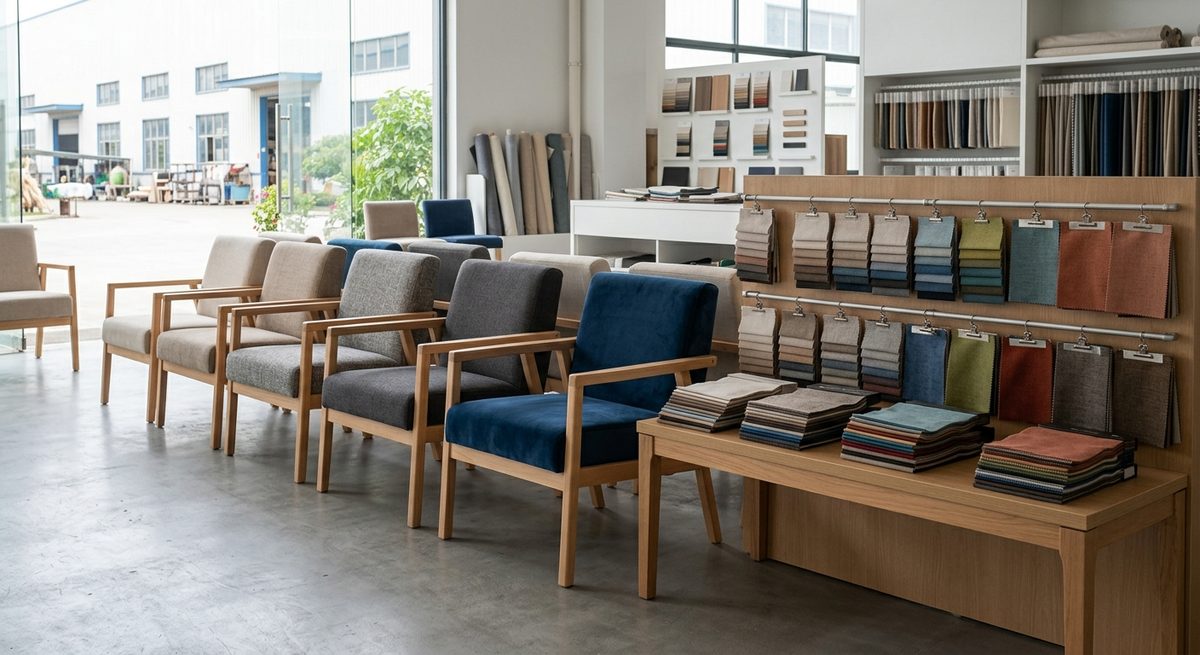
Put two mesh task chairs side by side in a Foshan showroom and a photograph can’t tell them apart, while the invoices sit a long way apart. The gap isn’t decoration. It lives in five or six components a camera never sees, plus a carton volume figure most first-time buyers don’t think to ask about. So let’s take the price of a chair apart piece by piece, because anyone who wants to import office chairs from China gets a much better outcome once they know which parts of the number are worth pushing on and which parts should be left alone.
Five Components Carry Most of the Price
Strip a task chair to its bill of materials and the cost concentrates fast. In our experience the big movers are these:
- The gas lift, where certified higher-class cylinders cost meaningfully more than basic ones.
- The mechanism under the seat, from a simple tilt plate up to a synchronised design with seat depth adjustment.
- The base, running from black nylon through glass-fibre reinforced nylon to polished aluminium.
- Mesh, foam and fabric, where density and weave separate a two-year chair from a seven-year chair.
- Armrests, from fixed plastic to multi-direction adjustable designs with soft pads.
Everything else on the quotation nudges the price in small steps. These five move it in leaps. That’s why a supplier can hit almost any target you name, if you let them choose where the cut lands.
The Gas Lift Is Where Budgets Get Quietly Trimmed
Ask an experienced furniture inspector which component they check first and you’ll hear the same word: cylinder. Gas lifts are graded by class, and the higher classes are tested to stricter requirements. A chair quoted well under market level has, in many cases, a lower class cylinder inside a column that looks exactly like the better one. For chairs sold into offices, where use is daily and warranty claims are expensive, put the cylinder class, the maker and the marking on the cylinder body into the purchase order. It’s a small line item. It decides a large share of the safety and the lifespan of the product.
Lecong or Anji: Two Supply Bases, Two Price Logics
Most buyers end up choosing between two regions. The furniture belt around Foshan, with Lecong at its heart, sits an hour from Guangzhou and leans toward broad ranges, showrooms you can walk in a day, and flexibility on mixed containers. A word of warning about those showroom days: the halls run their air conditioning at full blast even in August, and after four floors of chairs you’ll be reaching for the jacket you laughed at packing. Anji, over in Zhejiang, is specialised chair country, with a supply chain so concentrated that mechanisms, mesh and cylinders come from neighbouring towns. Anji pricing on pure chair volume is often keen. Lecong wins when your container mixes chairs with desks, sofas or storage, and when you want to inspect and consolidate close to the port of departure. There’s no universally right answer, which is exactly why we quote both routes for chair projects and let the numbers argue it out.
Chairs Ship as Air
An office chair is mostly empty space, and the sea doesn’t care what the space contains. Freight is charged on cubic metres, so the packing method quietly becomes a price component as large as some parts of the chair itself. Fully assembled chairs go straight to the showroom floor and waste enormous volume on the way there. Knock-down packing, with the base, column and arms boxed flat for the end customer to assemble, commonly fits several times more chairs into the same container. Negotiate the carton like you’d negotiate the chair. A centimetre saved on each side multiplies across a full container. As a shipping agent in Guangzhou we run these loading calculations before the order is signed, because the moment to change a carton is before the tooling for it exists.
From Ex-Factory to Your Warehouse Door
The factory quotation is the beginning of the price, not the end of it. On top of it sit inland haulage to the port, export clearance, ocean freight, insurance, import clearance and duty on your side, then delivery to your warehouse. Two habits keep the stack honest. Compare supplier quotations on the same trade terms, because an ex-works price and a port-delivered price are different animals wearing similar numbers. And confirm the tariff classification and the duty rate for your own country with your customs broker before ordering, since chair components and finished chairs can be treated differently and we don’t guess at another country’s customs rules. If you want to know the people running these numbers for buyers every week, who we are is a two-minute read.
Where Paying More Comes Back, and Where It Doesn’t
Not every upgrade earns its cost. Money spent on the cylinder, the mechanism and foam density comes back through fewer warranty claims and better reviews, because those are the parts that fail in service. An aluminium base instead of reinforced nylon? On mid-market chairs that’s mostly a look, and I’d save the money without a second thought. Branding is the exception to thrift: a woven label, a printed carton and a decent assembly manual cost little per unit and change how the product reads at delivery. The discipline, if you plan to import office chairs from China, is to make these trade-offs component by component instead of handing a factory a target price. Hand over a bare number and the factory will find the cut somewhere. It’s rarely somewhere you’d have chosen.
Price Questions Chair Buyers Put to Us
What minimum quantity makes an office chair import sensible?
Chair factories commonly quote from a few hundred pieces per model, though it varies by factory and specification. The freight maths usually points to filling a container, since a half-empty box carries the same base costs. Mixing two or three models in one container is the usual way to get there sensibly.
Is it cheaper to import chair parts and assemble locally?
For most buyers, no. The assembly labour saving rarely beats the extra handling, and split shipments multiply paperwork. It can make sense for very large programmes or where local content matters. Ask your customs broker how parts and complete chairs are classified in your market before going down that road.
How much does a sample chair cost, and is it refundable?
Factories usually charge samples at a premium over the unit price plus courier costs, and many credit the charge back against a confirmed order. Courier freight on a boxed chair is significant because of the volume, which is one more reason buyers often review samples at our Guangzhou warehouse first.
If you’re pricing a chair programme now, send us your target specification through the contact form or WhatsApp. We’re based in Guangzhou, Lecong is up the road, and we regularly host buyers here, collect them from the airport and spend the day inside the chair factories comparing the very components this piece just pulled apart.
Read next
One Wireless Earbud Order, Followed from Enquiry to Delivery
Follow one real order to import wireless earbuds from China: spec sheet, tooling choice, samples, pilot run, inspection,…
The Faults That Sink USB Cable and Charger Imports from China
Want to import USB cables from China? These are the faults that ruin shipments, from thin copper to charger safety gaps, and…
Visiting Dash Camera Factories in China: A Buyer’s Field Guide
What to check in person before you import dash cameras from China: lens benches, burn-in rooms, firmware teams and the…