
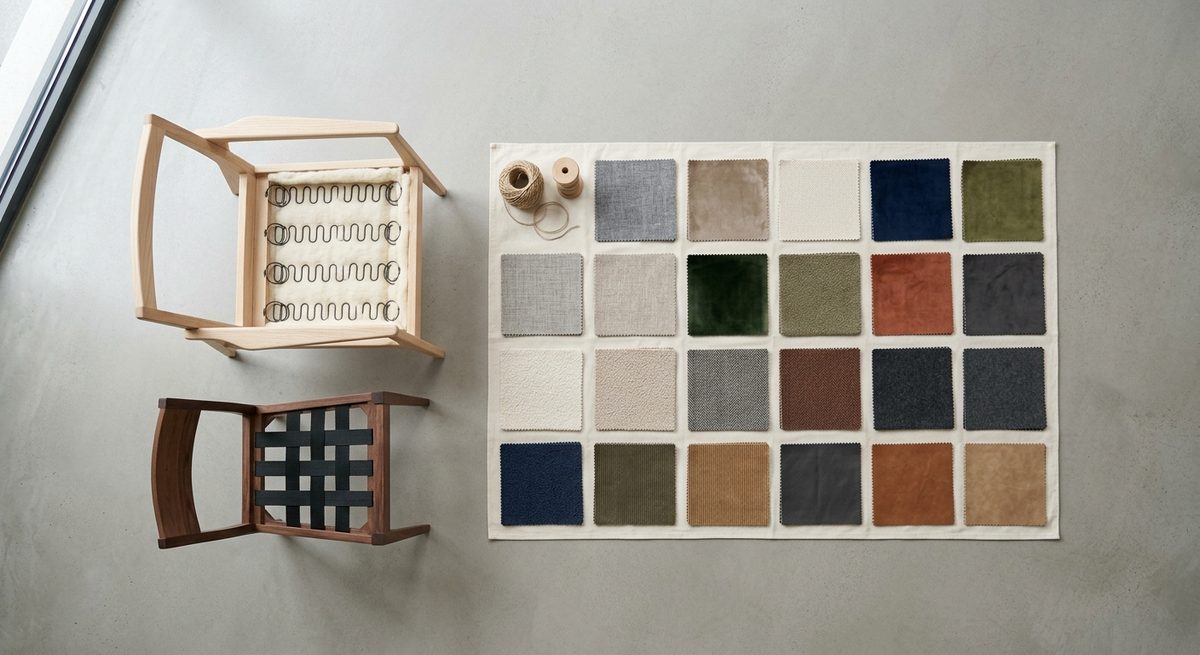
Every sofa hides its most important parts under the fabric. The frame, the springs, the webbing and the foam decide how the thing feels in year three, and all four vanish from sight the day the upholstery closes over them. That one fact shapes everything about quality control for anyone planning to import sofas from China: the inspection has to happen in stages, because the worst defects can only be seen at moments that never come back. Our team runs these inspections in the Foshan furniture belt, mainly around Longjiang and Lecong. This is what we actually look for.
The Frame Disappears on Day Two
A frame built from kiln-dried hardwood with glued and screwed joints will outlive its fabric. A frame stapled together from soft offcuts and particle board will creak within months. Both look identical in the finished product, which is why the first visit happens while frames are still bare on the workshop floor. We check the timber against the contract, look at joint construction, count corner blocks, and press hard on the arms and back rails to feel for movement. The frame bays in Longjiang are open sheds that smell of cut timber and hot glue, with staple guns going off around you in bursts, and a scheduled visit there puts dozens of bare frames in front of you at once. Here’s the quiet bonus: a factory that welcomes this visit is telling you something almost as useful as the frames themselves.
Foam Density Decides Year Three
Showroom comfort proves very little. Almost any new foam feels fine for a month. What matters is density, measured in kilograms per cubic metre, and it belongs in the purchase contract as a number, never as the word comfortable. During production we cut or weigh foam samples against that number, because lower density foam looks identical and costs less. One sofa legitimately carries several grades, with seat cores, back cushions and armrests all different, so the contract should state each. Where a client sells with a long warranty, we also ask the factory for the foam supplier’s specification sheet and keep it in the order file. Cheap insurance. It has settled more than one argument a year later.
Reading Leather and Fabric Before They’re Cut
Cover material is the other place a quotation can quietly drift away from reality. Genuine leather comes in grades and cuts, and the gap between full grain and heavily corrected split leather isn’t a different shade, it’s a different product. Fabric has its own traps: colour drift between dye batches, weight below the agreed grams per square metre, rub resistance that disappoints the destination market. We check rolls and hides when they arrive at the factory, compare them against the sealed approval sample, and run simple on-site tests, with laboratory testing for abrasion and flammability where the destination market demands it. Buyers building their own furniture label usually pair this stage with our brand building support, so labels, care booklets and woven tags get approved in the same round as the cover material.
Stitching, Seams and the Sit Test
Once upholstery begins, attention moves to the surface. Straight, even stitching with matched thread tension is the fastest read on workshop skill you’ll ever get. We look at stitch density on stress seams, pattern alignment across cushions, zip quality on removable covers, and how the corners and piping are finished. Then comes the least scientific and most useful test in furniture inspection. Sitting. An experienced inspector sits, bounces, leans on each arm and listens, and the clicks, creaks and uneven cushions announce themselves within a minute. It looks casual to a first-time visitor. It isn’t.
Three Visits, Timed to the Build
Sofa production punishes buyers who only inspect at the end, because by then the frame and foam are sealed inside. We recommend a schedule that mirrors the build:
- A pre-production check, confirming frame material, foam grades and cover stock before the first sofa is assembled.
- An in-line inspection part way through the run, while frames and foam are still reachable and corrections are still cheap.
- A final random inspection of finished, packed sofas, covering workmanship, dimensions, carton strength and loading condition.
The middle visit is the one buyers skip most and the one that saves the most money, and if the budget only stretches to two visits, that’s the one I’d fight to keep. A fault found there affects part of the order. The same fault at final inspection affects all of it, with the sailing date close enough that every option left on the table costs something.
Loading Day, and Why We Stand at the Container Door
Sofas are bulky, and a carelessly packed container arrives as a container of scuffed corners. On loading day we check that every piece carries its protective wrap, that heavy items never ride on soft ones, and that the loading plan matches the packing list carton by carton. Many buyers time their own trip to China around this stage and the in-line visit, walking the Longjiang and Lecong workshops with us in the same week. If that appeals, you can meet us in China and visit the factories yourself, with airport pickup, an interpreter and the factory schedule arranged before you land. Watching your own order come off the line changes how you write the next specification. Most buyers tell us the trip paid for itself in sharper contracts alone.
Inspection Questions Sofa Buyers Raise
What defects show up most often in upholstered furniture orders?
Uneven stitching, cushion inserts below the agreed foam grade, colour variation between pieces cut from different batches, and frames that creak under load top our reports. Nearly every one traces back to a specification that was vague, which is why the contract stage is really part of quality control.
Can inspection verify foam density after the sofa is finished?
Only imperfectly, and that’s the honest answer. Zip-off cushions can be opened and their cores weighed and measured, but sealed seat decks can’t be checked without cutting. Which is exactly why the in-line visit exists: density is easy to verify while the foam is still loose in the workshop.
How does quality control change for leather sofas headed to different markets?
The workmanship checks stay the same, but testing differs. Some destination markets hold upholstery to strict flammability rules, others care most about labelling and fibre content. Confirm your market’s requirements with your compliance advisor early, so the cover material is chosen against the right standard from the start.
If a sofa or upholstered furniture order is taking shape, reach us through the form on this site or by WhatsApp. We’re based in Guangzhou, the Foshan furniture belt is on our doorstep, and we’d be glad to collect you at the airport, sit you down in the workshops, and put a proper inspection plan behind your plan to import sofas from China.
Read next
What You Actually Pay For in an Office Chair Made in China
What drives the price when you import office chairs from China: gas lift class, mechanism, mesh, carton volume and the road…
One Wireless Earbud Order, Followed from Enquiry to Delivery
Follow one real order to import wireless earbuds from China: spec sheet, tooling choice, samples, pilot run, inspection,…
The Faults That Sink USB Cable and Charger Imports from China
Want to import USB cables from China? These are the faults that ruin shipments, from thin copper to charger safety gaps, and…