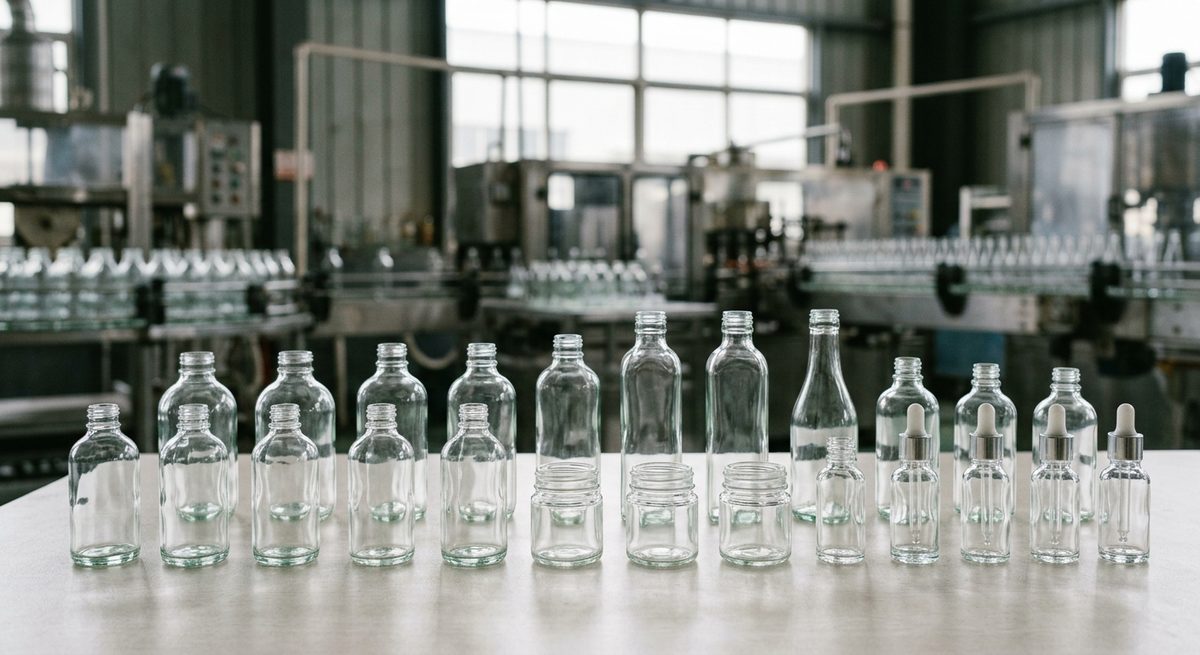
What turns a plain tumbler on a factory shelf into the glass a customer photographs on a cafe table? Mostly decoration, packaging and a name. The blank itself is cheap and made in enormous volumes. If you plan to import glassware from China under your own label, the real work starts after the furnace: in the decal room, the spray booth and the box printer. That second half of the job is where a brand actually gets made, and it’s the half most first-time buyers underestimate.
The blank comes first, but it isn’t the story
Most machine-made blanks, the undecorated tumblers, mugs and stemware, come out of big furnace operations, and Shandong is home to many of the large glass plants. Decoration is a separate trade. Workshops across Guangdong take those blanks and add the colour, print and finish that customers actually see. For an importer that split is good news. Pick a proven blank, then spend your energy where the eye goes.
It also means your supplier conversations happen close to Guangzhou even when the furnace is a thousand kilometres away. Decoration plants, packaging printers and export warehouses all cluster in the delta. One trip covers the whole finishing chain: decoration in the morning, packaging proofs after lunch, the export warehouse before dinner. We’ve run that exact day for buyers more times than I can count.
Decoration methods that carry a brand
Each technique has its own tooling, minimums and durability, and a good range usually mixes two or three:
- Fired-on decals: artwork printed as a transfer, applied by hand, then fired so the ink bonds with the glass. Durable, precise, right for logos and detailed patterns.
- Spray colour: solid or gradient coatings over the outside, often with a decal on top.
- Frosting and etching: a matt surface done chemically or by sandblasting, popular on premium bottles and candle vessels.
- Electroplated finishes: mirror and iridescent effects that jump off a shelf but hate rough handling and hot washing.
- Rim work: gold or platinum banding applied by hand on stemware and tea glasses.
The decal room is my favourite stop on any visit. Rows of workers sliding wet transfers off backing paper onto glass, thumbs smoothing out the bubbles, and the whole room smells faintly of the soak water. Watch for ten minutes and you’ll understand why placement tolerance exists. Ask every plant which techniques run in-house and which get subcontracted; the answer changes your quality control plan more than any certificate does.
Owning the look without owning a mould
A private label programme has three layers: the shape, the decoration and the packaging. You don’t need a custom shape on day one, and honestly I’d talk most buyers out of it. Plenty of strong brands launch on stock blanks with distinctive decoration and boxes, then pay for their own shape once sales prove the range. What you do need from the start is consistent artwork, a colour standard the factory signs, and packaging that matches your price point.
Getting those three layers to agree is design work as much as sourcing work. Our brand building support exists for exactly this stage: logo and artwork adapted to decals and boxes, packaging structure, and the story that ties a glassware range together.
What glass tooling really involves
When you’re ready for your own shape, understand what you’re asking for. A new mould set for machine production is a serious piece of engineering, and furnaces schedule custom runs around their standard output. In many cases the minimum for a custom shape sits far above the minimum for custom decoration, and the tooling cost swings widely with size and complexity. Handmade and mouth-blown workshops will do custom shapes at lower minimums, at a higher unit price, with more piece-to-piece variation.
The middle path we usually propose: launch on stock shapes, reserve the custom mould for your best seller, and let decoration carry the identity across both. It works.
Packaging is the second product you’re buying
Glass travels badly in bad boxes. The gift box, the dividers and the master carton are a manufactured product of their own, with their own supplier, artwork files and quality checks. Get the dieline from the printer before your designer starts. Drop test the packed sample. Check barcode print quality under an actual scanner. A lovely glass in a crushed box reads as cheap, and replacements eat margin fast. Master cartons deserve the same attention: agree the wall grade, the partition layout and the maximum carton weight in writing, then have your inspector open packed cartons from the middle of the stack, not the convenient top row.
Approve the decorated piece, not the blank
Sampling in this category hides a trap. Factories send the stock blank quickly and the decorated pre-production sample much later, so buyers approve the blank, place the order, and only then find out how their artwork behaves on curved, fired glass. Colours shift in the firing. Decals can sit a few millimetres off centre. Gradients look different on glass than on a screen. Only the decorated piece tells the truth, so approve a fired, packed sample before mass production and keep one signed sample in your office and one at the factory.
Some buyers would rather do this step face to face and fold sample approval into a supplier trip. You can meet us in China and visit the factories over a few days: we handle the airport pickup, the interpreter and the schedule, and you sit in the sample room making decisions with the actual glasses in hand. It beats a courier loop by weeks.
Three questions private label glass buyers ask
Will printed decoration survive a dishwasher?
Fired-on ceramic decals hold up well in domestic dishwashers. Organic inks and some sprayed or plated finishes don’t. Decide your care instructions first, then pick the technique to match, and run washed samples before you print “dishwasher safe” on a single box.
Can one factory make both the glass and the decoration?
Some large plants do both, but the split model, blanks from Shandong and decoration in Guangdong, is extremely common and works well. What matters is that one party owns the finished, packed piece, so a defect can’t be blamed back and forth between two companies.
How many pieces do I need for a custom decal design?
Decal minimums follow the transfer printing run. In many cases a few thousand pieces per design is workable, varying by factory and by how many colours your artwork uses. Custom shapes need far more. Custom boxes sit somewhere in between.
If a glassware brand is on your roadmap, send us a message through the contact form or WhatsApp. We’re on the ground in Guangzhou, we’ll meet you in person, and we can walk you through the decoration plants and packaging printers so you see every step your product will take.
Read next
Silicone Kitchenware from China: A Map of the Moulding Towns
See where to import silicone kitchenware from China: how Dongguan and Shenzhen moulding towns divide the work and how goods…
Stainless Steel Cookware from China: A Quality Inspector’s View
Find the defects that matter before you import stainless steel cookware from China: steel grades, polishing faults, base…
What You Really Pay for in a Bedding Set Made in China
See what actually drives the unit price when you import bedding sets from China, from fabric weight and thread count to…