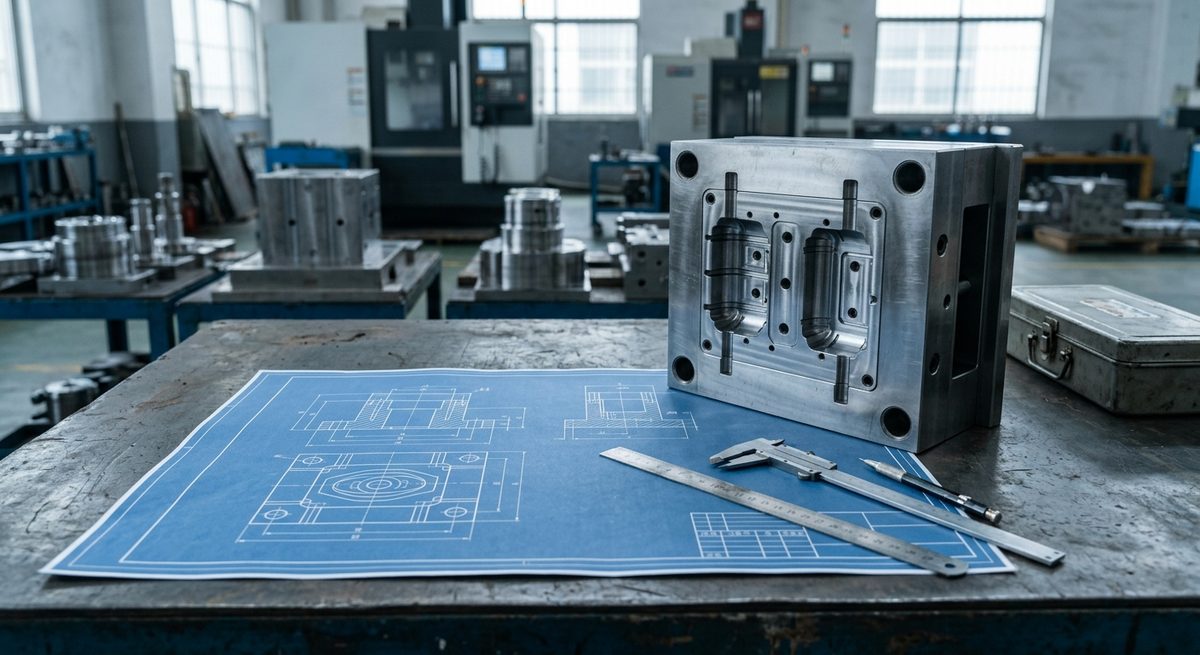
There’s a mould workshop in Zhongshan we visit a few times a year, and the thing that always gets buyers is the storage racks: rows of steel mould blocks, each one heavier than a motorbike, each with a customer’s name written on the end in silver marker. Some names have a dozen blocks. Some have one, gathering a film of machine oil, for a product that shipped twice and died. Every block represents somebody’s decision to stop buying what factories already make and start paying for what only they sell. It’s the most important upgrade in an importer’s life, and also the one most often made too early.
The ladder has more rungs than people think
Buyers tend to imagine two states: catalogue product or full custom. In practice there’s a ladder, and each rung up costs more and commits you harder.
- Stock product, factory’s design, your logo printed on it.
- Stock product with modifications: your colours, your packaging, a changed component or material.
- Your design built with the factory’s existing tooling and platforms.
- Your design with new tooling cut specifically for you.
Rung two solves most branding problems at a fraction of rung four’s cost and risk. My honest advice, and it costs us project fees to give it: stay on the lowest rung that makes your product distinct in front of your customer. Climb when sales data pushes you, not ambition.
What tooling really means for your wallet and your calendar
The move to rung four changes the shape of your costs. Custom manufacturing in China typically means paying for tooling up front, waiting weeks for it to be cut and polished, then sampling off it and adjusting. The unit price afterwards often drops below the stock equivalent, which is the prize. But your cash is now sunk in steel before a single sellable unit exists, and your lead time for launch has grown by the whole tooling period. Plan both, in writing, before you commit.
Settle mould ownership before the first cut
Put it in the contract: who paid for the mould, who owns it, whether it may be used for any other customer, and what happens to it if you move factories. All of this is negotiable while the quote is open and awkward afterwards. We photograph clients’ moulds, record their storage location, and check on them during factory visits, the same silver marker names on the same racks. A mould you can’t locate is a mould you don’t own in any practical sense.
Sampling is a loop, not a step
First samples off new tooling are almost never right, and that’s not a defect of the factory, it’s the nature of steel meeting theory. Expect a round or two of corrections, sink marks to chase out, a fit to tighten, a texture to re-polish, and budget the calendar for it. The discipline that keeps this loop short is written feedback: numbered defects, photos, measurements against the drawing. Approve nothing verbally. The sample you sign becomes the standard every future inspection measures against, so sign it like it matters, because it does.
Your drawings are an asset. Treat them like one
Before detailed drawings go anywhere, put an NNN agreement in place, signed properly by the factory with its chop, naming the actual legal entity. It’s not bulletproof and nobody serious will tell you it is, but it sets expectations and screens out factories that refuse. Then share drawings in stages: enough to quote first, full detail only with the factory you’ve chosen. Categories with regulatory weight need extra care again, and the compliance sequence in How to Order Medical & PPE Products from Guangzhou Factories shows how documentation-heavy a custom project can get at the far end of that scale.
Picking a factory for what it could make, not what it makes
The catalogue tells you a factory’s past. For custom work you’re buying its engineering future, and that’s assessed differently. Does it have an actual development engineer, or does the sales manager forward your drawing to a cousin’s workshop? Can it show tooling projects for other customers, with the steps documented? Does it push back on your design where it’s hard to manufacture? That last one matters most. A factory that accepts every feature without comment hasn’t read the drawing. The good ones argue with you early, and every argument they win before tooling is money you don’t burn after it.
We shortlist for custom projects around the Pearl River Delta by production method, plastics and metals one way, electronics another, and the category logic in Sourcing Power & Accessories from Guangzhou, China is a fair example of how tightly capability clusters by district here.
The honest cases for staying with stock
Custom is a means, not a status symbol. If your edge is your brand, your channel or your service, a well chosen stock product with strong packaging may serve you better for years, with no tooling capital at risk and the freedom to change suppliers next month. We tell a portion of the buyers who come to us wanting custom work exactly this. Some are disappointed. The ones who test demand on stock products first, then tool up on proven sellers, build calmer businesses, and their mould racks hold nothing that’s gathering oil.
What buyers ask when they’re ready to design
How long does a custom project take end to end?
From final drawings, tooling commonly takes several weeks, then sampling rounds, then the normal production lead time. Most projects land somewhere between one season and two. Anyone promising dramatically less on a fresh mould is skipping a step you’ll pay for later.
Can I move my mould to another factory if things sour?
If ownership is documented and paid, yes, physically and legally, though expect friction and some re-commissioning work at the new factory. Without documentation you’re negotiating for your own property. Which is the whole argument for settling it on day one.
Do I need a patent before showing factories my design?
That’s a question for an IP professional in your own market and worth an hour of their time. What we handle here is the practical layer: NNN agreements, staged disclosure, and choosing factories with reputations that took years to build and wouldn’t be spent on your drawing.
Our office in Guangzhou runs custom projects from first sketch to sea freight, and we’ll tell you plainly if we think your product isn’t ready for tooling money yet. Bring your idea over, in an email or in person, and we’ll walk you through that mould workshop so you can see what commitment looks like in steel.
Read next
How Buyers Get Priority When a Factory Is Busy
What moves an order up a factory production schedule China planners really keep: clean specs, punctual money and forecasts a…
Turning One Order Into a Working Supplier Relationship
A Chinese supplier relationship is built between orders, not during them. A Guangzhou team on reorders, terms, feedback and…
Customs Paperwork Buyers Should Collect Before Shipping
The china export documents your broker will demand, explained by a Guangzhou sourcing team: what each paper does, who issues…