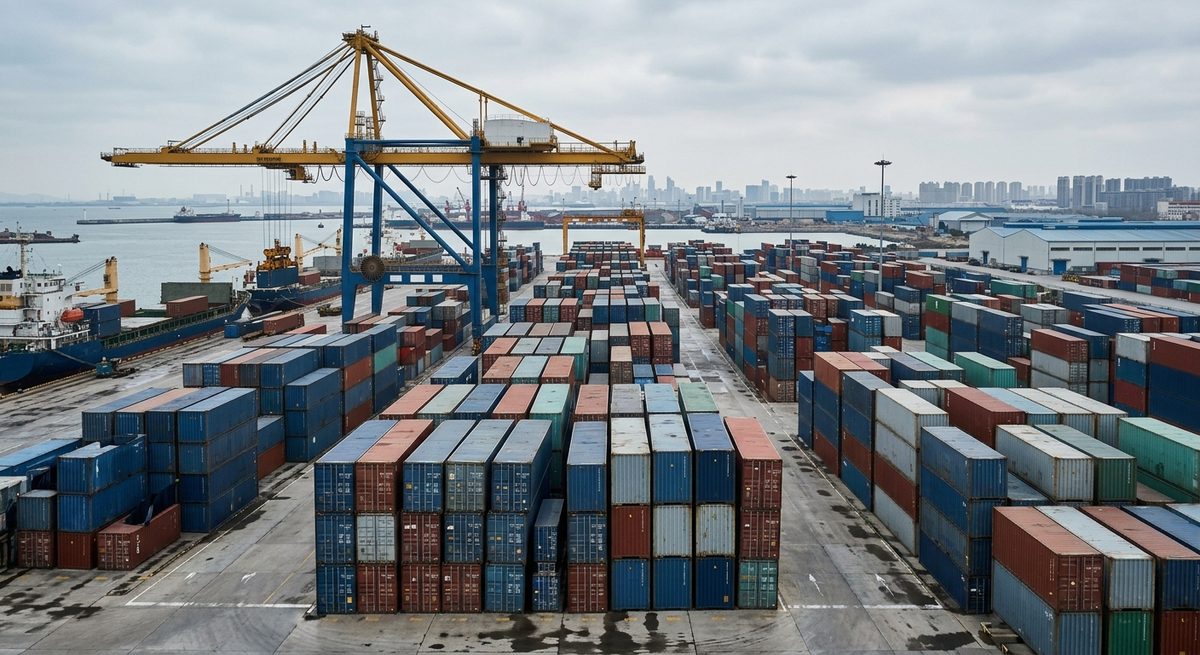
A buyer we hosted last spring had a problem he could see from his warehouse door. His container of storage boxes had arrived full, yet his shelves stayed half empty. The boxes had shipped assembled, lids clipped on, every single one holding nothing but air. Plastic housewares live or die on cube utilisation, and the freight plan starts at the design stage, long before anyone books a vessel. If you’re going to import plastic housewares from China, read the packing section of a quotation as carefully as the unit price line. More carefully, honestly.
Air is the real cargo
Injection moulded goods are light for their size, so ocean freight in this category is charged on volume rather than weight in nearly every case. Follow that through. You’re paying to move space, and any air inside that space is money spent on nothing. Every design decision that lets one piece sit inside another cuts the landed cost directly: tapered boxes nest in stacks, lids ship flat in their own cartons, drawer units travel knocked down with a small assembly step at destination. A factory will happily quote either version. Only one of them makes commercial sense on a long ocean leg.
Ask for pieces-per-carton and carton dimensions on both packing options before you choose. The gap between an assembled pack and a nested pack can reshape a whole order, and it’s far easier to fix on a drawing than on a loading dock.
The container arithmetic worth doing yourself
The working numbers are simple. Each carton has a volume in cubic metres. A forty-foot high cube offers roughly seventy-six cubic metres, less in practice once cartons refuse to tessellate perfectly. Divide realistic usable space by carton volume, multiply by pieces per carton, and you know what one container really carries. Run that on every quotation. Per-unit freight falls out of it immediately, and offers that looked close often stop being close.
Season matters too. Freight rates move through the year, and the pre-holiday months are commonly the tightest for space. Pricing a shipment that sails in five months off today’s rate is a well-worn way to get surprised.
Cartons, liners and the long damp ride
A container crossing the ocean sweats. Temperature swings pull moisture out of the air and out of the cartons themselves, and single-wall boxes that felt firm in Foshan can land soft and sagging. For housewares we specify double-wall masters for anything heavy or stacked high, polybags or liners where the surface shows scuffs, and desiccant sized to the route and season. None of that’s exotic. It just has to be written into the order, priced, and then checked at loading, because packing material is a quiet place for a factory to claw back margin.
FCL, LCL and the consolidation habit
Less than container load shipping is charged by volume with handling at both ends, and bulky plastic goods burn through that pricing fast. In many cases the crossover comes early: once an order fills a meaningful part of a twenty-footer, a full container starts winning on cost and on damage risk, since nobody restacks your cartons in a transit warehouse. The other route we use constantly is consolidation, goods from two or three factories collected into one Guangzhou warehouse and shipped as one full box. Buyers who import plastic housewares from China on a repeating cycle usually settle into a rhythm, one consolidated container a month or a quarter, sized to their own warehouse rather than to any single supplier’s minimum.
If the range carries your own identity, there’s one more moving part: in-mould labels, printed lids and branded cartons all need artwork settled early, because they enter production before packing does. Our brand building support runs that workstream alongside the freight planning so neither delays the other.
Loading day at the warehouse door
The last hour before the container seals is where the paper plan meets reality. Our checklist for housewares loads:
- Carton count against the packing list, per model and per colour
- Random carton weight checks, since a light carton usually means missing pieces
- Moisture check on cartons that sat in storage through humid weeks
- Floor-loading pattern agreed in advance, heavy cartons low, crush-sensitive ones on top
- Photos of the empty container, the completed load and the seal number
Palletising is the standing argument in this category. Pallets speed up destination handling but steal volume from goods that are already volume-hungry, so most housewares loads we handle go floor-loaded unless the buyer’s warehouse insists otherwise. My default answer is floor-load and spend the saved space on stock.
Foshan and Taizhou, where the moulding happens
Two regions dominate our supplier map for this product group. Foshan sits right beside Guangzhou, full of injection plants serving the home and furniture trades, close enough for a morning factory visit and an afternoon back at our office. Step inside one and you get the rhythm of the place at once: the hiss and clack of the presses every few seconds, robots swinging parts onto conveyors, and stacks of just-moulded boxes still warm when you pick one up. Taizhou, further north in Zhejiang, is famous across the industry for mould making, and many of the sharpest storage and organisation designs start there. Orders often combine both regions, which is exactly when a China sourcing agent in Guangzhou earns its keep: one warehouse, one inspection, one container, one document set.
Quick answers on shipping plastic housewares
Why did my freight quote change after a small lid redesign?
Because the lid probably changed the nesting. A lid that clips flat against the next one packs tight; a lid with a tall handle or a dome adds air to every carton in the load. Re-run the carton maths after any geometry change, however minor it looks on screen.
Should storage boxes ship palletised or floor-loaded?
Floor-loading usually wins for bulky nested goods because it uses the full cube. Choose pallets when your destination warehouse can’t hand-unload, or when the cartons are heavy enough that handling damage would cost more than the lost space.
How large a share of landed cost is freight for this category?
A bigger share than most buyers expect, and bigger than for dense goods like ceramics or hardware. The exact share moves with the route, the season and above all your cube utilisation. That last one is the only variable fully inside your control, so work it hardest.
Planning a housewares order and not sure how it should pack and ship? Send us a note through the contact form or WhatsApp. We’re on the ground in Guangzhou, we meet buyers in person, and we can take you to the moulding plants in Foshan so you see your product, and its cartons, before anything sails.
Read next
Ceramic Tableware from China: The Tests and Papers You Need
Import ceramic tableware from China with the right paperwork: metal release tests, compliance documents and Chaozhou factory…

Private Label Glassware from China: Decoration to Packaging
Plan to import glassware from China under your own brand: decoration methods, glass tooling, packaging and sampling…
Silicone Kitchenware from China: A Map of the Moulding Towns
See where to import silicone kitchenware from China: how Dongguan and Shenzhen moulding towns divide the work and how goods…