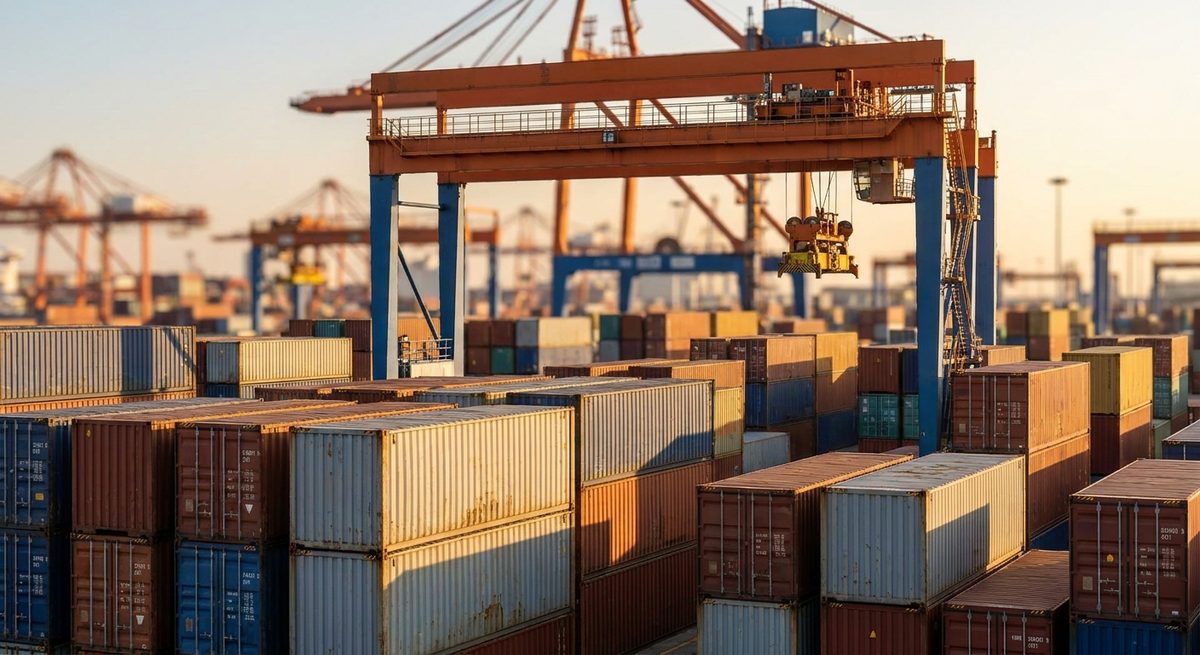
The truck queue at the Huangpu terminals forms before the gates open. Half those containers were loaded overnight in Foshan furniture workshops, the rest in Dongguan electronics plants or garment buildings on the edge of Guangzhou. Getting the goods made is one job. Shipping from Guangzhou to your own warehouse is a second one, and it deserves the same care you gave the factory price. Sea, air, rail or express. Which one fits depends less on some league table of speed and cost, and much more on the volume, value and deadline of the order that’s actually in front of you.
Four doors out of the delta
Nearly everything leaving this region goes one of four ways: ocean freight through Nansha, Shekou or Yantian, air cargo out of Baiyun airport, rail services running west toward Europe and Central Asia, or a door to door courier. None of them wins every time. The mode that suits a pallet of samples would be absurd for twelve hundred cartons of ceramic mugs, and the mode that suits the mugs would wreck the launch date of a fashion collection. Match the mode to the order. That’s the whole trick, and it’s harder than it sounds only because packing decisions made weeks earlier keep interfering.
Sea: a box of your own, or a share of someone else’s
Ocean freight carries most of the bulk cargo out of South China because nothing else moves weight and volume anywhere near as cheaply per cubic metre. It’s slow. Everyone knows it’s slow. Plan around that from the start and it stops being a problem.
Full container load
If your order fills most of a 20 foot or 40 foot box, book the whole box. It gets loaded at the factory or at a consolidation warehouse, sealed, and not opened again until it reaches you. Fewer hands touch the goods, which matters for furniture, sanitary ware and anything with a painted or polished face. Nansha sits practically on Guangzhou’s doorstep, and a factory in Foshan or Zhongshan can truck a container there in a few hours.
Less than container load
Smaller orders travel LCL, sharing a container with other shippers’ cargo and paying by the cubic metre. Affordable, yes. But the goods get handled far more: into the consolidation warehouse, into the box, out again at a destination station, then onto a local truck. So we specify stronger board grades for LCL cartons and put anything fragile or heavy on pallets. Weak cartons are where LCL savings quietly leak away.
Air cargo and the courier networks
Baiyun airport has freighter and belly capacity to most major markets. Air is priced on actual weight or volumetric weight, whichever is greater, so light bulky goods like plush toys get punished while dense hardware does fine. Couriers go one step further and carry the shipment door to door with customs handled along the way. For sample sets, urgent replacement parts or a small trial order, that’s often the sensible route even at a painful rate per kilo. Past a few hundred kilograms, a proper air freight booking through a forwarder usually works out better than courier, though the crossover point moves with season and destination. Get both quoted. It takes a day and settles the argument.
The rail lane west
Trains from South China hubs connect through the national network to services running into Europe and Central Asia, and rail commonly lands between sea and air on both transit time and cost. That makes it a decent middle option for a replenishment order that missed its vessel cutoff but doesn’t justify air money. Schedules and routings shift through the year, so we price rail case by case rather than build a plan around it. Battery goods in particular need checking against the carrier’s rules before anyone promises a date.
Your freight bill was written at the packing bench
Freight is bought with two numbers, gross weight and volume, and both were fixed long before the booking, at the moment the factory decided how to pack. A retail box two centimetres taller than it needs to be, multiplied across five thousand units, is real cubic metres you’ll pay for. When clients develop retail packaging through our brand building support, we check the carton maths at the artwork stage. That’s the cheapest moment to fix it. It only gets more expensive from there.
Before any booking goes out, our warehouse team works down a short list:
- Measure and weigh actual master cartons, never the figures on the factory’s packing list.
- Check board grade against the mode, because LCL and air handling is rougher than a sealed container.
- Decide on pallets. They add volume but protect goods and speed up loading at both ends.
- Mark every carton clearly so a mixed consignment can be sorted at destination.
- Confirm the packing list, invoice and certificates match the cartons exactly.
That last point saves more delay than any clever routing. Paper that disagrees with the physical cargo is the single most common reason a shipment just sits.
How growing importers actually split it
There’s a pattern we see over and over. First order by courier. Second by air freight. From the third onward the goods go by sea, with a small air top-up for whatever can’t wait. Splitting one order across two modes sounds wasteful, yet it regularly protects a launch date for modest money, and I’d defend the habit every time. Consolidation helps too. If you buy from a lighting factory in Zhongshan, a charger supplier in Shenzhen and a packaging printer in Guangzhou, pulling everything into one warehouse and shipping a single consignment beats three separate bookings on cost and on paperwork. Our warehouse floor is painted out in yellow grid squares, one client’s cargo per square, and the screech of tape guns doesn’t let up from eight in the morning until the last truck leaves. Buyers who want to see it can meet us in China and visit the factories, then stand in the aisle where their own cartons will be stacked. Watch shipping from Guangzhou happen once, factory truck to container door, and every later booking becomes easier to plan from abroad.
Freight questions we hear every week
How long does sea freight take from Nansha to Europe or North America?
Port to port is commonly a matter of weeks, and door to door you should allow extra for export loading, customs at both ends and inland delivery. It varies by carrier, routing and season, so we confirm live schedules at booking rather than quoting a fixed number that won’t survive contact with a real sailing calendar.
Can goods from several factories leave as one shipment?
Yes, and it’s one of the most requested things we do. Cargo from Foshan, Dongguan, Shenzhen and elsewhere in the delta gets trucked into our Guangzhou warehouse, inspected, repacked where needed, and loaded as one consignment with one set of documents.
When is express the wrong choice?
Once an order grows past a small stack of cartons, courier pricing per kilo stops making sense. Battery and liquid products also face stricter acceptance rules inside the courier networks, and at that point a proper air or sea booking with full documents is the calmer path.
Weighing up modes for a coming order? Send the carton details and destination through the contact form or WhatsApp. We’re based in Guangzhou, we meet buyers in person, and we’ll happily take you round the factories and the loading warehouse so you can see exactly how your cargo will travel.
Read next
How Money Actually Moves to a Chinese Supplier
What paying a factory in China really involves: deposits and balances, bank details done properly, currency choices, and…
Dongguan Factories: What Buyers Find in the Workshops
Field notes from years of visiting dongguan factories: how the towns divide the work, what the workshops look and sound…
Consolidating Several Suppliers Into One Container
How consolidation in Guangzhou turns deliveries from several suppliers into one clean container: warehouse checks, loading…