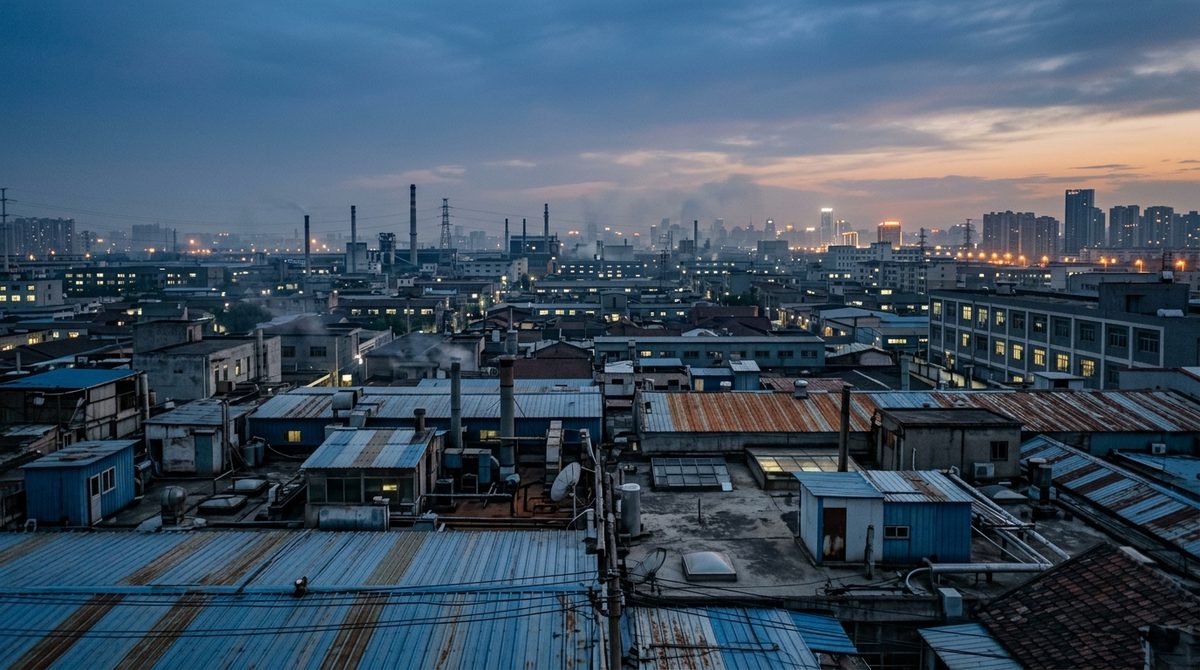
You feel a stamping plant before you see it. Standing in the yard of a metal workshop in Chang’an, the thud of the big presses comes up through the concrete into your shoes, a slow heartbeat you stop noticing after ten minutes and remember for years. Our clients often go quiet at that point. Photographs had told them they were buying from “a manufacturer in Dongguan”. The floor tells them what that sentence actually weighs. This article is about that gap: what the workshops of this city are really like once the gate rolls open, and how to use a visit well.
A city organised like a toolbox
Dongguan sits between Guangzhou and Shenzhen and works for both of them. Administratively it’s one city; practically it’s a few dozen towns, and the towns specialised long ago, the way drawers in a toolbox hold one kind of tool each. Ask us where something is made and we’ll answer with a town, not the city, and buyers comparing Dongguan factories learn to do the same within a trip or two.
- Chang’an: metal stamping, CNC work, moulds and die casting
- Houjie: shoes and furniture, side by side for decades
- Dalang: sweaters and knitwear, whole streets of yarn shops feeding the machine halls
- Humen: garments, with a wholesale trade of its own
- Dalingshan and Liaobu: furniture, from frames to finishing
- Tangxia, Qingxi, Fenggang: electronics parts and assembly, close against the Shenzhen line
The pattern has a practical consequence. Within the right town, your product’s entire supply chain often sits inside a twenty-minute drive: the surface treatment shop, the packaging printer, the fastener dealer. That density is why quotes from the correct town so often beat quotes from anywhere else, and why a supplier quoting your product from the wrong town deserves one more question before you proceed.
What the workshops actually look like
Forget the glass-tower factory of corporate videos. The typical building is three to six storeys of bare concrete with the company name in big characters on the roof, goods lift at one end, stairs at the other. Ground floor for heavy machines and shipping. Middle floors for assembly and sewing. Top floor, often, for offices and the sample room. Dormitories stand behind or above, laundry drying on every balcony, because much of the workforce lives on site.
None of this shabbiness, if that’s the word, predicts quality either way. We’ve pulled beautiful precision parts out of buildings with rusty stair rails, and disappointing goods out of freshly painted plants. What predicts quality is visible on the floor: order, labelling, measurement happening as a routine rather than a performance.
Five floor signals worth more than a brochure
Materials racked and named. Work instructions actually posted at stations, in use, not laminated decoration. First-article samples hanging at the line head. A rework area that’s busy but small. And workers who glance up without alarm, because visitors are normal here. Ten minutes of honest looking beats an afternoon of slides.
Getting there, and getting something out of it
The awkward truth about visiting is transport. High-speed rail reaches Humen quickly from Guangzhou South, but the towns sprawl, and the last stretch to any workshop gate is a car ride down industrial lanes where ride-hailing apps get shy. For a multi-factory day, a hired car with a driver who knows the towns is the difference between four visits and two. We group visits by geography, not by preference order, and we tell clients to bring shoes they don’t love, because yards are wet, floors are oily, and the good tour goes everywhere.
One more piece of the map: Songshan Lake, the greener district near the city’s middle, collects research offices and the cleaner end of electronics manufacturing. It looks nothing like the workshop towns twenty minutes away, and if your supplier claims an address there, expect an engineering-led company with production possibly elsewhere. Same rule as always: ask where the line is, then go stand next to it.
Time your trip with production in mind, too. A workshop between orders shows you machines; a workshop mid-run shows you truth. If you can only make one trip, make it while something, ideally your own trial order, is on the line. Factories rarely object to a visit timed that way, and the ones that do have told you something worth the train fare on its own.
Where buyers stumble in this city
The recurring mistake isn’t picking a bad factory. It’s verifying the wrong building. A sales company in Shenzhen or Guangzhou shows a plant, the buyer visits it once, and the order quietly runs somewhere cheaper. The cure is boring and quick: check that the name on the contract, the name on the building, and the name on the business licence agree, and drop in unannounced once if the order is large. Our method in How to Verify a Guangzhou Factory in 48 Hours works unchanged here; only the drive is longer.
Subcontracting itself isn’t the villain. In these towns it’s the operating system, and a moulding shop sending parts two streets over for plating is normal and healthy. What you want is disclosure, and a main contractor who takes responsibility for the whole chain in writing. Products that mix trades feel this most, and anything electrical layered onto metal or plastic parts deserves the component-level care we describe in Sourcing Power & Accessories from Guangzhou, China.
Straight answers to the usual questions
Do these workshops accept small orders?
Depends on the trade. Knitwear and garment plants in Dalang or Humen often run modest trial quantities in low season. A stamping shop that must cut a die for you can’t be small, because the tool costs what it costs regardless of volume. Ask what drives the minimum; the answer tells you whether it can bend.
Can I stay in Dongguan itself instead of Guangzhou?
You can, and for a week focused on one town it’s efficient. Hotels near the town centres are decent and cheap by big-city standards. For mixed itineraries most buyers still base in Guangzhou for the flights, restaurants and the fair, then day-trip out. Either works.
Is English spoken in the workshops?
In sales offices, usually. On the floor, rarely, and the floor is where your real questions get answered. An interpreter who knows production vocabulary, tonnage, cavities, yarn gauge, changes what you learn from the same walk.
We drive these towns constantly, escorting buyers, auditing plants and chasing orders through the workshops behind the addresses. If a supplier of yours quotes from this city, or you’re wondering which town your product really belongs to, message us through the site or WhatsApp and we’ll tell you what we’d check and gladly take you there.
Read next
Warehouse Time in Guangzhou: What It Costs and Saves
A week in a warehouse in Guangzhou can trim a freight bill or quietly eat a margin. Our team explains what storage really…
Sea, Air or Rail: Choosing Without Guessing
Sea, air or rail? A Guangzhou team explains how value, weight and the calendar decide shipping from Guangzhou, with the…
Payment Terms & Incoterms: EXW vs FOB vs CIF vs DDP
Understanding payment terms and Incoterms is crucial for importers because these two sets of rules determine when you pay…