
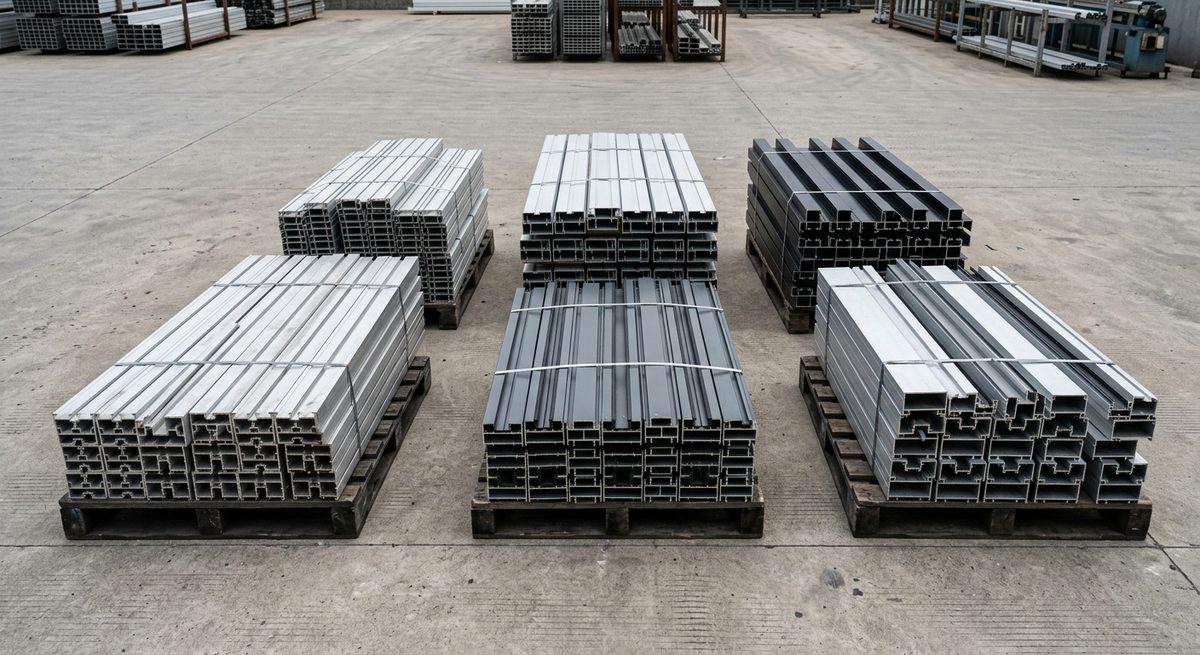
Somewhere in a Foshan door plant right now, a hydraulic press the size of a delivery van is stamping a rose pattern into steel sheet, and you feel each stroke through the concrete before you hear it. Doors are heavy industry dressed up as home decor. That’s exactly why they punish careless orders: every mistake is bulky, heavy, and already paid for by the time it clears the port.
Most of the security and interior doors we handle come from Foshan and the wider Guangdong belt, about an hour from our office in Guangzhou. Over the years the same handful of problems has sunk order after order. None of them are exotic. All of them are preventable, so let’s go through the list honestly.
The wrong millimetres
Chinese factories build to Chinese standard openings unless you tell them otherwise, and your market almost certainly uses different ones. Leaf heights differ. Frame depths differ. Wall thicknesses differ most of all, because a frame made for a brick wall in Guangdong won’t wrap a stud wall somewhere else.
The fix is dull and absolute, and it applies before you import doors from China at any scale: order from a drawing, never from a catalogue name. Send a dimensioned sketch of the leaf, the frame, the wall section and the threshold, and make the factory sign it back to you before deposit. When a buyer tells me the factory “knows our sizes”, I ask to see the signed drawing. Silence usually follows.
Left hand, right hand, wrong hand
Handing conventions are a trap because every country describes swing direction differently, and everyone in the conversation is certain their version is universal. A steel security door arrives pre-bored for hinges and lock case. Bore it for the wrong hand and there’s no fixing it on site. The door is scrap, or at best a very expensive workshop project.
Never write “left” or “right” in an order. Draw it. A plan view arrow showing which way the leaf swings, viewed from outside, stapled to every order sheet. It feels childish. Do it anyway.
What’s inside the leaf, and what water does to it
Interior doors from this region commonly carry a honeycomb paper core, a timber frame and MDF skins. That’s a perfectly good construction at the right price point, but it’s not what every buyer pictures, so open a cut sample before you commit. Solid timber and tubular chipboard cores exist too, at different weights and different money.
Moisture is the bigger enemy. A container crossing warm seas sweats, and MDF skins drink. We’ve seen leaves arrive with a gentle banana curve you could spot from across the warehouse. Prevention is unglamorous:
- Ask for the moisture content of timber components at packing, and get it in writing.
- Have every leaf shrink wrapped individually, with desiccant inside the wrap, not just loose in the container.
- Insist on corner protectors and edge battens, because a wrapped door with crushed corners is still a rejected door.
- Store them flat and off the floor on arrival, and let them acclimatise before hanging.
Glass, paint and the last metre of the journey
Glazed interior doors add two failure modes at once. The glass itself, which should be tempered and marked as such, and the beading holding it, which rattles loose when cartons are dropped on their ends. Paint and lacquer scuffs almost never happen in the factory. They happen at the last metre, on and off trucks, so the packing spec matters more than the paint spec. A-frames or vertical stacking beat flat piles of doors every time, and it’s worth paying for.
On inspection day we open cartons at random and run a bare palm over every edge of those leaves. Hands catch what eyes miss under warehouse lighting.
Paper problems nobody sees until customs
Security doors get sold with all sorts of ratings, and the certificates behind them are usually genuine, but genuine for the Chinese market. Your building codes may not recognise them. If a project specifies fire performance or forced-entry resistance, confirm with the specifier which certification scheme they’ll accept before you order, and confirm the tariff code and duty question with your own customs broker rather than taking anyone’s word for it. It isn’t exciting work. It’s much cheaper than a rejected consignment.
Plenty of buyers in this category outgrow reselling a factory’s standard range and put their own name on the product: etched hinge plates, branded thresholds, printed cartons, a proper catalogue. If that’s your direction, you can build your own brand with our team and we’ll carry the design work into the factory alongside the order.
Getting forty heavy boxes onto one boat
Doors eat container space in awkward ways, and a mixed order of frames, leaves and architraves rarely packs efficiently if each factory loads its own goods separately. We bring everything into our warehouse first, check it against the order, repack where needed, and load one clean container. That’s the everyday shape of our consolidation and export handling service, and for door orders it regularly pays for itself in saved freight alone.
Weight is the other surprise. Steel security doors get heavy fast, and floor loading, crane access and delivery vehicles at destination all need thinking about before the goods sail, not after.
Three door questions we answer every month
Can one factory supply both my security doors and interior doors?
Usually not, and you shouldn’t want it to. Steel doors come from press-and-weld plants, timber and MDF doors from woodworking factories, and they’re different worlds. Buy each from a specialist and consolidate the shipment instead of forcing one factory to trade outside its trade.
Should I order doors pre-hung or as leaf only?
It depends on who installs them in your market. Pre-hung sets save labour on site but ship bulkier and suffer more transit damage at the frame joints. Leaf-only suits markets with skilled carpenters. We’ve done both, and the deciding factor is nearly always the installer, not the factory.
How do I stop warping claims in humid destinations?
Start at the factory: written moisture content, individual wrapping, desiccant. Then control the arrival end, because a leaf stored on its edge in a hot tin shed will curve no matter how well it was made. Put storage instructions in your customer documentation. It sounds fussy, and it prevents most of the arguments.
We’re on the ground in Guangzhou, and the Foshan door plants are a short drive we make constantly. Get in touch through the site or WhatsApp, tell us what you’re building or selling, and if it’s worth flying in we’ll pick you up at the airport and walk the press lines with you.
Read next

Walking a Baiyun Packaging Factory Before You Order a Single Jar
See what actually matters when you import cosmetic packaging from China: spray lines, pump testing, decoration rooms and…

Skincare OEM in Guangzhou: Samples, Minimums and the Money
A grounded look at cosmetics OEM China projects from Guangzhou's Baiyun belt: how sampling really works, what sets the…
Smart Door Locks by the Carton: Weight, Batteries, Freight
How to import smart door locks from China without freight surprises: battery paperwork, heavy cartons, drop protection and…