
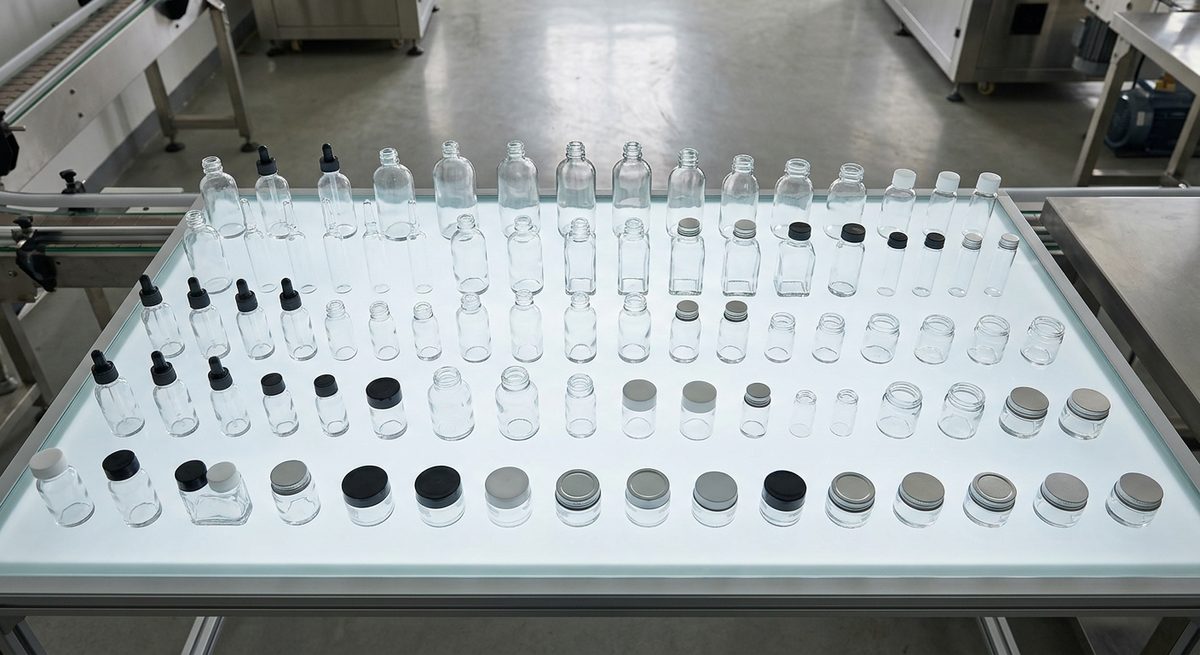
By late morning in a Guangzhou filling plant, everyone on the line smells faintly of whatever ran that day. The crimping head comes down with a double thunk, seals a pump onto a bottle, and moves on, and after an hour beside it you stop noticing the scent entirely. Your nose gives up. I mention this because perfume is a product where the romance sits entirely at the retail end, and the factory end is metal, glass and arithmetic. If you want to buy it well, you need the arithmetic.
Buyers who ask us to help them import perfume from China usually arrive with one number in mind, a target retail price, and no idea how the unit cost underneath it splits. So let’s split it.
The juice sets the ceiling
Fragrance oil is the single biggest quality lever and often the biggest cost lever too. Concentration matters first: an eau de parfum carries far more oil than a light body mist, and oil is the expensive part. Then comes where the oil comes from. The fragrance houses supplying Guangzhou filling plants range from workmanlike to genuinely impressive, and the same bottle can be quoted with oils at wildly different levels. Cheap juice smells fine for twenty minutes. The dry-down is where it falls apart, and your customers wear the dry-down all afternoon.
My advice hasn’t changed in years. Spend up on the oil, save on almost anything else. Nobody returns a perfume because the carton felt light.
Glass, and the private mould question
A stock bottle from an open mould costs a fraction of a custom one and can still look sharp with the right finishing. A private mould gives you a shape nobody else can ship, but the tooling bill only makes sense against real committed volume, and heavy glass with thick bases costs more at every stage: material, annealing, rejects, freight. Polishing and coating add again.
Plenty of successful lines launch on stock glass with strong decoration and move to custom moulds later. If you’re unsure which side of that line you’re on, that’s exactly the conversation to have with people who can walk you into the glass plants, and it’s part of the help in Guangzhou we give sourcing clients before any money moves.
Pumps, collars and the parts you feel
The spray pump is where cheap products give themselves away. A fine, even mist with a soft action costs more than a coarse spitter, and the difference per unit is small enough that skimping here is a false economy. Around the pump sit the collar and cap: anodised aluminium collars, weighted caps, magnetic closures. Each one is a line on the quote, and each one is a decision you should make deliberately rather than accept by default.
One practical note from the line: ask for pump samples crimped onto your actual bottle, not loose in a bag. Crimp quality depends on the collar meeting the neck finish precisely, and a pump that works loose in the hand can leak once sealed under pressure. We’ve caught mismatched neck finishes at the sample stage more than once, and it’s a five-minute check that spares you a container of leakers.
The box can cost more than the bottle
This surprises everyone once. A rigid presentation box with foil, embossing, soft-touch lamination and a fitted inner platform can overtake the empty bottle on cost. Sometimes that’s the right call, because in this category the box does half the selling. Sometimes it’s vanity. A folding carton in good board with clean printing serves a mid-priced line perfectly well, and the savings buy better oil. See the previous point about oil.
Filling, labour and minimums
The filling plant charges for batch setup, filling, crimping, coding and packing, and small runs carry those setup costs on fewer shoulders. There’s also time in the process most buyers never hear about: a mixed batch commonly rests before filling so the alcohol and oils settle together properly, which is one of several reasons a perfume order won’t compress into the timeline of a simpler product. Minimums vary by factory and specification, but filling lines want volume, and quotes soften noticeably as quantities rise.
Freight: alcohol rewrites the rules
Here’s the part that catches nearly every first-time buyer. Alcohol-based perfume ships as dangerous goods. That means classified packaging, a DG declaration, carriers who accept the cargo, and paperwork including a proper MSDS from the filler. It rules out some routings, adds cost, and rewards planning far more than speed. Consolidating perfume with your other cargo takes care too, which is why our consolidation and export handling team gets involved in these orders early, while the packing spec can still be shaped.
Import rules at destination differ by country, so confirm the tariff code, the applicable rate and any cosmetic registration requirements with your own customs broker and regulator before ordering. Getting that answer late is expensive. Getting it early is free.
Where I’d spend, where I’d save
- Spend on fragrance oil and the pump. These are the product.
- Spend on colour-consistent glass, even from a stock mould.
- Save on exotic caps until the line has proven itself.
- Save on rigid boxes for mid-priced lines, spend on print quality instead.
- Never save on DG-compliant packing. That money protects the whole shipment.
The three cost questions perfume buyers ask first
Why do two quotes for the same bottle differ so much?
Because “the same bottle” rarely is. One quote has lighter glass, a coarser pump, thinner oil at lower concentration and a folding carton. Line the specifications up side by side before comparing numbers, or have someone do it for you. The gap usually explains itself within minutes.
Can I use a stock bottle and still look premium?
Yes, and many strong lines do. Decoration carries more weight than shape: a well-executed coating, clean screen print and a considered cap read as expensive. Shoppers hold the bottle for seconds and wear the scent for hours.
What paperwork does an alcohol-based product need to ship?
At minimum an MSDS, a dangerous goods declaration and UN-rated packing from the filler, plus whatever your destination requires for cosmetics registration. Requirements vary by country and by carrier, so build the document list with your forwarder and customs broker before production, not at the port.
We’re in Guangzhou, minutes from the fragrance and filling plants, and we take buyers into them every month. Write to us through the site or on WhatsApp with your target product, and if a trip makes sense we’ll meet you at the airport and let you smell the difference between oil grades yourself.
Read next
From First Email to Full Container: A Storage Box Order, Step by Step
Follow one order from enquiry to loading day and see how to import plastic storage boxes from China: moulds, samples,…
Door Orders From Foshan: The Problems Buyers Actually Hit
Learn what ruins door shipments before you import doors from China: sizing mismatches, wrong handing, warping, glass damage…
Walking a Baiyun Packaging Factory Before You Order a Single Jar
See what actually matters when you import cosmetic packaging from China: spray lines, pump testing, decoration rooms and…