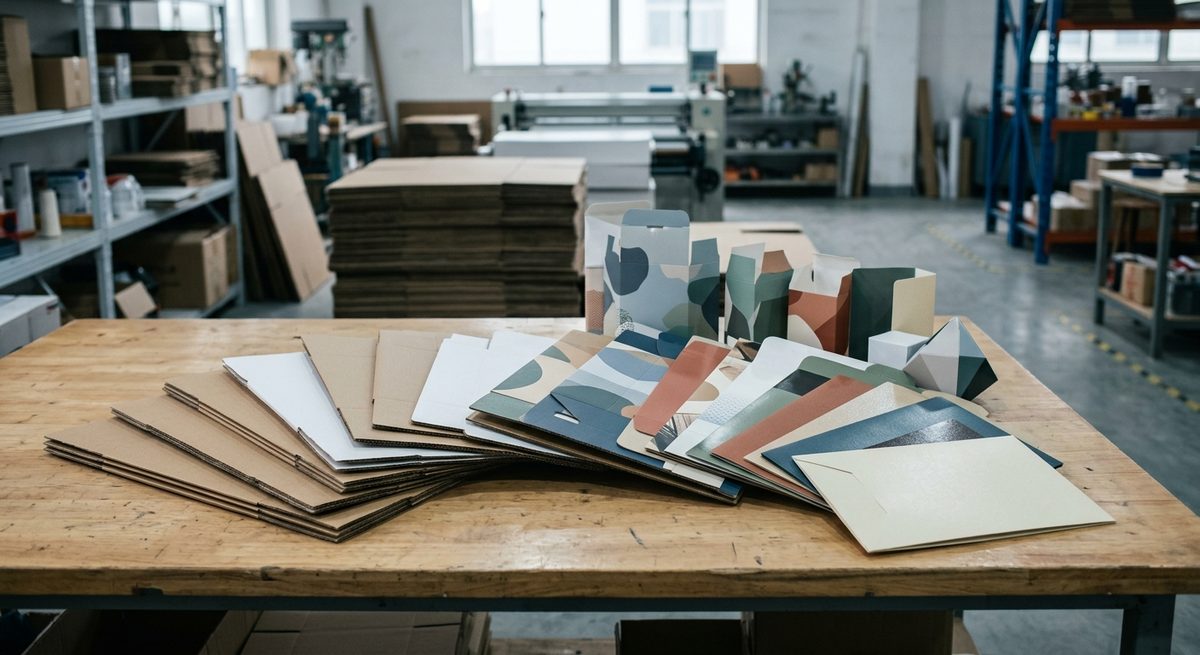
We once spent a full day in a packing room in Panyu re-boxing nine hundred cartons because each one was two centimetres too tall. Two centimetres. The tape guns barely stopped, kraft dust hung in the air, and by evening everyone’s forearms were brown with it. Those two centimetres meant the cartons stacked five high instead of six in the container, which meant a chunk of the load wouldn’t fit, which meant a second shipment for the leftovers. The factory had chosen the carton size for convenience at their end. Nobody had done the maths for the container. Somebody always pays for that, and it’s never the factory.
You are billed for space, and cartons define the space
Sea freight prices by the cubic metre or by the container, and freight from China gets expensive precisely where cartons waste volume. A box that’s ten percent air is a freight bill that’s ten percent air. Multiply that across a few thousand cartons and you’ve paid real money to ship nothing. The product’s size is fixed. The carton around it is a decision, and it’s a decision most buyers never see being made.
The fix costs nothing but attention. Before production starts, ask the factory for the master carton’s outer dimensions, the units per carton, and the gross weight. Then check how those boxes tile into a container or onto a pallet. Ten minutes with a calculator. It has saved our clients more than almost any negotiation trick I know.
The container is a fixed box. Work backwards from it
A standard container has fixed internal dimensions, published by every shipping line. Good packing engineering starts there and works backwards: which carton size fills the width with no gap, stacks to the ceiling with no wasted layer, and still protects the product? Often a small change does it, twelve units per carton instead of ten, or the lid flaps folded a different way.
Pallets change the sums again
Palletised cargo is faster and safer to handle, and some destination warehouses demand it. But pallets eat height and floor space, so a container that swallows your loose cartons whole may refuse the same goods on pallets. Decide floor loaded or palletised before the carton size is fixed, not after. Reversing that order is how re-boxing days happen.
The double stack question
Ask whether cartons on the bottom layer can carry the weight above them for weeks at sea, in humid air. Carton strength ratings exist for exactly this. A crushed bottom layer turns into damaged goods and an insurance argument, and cheap single wall cartons are the usual culprit. For anything heavy or long haul, we specify double wall as a matter of course and consider it cheap insurance.
Air freight punishes bulky cartons twice
Airlines bill by whichever is greater, the real weight or the volumetric weight calculated from the carton dimensions. Light, bulky products, toys, textiles, anything padded, nearly always get billed on volume. Which means for air shipments the carton isn’t just packaging. It’s the price. Vacuum packing soft goods, nesting products inside each other, and shaving empty headroom out of a box can pull the billed weight down noticeably. Ask us how we know. We’ve re-packed pillows.
Inner cartons count too
Buyers fixate on the master carton and forget what’s inside it. Retail boxes with generous headroom, bubble wrap where moulded pulp would sit tighter, inner cartons of six where eight would tile the master neatly. Each layer of packaging either uses the space or wastes it, and the waste multiplies outward. When a product’s retail box is being designed anyway, hand the dimensions to whoever plans the export packing before the artwork is signed off. It’s a rare case where marketing and freight can help each other, and it happens about once a decade without someone forcing the conversation.
What we check before goods leave a factory
Carton problems are cheap to fix at the factory and miserable to fix anywhere else. So the packing spec goes into the purchase order alongside the product spec, and the pre shipment check covers both. The short list we run:
- Outer dimensions match the agreed spec, measured, not read off a label.
- Carton weight sits within the limit a single person can safely lift where required.
- Shipping marks, carton numbers and side-up arrows printed correctly.
- Drop test on a sample carton for anything fragile.
- No mixed products inside one carton unless the packing list says so.
Buyers who work with factories directly can run the same list themselves. If you’re at the earlier stage of choosing who makes the goods at all, Finding a Manufacturer in Guangzhou with Private VIP Help covers how we shortlist and vet before any packing spec exists.
A word on packing questions during factory visits
When we walk buyers through workshops, the packing area tells you plenty. A factory that stores flat cartons off the damp floor, prints marks cleanly and stacks finished goods in tidy, counted blocks usually runs its production lines the same way. A packing corner full of odd sized reused boxes is worth a pointed question. If you’re planning a trip, How to Visit Factories in Guangzhou Without Wasting Days explains how to see more floors in fewer days, and I’d add: linger by the packing line longer than feels polite.
Carton questions we hear most
Should I let the factory pick the carton size?
Let them propose it, never let it pass unchecked. They optimise for their packing line, which is reasonable, but you’re the one paying for the space it occupies at sea. Check the proposal against the container maths and push back where it wastes air. Factories adjust carton specs all the time. It’s a normal request, not a special favour.
Is it worth paying more for stronger cartons?
For heavy goods, stacked loads and long transits, yes, and it isn’t close. The price gap between single and double wall is small against the cost of one crushed layer. For light goods on short hops you can reasonably economise. That’s one of the few places I’d say cheaper is fine.
What’s a shipping mark and do I really need one?
It’s the printed block on the carton showing consignee, order reference, carton number and destination. When your goods share a warehouse or a container with hundreds of other cartons, the mark is what keeps them yours. Skipping it saves nothing and risks plenty. Insist on it.
Our team in Guangzhou writes packing specs, checks them at the factory and re-runs the container maths on every order we handle, because this is where quiet money leaks out of an import. Send us your product’s dimensions and we’ll tell you honestly whether your cartons are shipping product or shipping air.
Read next
Sea, Air or Rail: Choosing Without Guessing
Sea, air or rail? A Guangzhou team explains how value, weight and the calendar decide shipping from Guangzhou, with the…
Warehouse Time in Guangzhou: What It Costs and Saves
A week in a warehouse in Guangzhou can trim a freight bill or quietly eat a margin. Our team explains what storage really…
Consolidating Several Suppliers Into One Container
How consolidation in Guangzhou turns deliveries from several suppliers into one clean container: warehouse checks, loading…