The call came on a Sunday. A client’s container had reached her port, her broker wanted a certificate of origin to apply a preferential rate, and nobody had one, because nobody had asked for one while the goods were still here. Getting that certificate issued after departure took the factory’s shipping clerk most of a week and a stack of favours. The goods sat in port the whole time, on paid storage. Every paper in this trade is cheap and quick while the cargo is still in China and slow and expensive once it isn’t. That single sentence is most of what this article has to say. The rest is detail.
The core set every shipment carries
Three documents travel with essentially every commercial shipment, and your broker will ask for all of them before your goods clear at home.
- Commercial invoice. The seller’s bill: buyer, seller, product description, quantity, unit price, total value, currency and trade term. Your import duty is assessed off this, so the description needs to be accurate and specific, not “gift items”.
- Packing list. Carton by carton: what’s inside, how many, net and gross weights, dimensions. Customs officers and warehouse staff both live by it.
- Bill of lading for sea, or air waybill for air. The transport document and, for sea freight, the paper that controls who may collect the goods. Guard it accordingly.
Keep the product description consistent across all three, and consistent with what your broker files at home. A shipment described as “LED wall lamps” here and “lighting parts” there invites questions that take days to answer, and every question is asked while your container sits still.
The single most common fault we see isn’t a missing document. It’s disagreement between them, a weight that differs between invoice and packing list, or a consignee spelled two ways. Cross check the set as a set. One afternoon of clerical care buys quiet at the other end.
The certificate that pays for itself
A certificate of origin states where the goods were made. Depending on your country’s trade arrangements, the right certificate can reduce the duty you pay, sometimes substantially. Whether yours qualifies, and which certificate form applies, is a question for your own customs broker, and asking it two minutes into planning costs nothing. The factory or its export company applies for the certificate here, and it’s a routine errand before shipment. As the Sunday phone call showed, it stops being routine afterwards.
Ask this question before you pay a deposit
Tell your broker the product and where it’s made, and ask what China export documents they’ll want to see at clearance. Write the answer into your purchase order as a condition of the balance payment. Factories provide what the order requires. They rarely volunteer what it doesn’t.
Papers that depend on the product
Past the core set, the requirements follow the product. Test reports against your market’s standards for electronics, toys and anything a child touches. A fumigation certificate wherever solid wood packaging is involved. Battery documentation, including the UN38.3 test summary, for anything with lithium cells, or the airline and the shipping line will refuse the cargo outright. Material safety data sheets for liquids, powders and cosmetics. None of this is exotic. All of it takes days to weeks to arrange, which is why the collecting starts at order time, not at booking time.
Who actually issues what
Factories issue invoices, packing lists and their own spec sheets. Third party laboratories issue test reports, and a report belongs to whoever paid for it, worth remembering when a factory waves a certificate that was issued to a different customer for a similar product. Forwarders issue transport documents. Official bodies issue certificates of origin. Knowing who owns each paper tells you who to chase, and how hard.
Chops, originals and the folder we keep
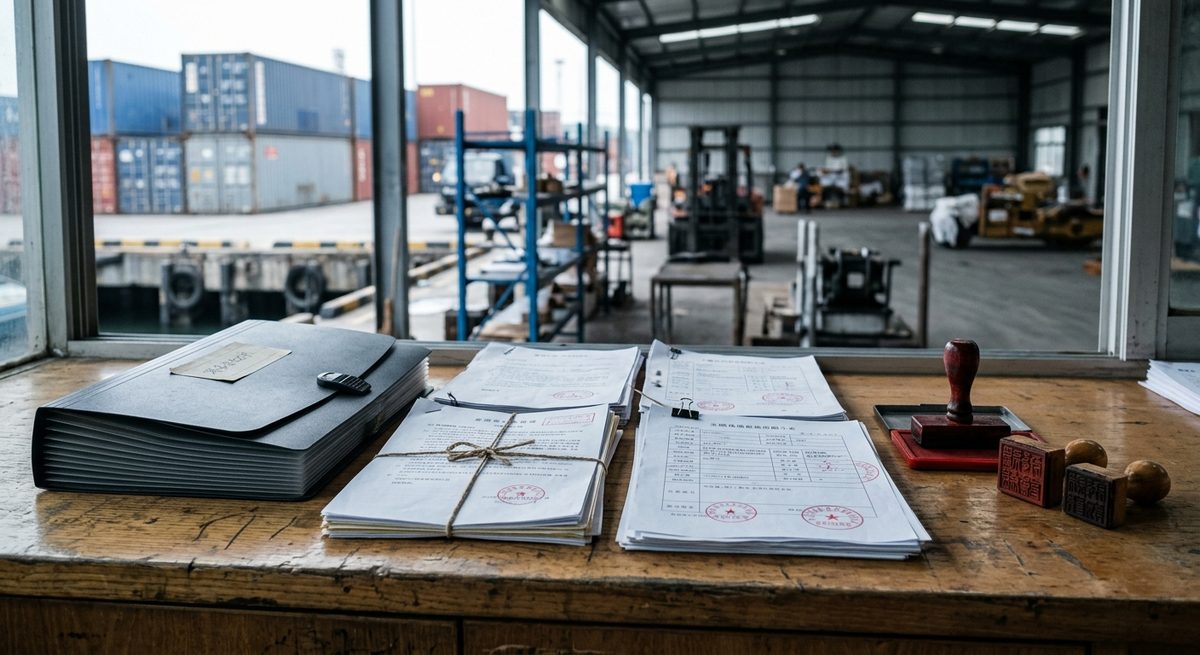
Sit in any factory shipping office here and you’ll hear the chop before you see it, the double knock of a red seal hitting an ink pad and then the page, again and again, because Chinese commercial documents are stamped, every copy. A document without the company chop often has no standing at all, which startles buyers used to signatures. When we collect a document set for a client we check the chops as carefully as the numbers.
We keep every order’s papers in one shared folder, scanned as they’re issued, and we send originals by courier whenever an original controls anything, bills of lading above all. Six months later, when a warranty claim or an audit or a reorder needs the file, it’s one link. Buyers who assemble paperwork by searching old email threads lose days to it. Some lose the argument.
Doing this from a distance
None of the above needs you in China, but it does need someone here who answers, checks and chases. That’s a role we play daily. If you’d rather handle it yourself on the ground, plan the shipping office conversation into your factory visits, and Your First Sourcing Trip to Guangzhou: How to Prepare Well will help you build that trip properly. And whoever you delegate this to, agent or otherwise, verify them first. How to Verify a Reliable Agent in Guangzhou explains exactly how we suggest buyers check credentials, ours included.
Paperwork questions buyers put to us
Can the factory just handle all documents for me?
They’ll handle the export side, because they must. What they can’t know is what your import side requires, which certificate earns you a lower rate, which test report your authority accepts. That knowledge lives with your broker. The working pattern is simple: broker names the papers, we collect them here, you file them there.
Are scanned copies enough or do I need originals?
For most papers a clean scan does the job. Bills of lading are the exception when issued as negotiable originals, and some certificates must arrive as stamped originals depending on your country. Ask your broker which ones, then courier exactly those and nothing else.
What happens if a document is simply wrong?
Caught before sailing, it’s a reprint and a re-stamp, an hour’s work. Caught at your port, it’s amendment requests, storage fees and a queue. The cost of an error grows with every mile the container travels, so the checking belongs at this end.
Our team collects, checks and files these papers for clients every week from Guangzhou, and we’re happy to look at your product and tell you which documents your order will actually need. Ask through the contact form or WhatsApp, and if you’re flying in, we’ll walk you through a real document set across a table.
Read next
What Slows a Shipment Down After It Leaves the Factory
Most shipping delays from China happen between the factory gate and the vessel. A Guangzhou team maps where the days go and…