The early flight lands at Baiyun just after dawn, and by nine you’re drinking tea across a folding table from a factory owner in Panyu. That’s the whole argument for a sourcing trip to Guangzhou. One week on the ground settles more open questions than half a year of video calls, but only if you treat the week like a production schedule. Every day needs a job before you board the plane.
Decide the questions before you book the flights
A first visit usually fails for one reason: the goal was mush. “See some factories and get a feel for the market” isn’t a goal. Write down the three or four decisions this week has to settle. Which shortlisted supplier gets the order. Whether the production line can actually hold the finish you admired on the sample. Whether the packaging you sketched can be made at a price that doesn’t kill the margin. Once those are on paper, the itinerary writes itself. Any meeting that doesn’t serve one of them gets cut.
Send your specifications, target quantities and question list to every supplier at least two weeks before you fly. Two weeks, minimum. A factory that’s had time to prepare puts counter samples on the table when you arrive. A factory that hasn’t sends someone off hunting for last season’s stock while you sit there drinking your third cup of tea.
Build the week like a delivery route
Five working days is right for a first trip. Fewer than four and you’ll end up choosing between suppliers you never met. More than eight and fatigue starts making your decisions for you. I’ve watched it happen.
Group days by geography, not by how much you like each supplier
Each city around Guangzhou has its own trade. Foshan runs deep in furniture, ceramics and building materials. Dongguan means moulds, hardware and electronics. Shenzhen covers anything with a circuit board, and Zhongshan is lighting country. The expressways between them eat hours, so give each cluster its own day or half day and loop through everything in that area at once. Don’t bounce between cities to suit a supplier’s preferred timing.
Leave one day empty
Something will run long. It always does. A supplier mentions a sister plant worth seeing, a revised sample needs a second look, a meeting that’s going well deserves another hour. An unplanned day in the middle of the week absorbs all of that without wrecking anything else.
The boring preparation list
None of it is complicated. All of it hurts if you leave it late:
- Check the current entry requirements for your nationality with the nearest Chinese consulate before you buy flights.
- Print your spec sheets and target price lists. Meetings move faster when everyone’s looking at the same page.
- Install a translation app that works offline, and pick up a local SIM or eSIM with data at the airport.
- Pack a luggage scale and a tape measure. You’ll use both more often than you expect.
- Book a hotel near a metro station in central Guangzhou, not next to any single factory. You’ll be heading in a different direction every day.
- Arrange an interpreter for the factory days. English lives in sales offices and rarely on production floors, and the floor is where the real answers are.
The showroom is a stage. Walk past it.
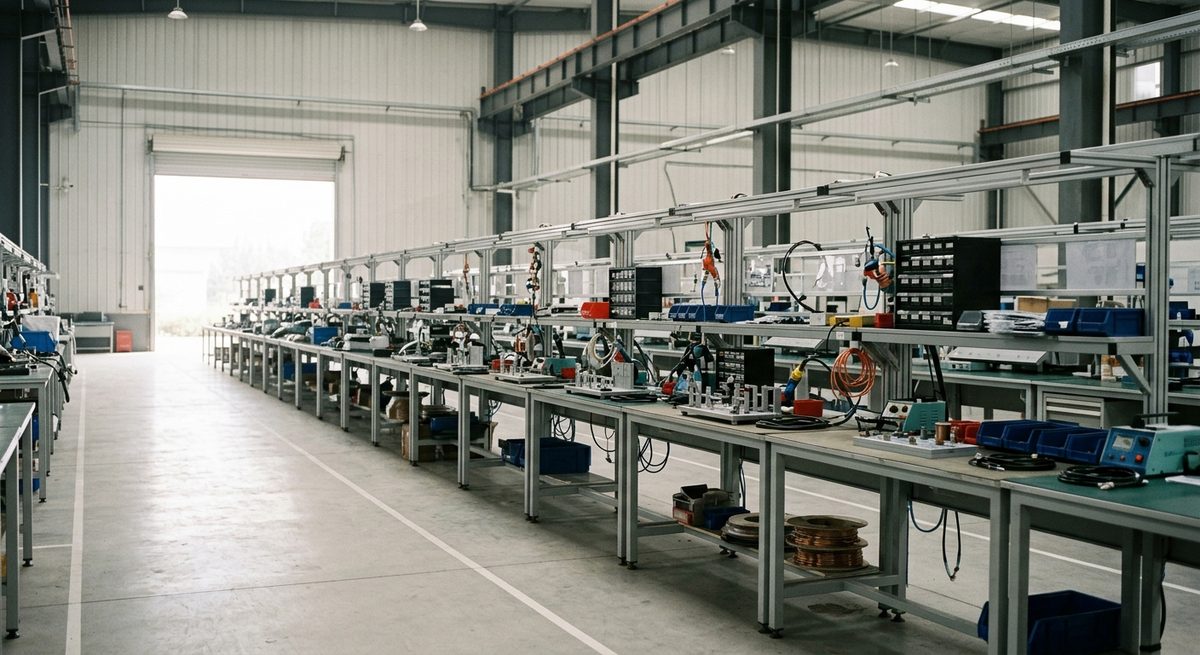
Ask to see the line that would run your product, and slow down at three points. Incoming materials first: rusting steel or fabric rolls sitting on a damp floor tell you exactly what your goods will be made from. Then pick one workstation and watch an operator complete a full cycle. Is there a reference sample or a drawing pinned up at the station? Good sign. At the end of the line, stand at the inspection bench and ask what gets rejected and where the rejects go.
One thing nobody warns first-time visitors about: the sales office is often freezing from the air conditioning while the workshop behind it runs ten degrees hotter and smells of hot cardboard. Dress for both, because the useful hour of your visit happens on the hot side of that wall. And if your plan involves your own logo and packaging, raise it while you’re standing next to the printing gear. Plenty of buyers use these visits to start planning how to build your own brand with our team, because artwork and packaging decisions get much easier when the machine that would do the work is right in front of you.
Evenings are for deciding, not just dinner
After a factory day you’ll want food and bed. Resist for one hour. Spread the day’s samples across the hotel bed, write your notes while the details are fresh, and rank the suppliers you saw. Photograph every sample with the supplier’s card in the frame, because by Thursday they all blur together. Then send your follow-up questions the same evening. Factories answer quickly when the buyer is clearly still in town and still deciding.
Think about logistics before you fly home, too. If you’re ordering from suppliers spread across Guangzhou, Foshan and Dongguan, those cartons have to meet somewhere for inspection and loading. Agreeing consolidation and export handling face to face means you leave with the whole chain settled, not just a factory price.
Three questions we get before every first trip
How many days do I need for a first sourcing trip to Guangzhou?
Five working days suits most buyers. That gives you two days of meetings in Guangzhou itself, a day each for one or two nearby cities such as Foshan or Dongguan, and a spare day for revisits and revised samples. With weekend travel on both ends, it fits inside a nine day window.
Do I need to speak Chinese to get anything done?
No, but somebody beside you does. Export sales staff manage workable English. Line supervisors, mould technicians and warehouse managers mostly don’t, and they hold the answers that matter. An interpreter who knows production vocabulary changes the quality of every visit. One who only knows restaurant Chinese doesn’t.
Is there a bad time of year to come?
The weeks around Chinese New Year, without question. Factories wind down, close, then restart with new workers, and nothing useful gets decided. The Canton Fair periods in spring and autumn fill the hotels and split supplier attention, though a well planned trip during the fair can still work. Summer is hot and sticky but perfectly workable.
We’ve lived and worked in Guangzhou since 2007, and we’ve hosted a lot of first trips. Airport pickup, hotel help, an interpreter at your side, and the factory doors that fit your product, from Panyu workshops to Foshan furniture plants. Tell us what you want to source through the contact form or WhatsApp, and we’ll help you shape the week before you book a single flight.
Read next

Meetings in China: What Buyers Should Expect in the Room
What business meetings in China actually feel like for a buyer: seating, tea, who really decides, how price talk unfolds,…

Visiting Picture Frame and Wall Art Factories Around Guangzhou
Planning to import picture frames from China? What to check in person at Guangzhou framing factories, from mitre joints to…
Reading a Chinese Factory Quotation Line by Line
A Guangzhou sourcing team takes apart a Chinese factory quotation line by line: unit price, incoterm, validity, packaging,…