
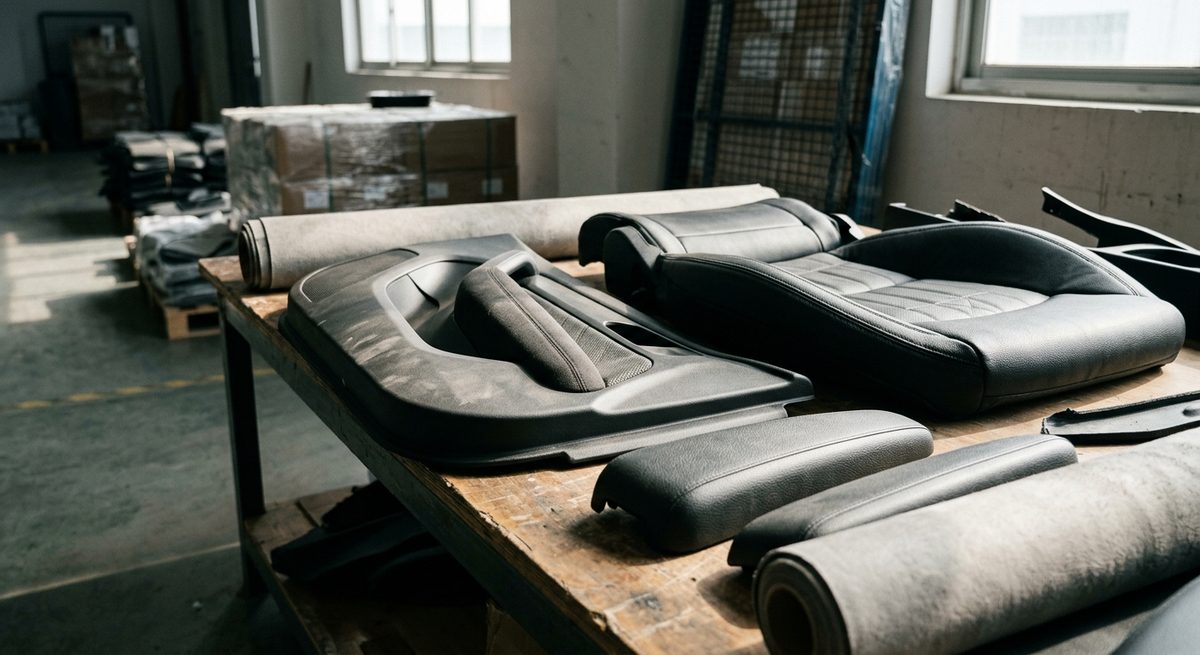
Yongfu Road smells faintly of new rubber. Walk it on a weekday morning and you’ll be dodging scooters stacked with headlight cartons while shopkeepers unpack floor mats that scent the whole arcade. Guangzhou’s auto parts trade has lived on this street and its side buildings for decades, and it’s still the quickest place I know to turn an idea for an accessories line into an actual stack of samples on a table. Before any of that turns into a purchase order, though, three things need to make sense: the samples, the minimums and the money.
Samples come first, price lists later
Ignore the quotation sheet until you’ve held the product. Seriously. In this category the same photo can represent four different qualities of seat cover, and only your hands can tell them apart. Stock samples of universal items, mats, organisers, phone mounts, sunshades, can often be pulled the same day around Yongfu Road. Factory samples of anything customised take longer, usually a week or two depending on the item, and you’ll pay the sample cost plus courier. That’s normal and fair. Many factories credit sample fees back against a bulk order, but only if it was agreed in writing when you paid.
One habit that saves buyers real grief: label every sample the moment it arrives, with supplier name, date and quoted price. Six weeks later, when you’re choosing between three nearly identical dash mats, that masking tape label is the only reliable memory in the room.
We hosted a buyer from the Gulf earlier this year who did this part beautifully. He spent two full days sampling before discussing a single order, laid everything out on our meeting table, and cut half the products from his plan because the samples told him his customers wouldn’t accept the stitching at that price level. The suppliers respected him more for it, and his eventual negotiation went faster, because everyone knew he’d done the looking.
The logic behind the minimums
MOQ in car accessories isn’t arbitrary, it follows how the thing is made. Universal products run on shared production lines, so minimums stay friendly, commonly a few hundred pieces per design. Model-specific parts are a different animal. A trunk liner cut for one vehicle model needs its own pattern or mould, so the factory needs enough volume per model to justify the setup. Colours count too. Every extra colour of the same item behaves like a small extra order, because the line has to change material and run again. If your budget forces a choice, more depth in fewer colours usually beats a thin spread across many.
Where minimums bend
They bend more often than published numbers suggest, especially in the weeks after a trade fair, when factories are hungry to convert the enquiries they collected. Stock designs go out in smaller lots. Some factories accept a trial order below MOQ at a higher unit price, treating it as a paid audition. And spreading one order across several items from the same factory often unlocks a lower minimum per item, since the container is what the factory really cares about filling.
Custom tooling changes the maths
The moment you want your logo embossed in a rubber mat or a bespoke fit for one vehicle, tooling enters the picture. A mould or emboss plate carries a one time fee, varying widely with size and complexity, and it changes your breakeven arithmetic on that product. Two rules we hold clients to. Get the tooling ownership written into the contract, in your name. And don’t cut tooling for an unproven product: sell the stock version first, then invest in the custom one once the numbers say so.
How the money usually flows
Payment structure in this trade is pleasantly boring. The common pattern is a deposit by bank transfer to start production, often around thirty percent, with the balance paid before shipment or against the shipping documents. Small trial orders are sometimes paid in full up front, which is reasonable given the amounts involved. Pay the company account named on the contract, so the paperwork, the invoice and the money all tell one story your accountant can follow. We schedule quality inspection before the balance payment, which keeps everyone’s attention wonderfully focused on the checklist.
Here’s what we pin down in writing before any deposit moves:
- Unit price including inner packaging and carton marks.
- MOQ per item, per model and per colour.
- The approved sample as the named quality reference.
- Lead time counted from deposit receipt, not from a vague start.
- The payment split and what triggers the balance.
- Tooling ownership, if any tooling exists.
One container, many small suppliers
Accessories orders are naturally fragmented. Mats from one factory, seat covers from a second, organisers and mounts from trading floors around Yongfu Road. If you plan to import car accessories from China as a business rather than a one off, that fragmentation is your friend on product range and your headache on logistics. Our warehouse takes in each lot, we count and check it, and our work as a shipping agent in Guangzhou ties five suppliers into one consolidated shipment with a single document set. Classification for car parts can be fiddly at your border, so confirm the tariff code and rate with your own customs broker while the goods are still in production, not when they land.
Straight answers on minimums and money
Can I order below the stated MOQ?
Often, yes. Ask for a trial quantity at an adjusted price, or start with the factory’s stock designs where minimums drop. What rarely works is demanding MOQ cuts and custom branding at the same time. Pick one for the first order.
Do sample costs really come back?
Many factories deduct them from the bulk invoice, and some don’t, so it varies by supplier. The deciding factor is whether the refund was agreed in writing before you paid for the samples. A one line note in the chat history is usually enough.
When should the balance be paid?
After your inspection passes and before the goods ship, or against a copy of the shipping documents, whichever the contract states. The sequence matters more than the exact mechanism. Inspection first, then balance, then departure keeps the incentives pointing the right way for everyone.
Thinking about an accessories range and want to see the real thing before committing? Come over. Start by reading who we are, then message us on WhatsApp or through the contact form. We’re based in Guangzhou and we’ll happily walk Yongfu Road with you, samples in hand today, factory visits booked for the next morning.
Read next
Catching Bad Drills Before They Ship: Power Tool Inspections
The defects to expect when you import power tools from China and the factory tests that catch them, from chuck runout to…
How to Source Automotive & Tools from Guangzhou, China
Guangzhou is one of China's leading automotive cities, hosting major car manufacturers and an extensive supply chain of…