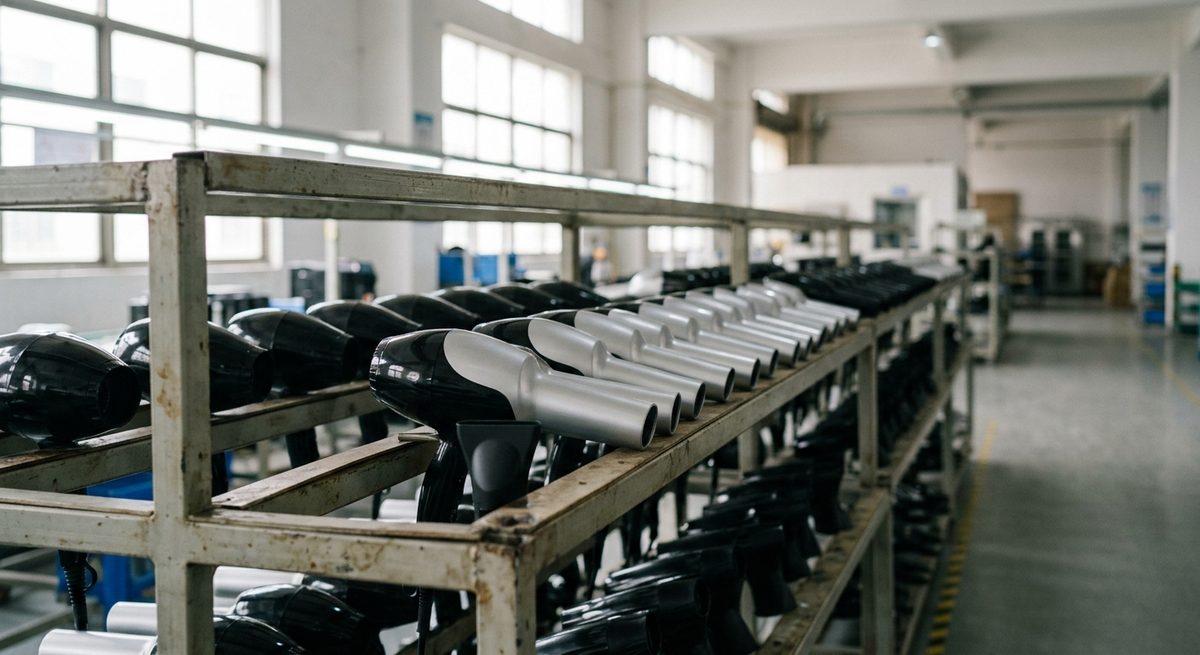
A buyer we hosted a while back opened her first container of hair dryers and found the bottom two layers sagging. Boxes intact, corners soft, giftboxes scuffed at the edges. The dryers worked fine. The retail boxes didn’t look fine, and retail buyers judge the box before they ever pick up the product. Nothing in her contract had said a word about carton strength. If you plan to import hair dryers from China, the packing spec deserves the same attention as the wattage, because styling tools are light, bulky, and sold on presentation.
The carton is a specification, not an afterthought
Hair dryers ship in a nested system: a unit giftbox, an inner carton of several units, and a master carton for the stack. Each layer has one job. The giftbox sells, the inner protects, and the master carries the stacking load of a full container plus warehouse handling at both ends. What we actually write into the contract:
- Board grade and flute type for the master carton, with a bursting or edge-crush value stated in numbers.
- Inserts inside the giftbox, moulded pulp or die-cut card, that keep the dryer body and nozzles apart.
- A polybag or tissue layer so the glossy giftbox can’t scuff against its neighbour.
- A maximum master carton weight, so warehouse staff can actually lift the thing.
- Clear shipping marks: item, quantity, carton number, gross and net weight, destination reference.
Factories in Foshan Shunde and Dongguan pack styling tools every day and do all of this well when asked. The failures happen when nobody asks. Then the quotation quietly assumes the thinnest board that survives the factory gate, and you find out at the destination port.
You’re paying to ship air
A hair dryer weighs very little but occupies a box with a pistol grip’s worth of empty space in it. That ratio is your freight bill. Sea freight for full containers is priced by the box, so your real cost per unit depends on how many cartons fit inside, and that’s a carton design question, not a negotiation question. Air freight runs on chargeable weight, the higher of actual and volumetric, and styling tools land on the volumetric side almost every time. A folding-handle model, or a giftbox trimmed by a centimetre on two sides, changes the maths of an air shipment more than any haggling over the unit price will.
Run the cube before you approve artwork
The moment the giftbox dieline exists, calculate units per master, cartons per pallet, cartons per container. We do this for clients before artwork approval. Shaving box size after the printing plates are made costs money. Before, it costs nothing.
Sea, air or rail for styling tools
Most bulk orders of dryers, straighteners and curling tools go by sea, and for steady replenishment that’s the sensible default. Air is for launches, content shoots and topping up a sold-out listing, a premium you accept for speed. Rail to Europe sits between the two and suits mid-size restocks in many cases. A common first-season pattern: main stock on the water, a small launch batch flying ahead of it. Cordless tools with lithium batteries are a separate conversation altogether. They move under dangerous goods rules with their own documents and carrier restrictions, so flag any battery model to your forwarder at quotation stage, not at booking. Forwarders forgive many things. A surprise battery isn’t one of them.
Plugs, voltage and a packing list that tells the truth
Styling tools are voltage-sensitive heating products, and one production run often covers several destinations. This is where packing discipline earns its keep. European plugs and UK plugs must never mix inside one master carton. Dual-voltage travel dryers need the switch position checked at packing. The packing list should state model, plug type and destination per carton range, so a split shipment can be picked cleanly at the warehouse. During pre-shipment inspection we open cartons right across the load and match plugs, labels and manuals to the destination plan, because a pallet of continental plugs sitting in a UK warehouse is a slow, annoying problem that didn’t need to exist.
If all of this is new to you, the fastest education is standing in the packing area yourself. It’s a loud room: tape machines screeching every few seconds, the smell of hot glue and cardboard dust, a line worker folding your giftbox around your dryer in about four seconds flat. Come over and meet us in China and visit the factories with us. We pick clients up in Guangzhou, drive them out to the Shunde and Dongguan workshops, and translate the technical back and forth on the spot.
From factory line to loaded container
The last leg matters as much as the first. Finished cartons travel to a warehouse, wait for their vessel, and get loaded by a team who’ll never see your brand again. We photograph the empty container floor, the load pattern and the door seal on every shipment we handle, and we plan the stack so nothing heavy ever rides on top of giftboxed styling tools. Clients building a retail line often pair this with our design side, where the same people who arranged brand building support for the giftbox artwork get to see how that artwork survives a real container, then adjust the next print run to match.
Freight questions dryer importers raise
How many hair dryers fit in one master carton?
Depends on the model and the giftbox. Inners of a few units grouped into masters of ten to twenty is a common pattern for pistol-grip dryers, but the honest answer comes out of the dieline maths for your exact box. Do that sum before you commit to artwork, not after.
Should I ship mixed models in one container?
Yes, mixing dryers, straighteners and accessories in one container is normal and usually efficient. What makes it work is a carton-level packing list and clear marks, so the destination warehouse can put goods away without opening every box. Keep each master carton single-model and single-plug. Always.
What if cartons arrive crushed despite a good spec?
Document everything before you unpack: photos of the container interior, the stack, and the damaged cartons with their marks visible. A carton specification written into the contract gives you a factual basis to discuss compensation with the factory or a claim with the carrier’s insurer. Without photos and a written spec, that conversation goes nowhere.
We arrange packing specs, inspections and freight for styling tools out of Guangzhou every month, working with the factories of Shunde and Dongguan at one end and your warehouse at the other. People who import hair dryers from China tend to come back for the second container, and it’s usually the packing file that convinced them. Send your model list and destination through the contact form or WhatsApp, and if you’d like to watch your order packed with your own eyes, we’ll host you here and take you to the line.
Read next

Test Reports and Paperwork for Kitchen Appliance Imports
Import kitchen appliances from China with the right test reports, safety marks and food contact documents. A practical…
Putting Your Own Name on a Robot Vacuum: A Factory View
Import robot vacuums from China under your own brand. What ODM base models, firmware, apps and packaging really involve,…