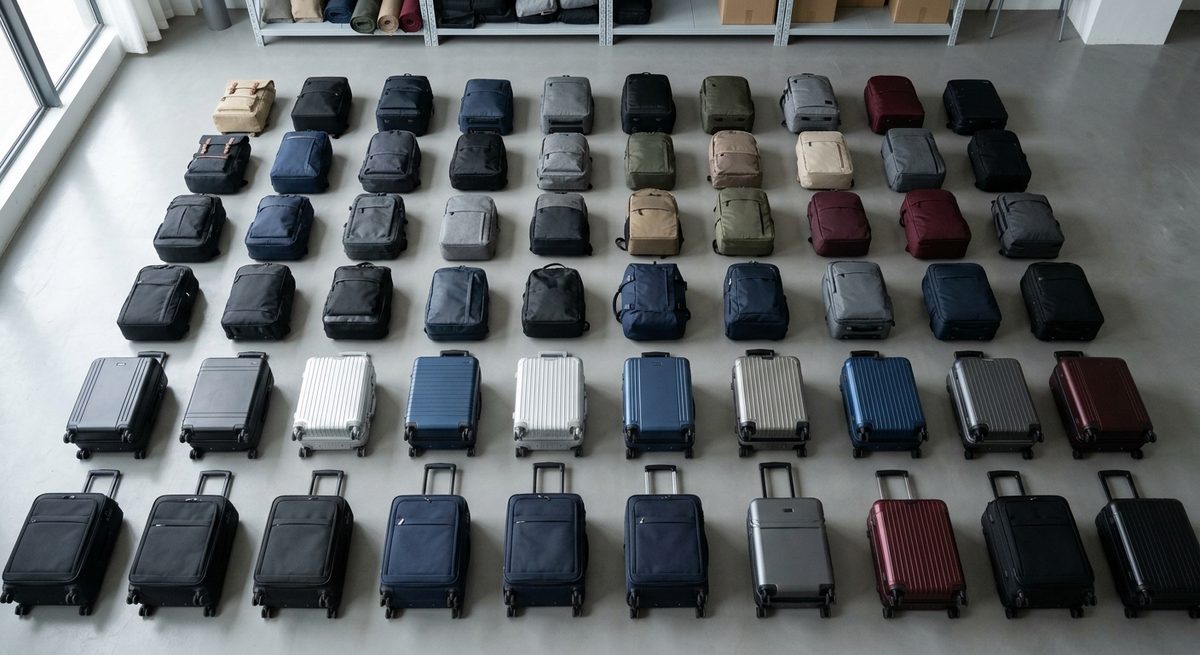
Last autumn we hosted a buyer from northern Europe who sells outdoor gear online and wanted his own line of daypacks. He arrived with a sketch, a mood board and a lot of questions. Sixteen weeks later a container left Nansha port with his first production run inside. What happened in between is a fair template for anyone planning to import backpacks from China, so let’s follow that order step by step, from the first email to the delivery truck.
Week one: turning an idea into a spec sheet
Nothing useful happens in bag sourcing until the product is written down. A backpack spec sheet covers volume in litres, main fabric and denier, coating type, zip sizes by position, webbing widths, back panel construction, compartments, target weight and colourways. Our buyer had strong opinions about the look and none about the fabric. That’s normal. We sat down in our Guangzhou office and turned his sketch into a two-page spec, starting from a 600D recycled polyester with a PU coating because it matched his price ambitions. That document became the reference for every quote that followed. Without it, factories quote whatever their standard pack costs, and the numbers can’t be compared.
Finding the makers in Baiyun
Guangzhou’s Baiyun district holds one of the densest bag and luggage clusters in the country. Workshops, mid-sized factories, fabric agents and hardware suppliers all sit within a short drive of each other, and the wholesale markets display thousands of finished styles, which is handy for calibrating taste. Production capability is what matters for a private order though. We shortlisted factories already making technical daypacks, checked their business licences and export history, and visited three with the buyer over two days. He learned more from thirty seconds beside a bartack machine, which fires like a nail gun and leaves a dense little block of stitching on each strap anchor, than from any brochure he’d been sent. It’s why we push clients to import from Guangzhou with at least one trip on the ground. The cluster’s compact. Two days of visits gives a real picture.
Sampling: the first backpack you can actually hold
The chosen factory produced a first sample in about two weeks. It looked right and failed in the details, which is exactly what first samples are for. The zip puller fouled the top handle, the laptop sleeve came up a centimetre short for the stated laptop size, and the logo placement drifted off centre. Round two fixed all three and added a hydration port the buyer had decided on late. Two rounds is typical for backpacks. Budget for it. Hoping to skip straight to production just means finding the same faults in bulk, where they cost a shipment instead of a few days.
The branding work ran alongside the sampling: woven labels, embossed zip pullers, a printed lining and a hangtag design. Our brand building support handled the artwork files and matched them to what the factory’s subcontractors could actually produce, which saved a full round of corrections.
Money on the table, terms on paper
With a signed-off sample in front of everyone, the commercial conversation got concrete. We rebuilt the unit price line by line: fabric consumption per pack, zips and hardware, labour, packing, factory margin. Minimum quantities for a custom backpack commonly start around 500 pieces per colourway, though this varies by factory and specification. Payment followed the standard structure, a deposit to start production and the balance against inspection before shipment. Everything went into a bilingual purchase contract: penalties for late delivery, the fabric lot approval process, and the rule that no material gets substituted without written consent. None of this is exotic. It just has to be written before the deposit moves, not argued about after, and I’ve watched that one habit save more money than any negotiation trick.
Production and the checks that ran during it
Production took five weeks. Rather than wait at the finish line, we checked at three points:
- Material check. Fabric rolls and zips verified against the approved swatch card before cutting began.
- Inline check. Two weeks in, finished units were pulled from the line and measured, strap anchors were load-tested, and zips were cycled several hundred times on a rig.
- Pre-shipment inspection. A sampled inspection across cartons covered stitching, symmetry, logo position, smell, and packed weight per carton.
The inline check earned its keep. A batch of buckles snapped under cold stress testing, and the factory swapped the lot before assembly reached that station. Found three weeks later, that fault would’ve meant reworking thousands of finished packs.
Cartons, cubic metres and the ride to Nansha
Backpacks are light and bulky, so sea freight is priced on volume, not weight. First-timers who import backpacks from China usually underestimate how much packing decisions change the landed cost. Folding packs flat with one polybag each, choosing five-ply cartons sized to the container, and vacuum-reducing padded styles where the design allows can cut the cubic metre count noticeably. It’s unglamorous work. It pays better than haggling. Our buyer’s order filled most of a 40-foot high cube, loaded at the factory in Baiyun and trucked to Nansha. The export documents, packing list and bill of lading were prepared in Guangzhou, and he cleared import on his side with his own customs broker, who confirmed the tariff code and rate for his country before the vessel arrived.
What buyers ask about backpack orders
How long does a first custom backpack order really take?
From first enquiry to goods on the water, three to four months is realistic: two to four weeks of sampling rounds, around five weeks of production, plus booking and loading. Repeat orders run faster because the sampling disappears.
Can I mix several backpack styles in one container?
Yes, and most of our clients do. Factories in the Baiyun cluster are used to consolidated loadings, and a clear carton marking plan plus a per-style packing list keeps unstuffing simple at destination.
What MOQ should I expect if I want custom fabric colours?
Custom-dyed fabric is the step that raises minimums, because dye mills have their own lot sizes. In many cases stock colours keep the MOQ near 500 pieces, while a custom dye lot pushes the total requirement higher. Confirm this before you fall in love with a shade.
Our team lives and works in Guangzhou, a short drive from the Baiyun bag cluster, and we’ve been walking buyers through orders like this one since 2007. Planning a backpack or luggage project? Write to us through the contact form or WhatsApp. We’ll meet you at the airport, take you into the factories, and run the order with you from spec sheet to sailing.
Read next
Leather Handbag Orders from China: Problems Buyers Hit and Fixes
Import handbags from China with fewer surprises. The leather, hardware and colour problems that hit handbag orders, and how…
Inside a Footwear Factory Visit: Checking Sneaker Suppliers in Person
Planning to import shoes from China? Here is what to check in person on the factory floor in Dongguan and Jinjiang, from…