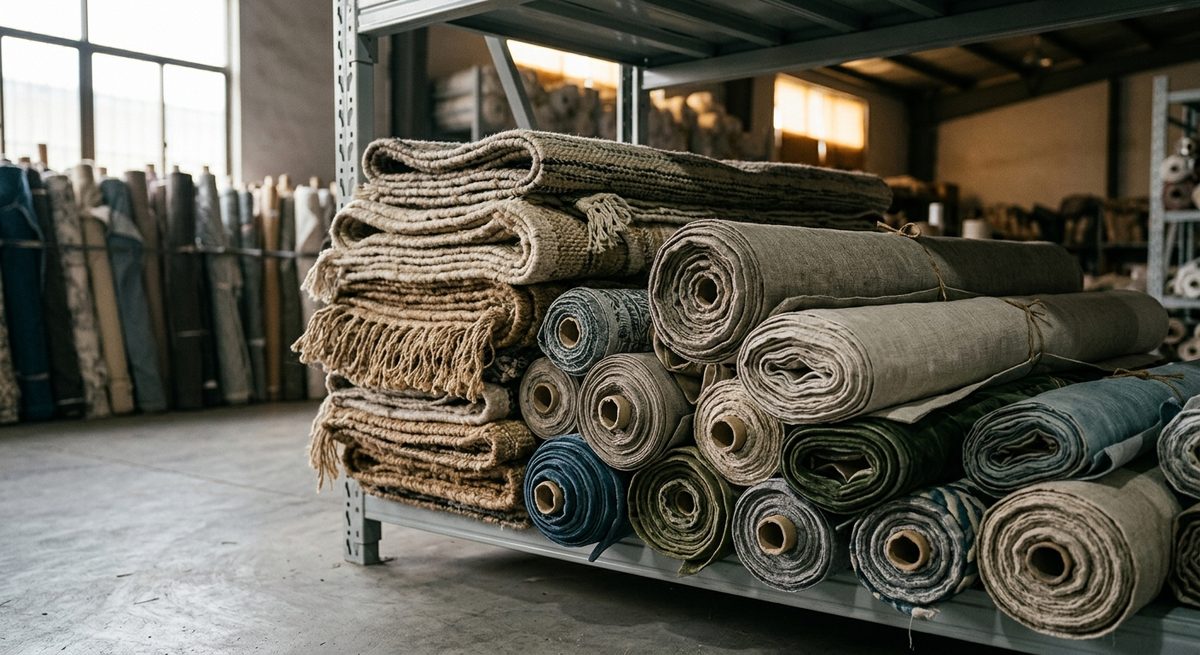
Last spring a European buyer we hosted sent us a single phone photo of a washable area rug and asked whether it could be made better and packed smaller. That one image became a full order, and following it from enquiry to delivery is the clearest way I know to show what it really takes to import rugs from China. Rugs punish vague briefs. Pile, backing, latex, printing, packing: each one carries decisions that change the price and the feel of the finished product. So here’s the story, stage by stage, in the order it actually happened.
Turning one picture into a specification
A photo shows a pattern. Nothing else. It doesn’t show pile height, pile weight, yarn type or backing, and those four lines decide most of a rug’s character. Our first job was a spec sheet: polyester or polypropylene yarn, printed or tufted construction, pile height in millimetres, total weight in grams per square metre, backing type, and whether an anti-slip layer was needed. We also pinned down the sales sizes and what tolerance the buyer could live with on each. Only with that sheet in hand does a quotation mean anything, because two prices for “the same rug” are usually two different rugs.
Matching the construction to the right plant
China’s rug industry isn’t one place. Tianjin in the north has a long history in woven and higher end constructions, while Guangdong’s tufting and printing plants turn out machine tufted, printed and washable rugs at volume. Since this order was a printed washable piece, the shortlist came from tufting plants within driving distance of Guangzhou, which meant we could reach any of them in a morning. Walk into one of those halls and the tufting machines sound like heavy rain on a tin roof, hundreds of needles hammering in unison, and everyone on the floor mouths their words rather than shouting over it. We sent the same spec sheet to several plants, compared the quotations line by line, and flagged the one that had quietly quoted a lighter pile weight to look cheaper. It happens. That’s why the sheet exists.
Two rounds of sampling, one sealed rug
The first sample matched the pattern but felt thin underfoot, and the anti-slip dots wore off a corner during a basic wash test. Rather than argue by message, we drove over with the sample, laid it next to the reference rug on the meeting room floor, and agreed the changes face to face: heavier pile, a different backing lamination, a revised care instruction. The second sample survived a home washing machine and a rub test on the backing. The buyer signed it. We sealed a duplicate in our Guangzhou office, and that sealed rug became the standard every later check would lean on. If you’re wondering who does this legwork, our China sourcing agent in Guangzhou page explains how the team works on the ground.
Price, terms and the paperwork moment
With the sample approved, commercial terms got settled before a single rug was tufted. Payment followed the structure most factories in this category expect: a deposit to start production, the balance against shipping documents, the exact split written into the contract. The proforma invoice listed the spec sheet line by line, the packing method, the inspection right and the production window. Unglamorous stuff. But nearly every dispute we’ve ever mediated traces back to something left out of this document, so we treat it as quality control, not admin.
Production, and the two visits that mattered
Our inspector went twice. The first visit came early, once the initial rugs were coming off the line, to check pile weight, print alignment and backing adhesion while corrections were still cheap. The second was the pre-shipment inspection, pulling finished cartons and checking them against the sealed sample. For a printed rug the checklist is specific:
- Print registration, so the design sits square instead of drifting toward one edge
- Colour match against the signed sample under a standard light source
- Pile weight spot checks on swatches cut from random pieces
- Backing peel test, because delaminating latex is the classic washable rug failure
- Edge overlocking, since loose binding unravels after a few washes
- A smell check after unrolling, as trapped latex odour drives customer returns
Both visits produced photo reports the same day. One correction was needed, a colour leaning too warm on early pieces, and it was fixed inside the production window.
Rolling, loading and the ride to the port
Rugs ship best rolled on cores, bagged, and stacked to use the container’s full height. Vacuum compression suits some washable constructions and cuts freight cost nicely, but compress the wrong quality and you crease the pile, so we tested one compressed rug for recovery before approving the method. Worth the extra day. The goods were trucked to our warehouse, consolidated with the buyer’s smaller home textile items from another supplier, and booked out of Guangzhou’s port complex under one set of export documents. The buyer’s customs broker handled the destination side, including confirming the correct tariff code for the construction, which is a step every importer should verify with their own broker.
Something else happened along the way. Watching the sampling process convinced the buyer to stop selling an unbranded rug and start building a label, with woven corner tags, printed belly bands and a story on the packaging. Our brand building support handled the artwork and packaging sourcing while the rugs were still on the line, so the branded version shipped in the very first container.
Questions rug buyers put to us most
What minimum quantities should I expect for machine tufted rugs?
It varies by factory and specification. Printed washable rugs commonly carry minimums per design rather than per size, and sharing one design across several sizes usually gets you over the threshold. Custom colours or special backings can raise it, so confirm against your exact spec.
Can rug samples reach me before I fly to China?
Yes. Factories courier samples worldwide, and we photograph and check them before dispatch. Many buyers review the first round remotely, then come to Guangzhou for the second round and the factory visits. That’s the most efficient use of a trip, in my view.
How should I judge a washable rug before ordering in volume?
Wash the sample in a normal household machine several times. Then look hard: backing for peeling, print for fading, shape for curling. It’s a low cost test that predicts customer reviews better than any datasheet.
If a rug or carpet range is on your roadmap, write to us through the contact form or message us on WhatsApp. The team is based in Guangzhou, and we can meet you at the airport, sit down over your reference photos, and drive you to the tufting plants ourselves.
Read next
Curtain and Blind Orders from China: What Goes Wrong
Learn where curtain orders go wrong before you import curtains from China: fabric swaps, sizing errors, dye lot drift and…
Visiting Guzhen Lighting Factories Before Your First Chandelier Order
Planning to import ceiling lights from China? Here is what to check in person at Guzhen and Guangzhou factories, from hidden…
Faucet Samples, MOQs and Payment Terms When Buying from China
Understand sampling, minimum order quantities and payment terms before you import faucets from China, with notes from the…