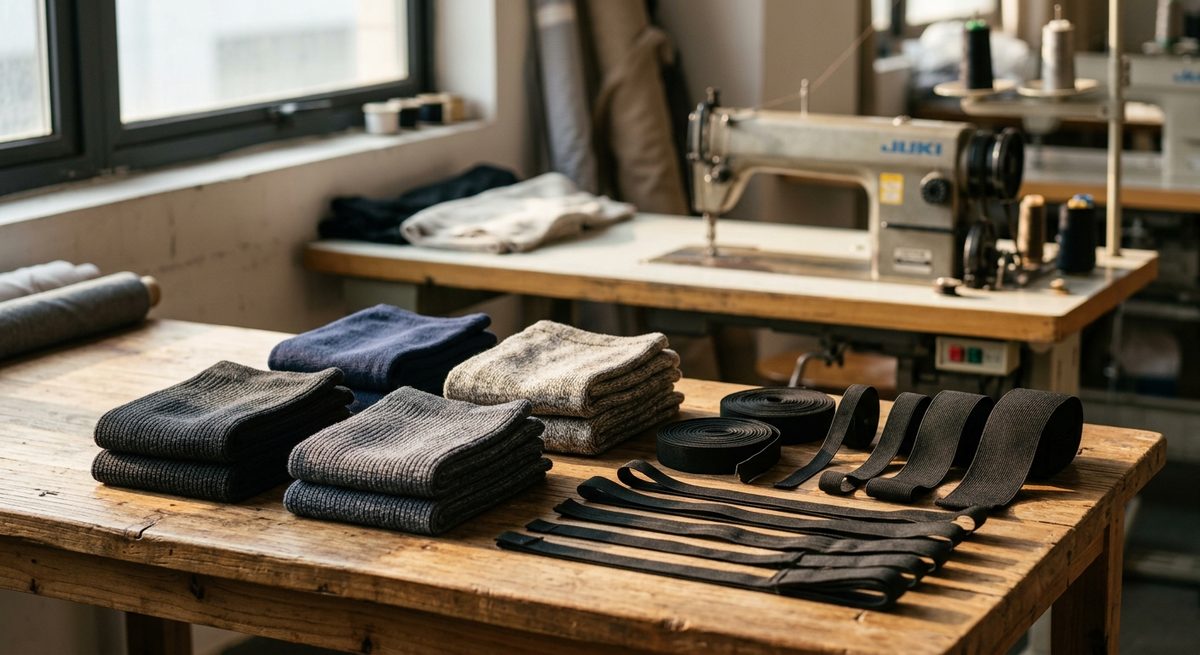
Underwear gets judged by rules a T-shirt never faces. It sits against skin all day, it’s washed constantly, and a big share of it is bought for children, so retailers and border officials read the paperwork behind it harder than they read almost any other garment. Learn what your destination market expects before you import underwear from China, because a missing test report holds cartons up faster than any sewing defect ever will. We’ve watched it happen. The goods were fine. The folder wasn’t.
Why next to skin garments get the extra scrutiny
Regulators in most markets treat prolonged skin contact as a higher risk category, and the worries are chemical rather than mechanical: residual formaldehyde from finishing, restricted azo dyes, pH outside the comfortable range for skin, heavy metals in dyes or prints. You can’t see any of that at an inspection table. That’s what laboratories are for.
Spend an hour in a knitting workshop around Yanbu in Foshan, a district that’s lived off underwear production for a long time, and you’ll walk out wearing the place: fine white fluff drifting off the machines and settling on your sleeves, your notebook, the rim of your tea cup. Factories there field testing requests every week, and an experienced one won’t blink when your order sheet includes a testing clause. One that pushes back on testing is telling you something useful about itself. Listen to it.
The lab programme most buyers actually run
The exact list depends on the market and the buyer’s own standard, but a typical programme for briefs, vests or bras covers safety and performance both. Safety items confirm the garment is clean in the chemical sense. Performance items confirm it still fits after ten washes. A common package:
- Fibre composition analysis, so the label matches what the fabric actually contains.
- pH value and formaldehyde content on the finished fabric.
- Restricted azo dye screening on dyed and printed components.
- Colourfastness to washing, rubbing and perspiration.
- Dimensional stability after repeated washing. Underwear that shrinks a size comes straight back.
Many buyers also ask for OEKO-TEX certification on the fabric, a voluntary label showing the material was screened for a broad list of harmful substances. It doesn’t replace your own testing, but it narrows the risk before you spend on a lab. For bras, add a nickel release check on underwires and hardware. For children’s items, confirm the drawstring and small part rules of your market with your compliance advisor before you sample, not after.
Arranging this from abroad is clumsy, which is why our team pulls sealed production samples, couriers them to the laboratory and chases the reports as part of the order. You can read more about who we are and how the Guangzhou office runs that side of things.
Labels: the quiet reason cartons get held
Test reports get the attention. Labels cause just as many holds. Underwear generally needs a permanent label with fibre content in the destination language, care instructions, country of origin and the importer’s identification where required. Size conversion deserves real care too, because a European 38 and an American medium aren’t the same body, and mixed up size labels turn a clean shipment into a warehouse sorting job that nobody budgeted for.
So print a full label set, stitch it to a sealed sample, and have your customs broker confirm it meets local rules before bulk cutting starts. A label fix costs minutes at sampling and weeks after packing. Give the outer packaging the same look: retail boxes and polybags in some markets carry their own warnings and material markings, and an inspection that only checks the garment sails straight past a non compliant polybag print.
Socks play by their own rulebook
Socks share the chemical requirements and add mechanical ones. Buyers commonly test abrasion on the sole, elastane recovery at the cuff, and the toe seam, since a lumpy linked toe is the complaint that fills review pages. Sizing tolerance matters more than people expect. A sock is judged by feel within seconds of going on.
Geography shapes this category too. A large share of the world’s socks come out of Datang in Zhuji, a town in Zhejiang province that has specialised in them for decades, while Guangdong plants tend to supply socks as one line inside a wider underwear programme. We regularly combine goods from both regions for a single buyer and bring the paperwork together in Guangzhou before export.
The folder that travels with the shipment
When the goods are ready, the reports have to line up with the shipping papers: commercial invoice, packing list, certificate of origin where the buyer wants it, and every test report filed against the right purchase order and style numbers. Customs codes and duty questions belong with your own customs broker, who can confirm the tariff classification and rate for your country.
Getting that folder straight is routine work for a shipping agent in Guangzhou, who books the freight, prepares the export documents and makes sure the paper matches the cartons before anything leaves the warehouse. The goal is boring on purpose. A shipment that clears without a single question.
Compliance questions we hear from underwear buyers
Is OEKO-TEX certification legally required for these goods?
No, it’s voluntary. Retailers ask for it because it signals the fabric was screened for harmful substances, and plenty of Guangdong and Foshan mills already hold it on their standard fabrics. Treat it as a strong starting point, then test the actual production lot for whatever your market regulates.
Who books the laboratory tests, the factory or the buyer?
Either can. The sample selection matters more than the booking, because a report only means something if the tested sample truly came from your production. Have an independent party pull sealed samples from the bulk goods. We do that step for our clients and ship the samples to whichever lab the buyer picks.
Do socks and underwear need different labels?
The core content is similar: fibre composition, origin, care. The difference is practical. Socks often carry printed inserts or wrap bands instead of sewn labels, and sizing shows as foot size ranges rather than body sizes. Confirm the accepted format with your customs broker or retail customer before printing anything.
Our team has been based in Guangzhou since 2007, close to the Foshan knitting workshops and connected to the sock plants further north. If you plan to import underwear from China and would rather have the testing, labelling and export papers handled by people on the ground, message us through the website form or WhatsApp. We host buyers in person and take them straight onto the factory floors.
Read next
Building a Swimwear Label with Xingcheng and Guangdong Mills
Plan to import swimwear from China under your own label. Prints, moulded cups, linings, packaging and artwork explained by a…
The Guangdong Knitwear Map Behind Every Pair of Leggings
Learn where to import activewear from China. We map the Guangzhou and Dongguan knit belt, from fabric mills to cut and sew…
Hoodie Quality Control: Inspecting Sweatshirts in Guangzhou
The defects that hit buyers who import hoodies from China, from twisted side seams to print cracking, and how inspections in…