Fabric chosen for the garment you are making
Apparel Fabric Sourcing in China from Guangzhou
Choosing fabric by a small swatch leaves several buying decisions unanswered. You still need to agree its construction, weight, usable width, finish, colour and the way it should behave in the garment. Agent Guangzhou helps clothing brands and manufacturers organise apparel fabric sourcing in China, from supplier enquiries to approved samples and delivery by the roll. We work from your specification and coordinate the questions between your team, the fabric supplier and the garment factory. Cotton, synthetic and blended fabrics are reviewed for the particular collection, rather than treated as interchangeable material choices.
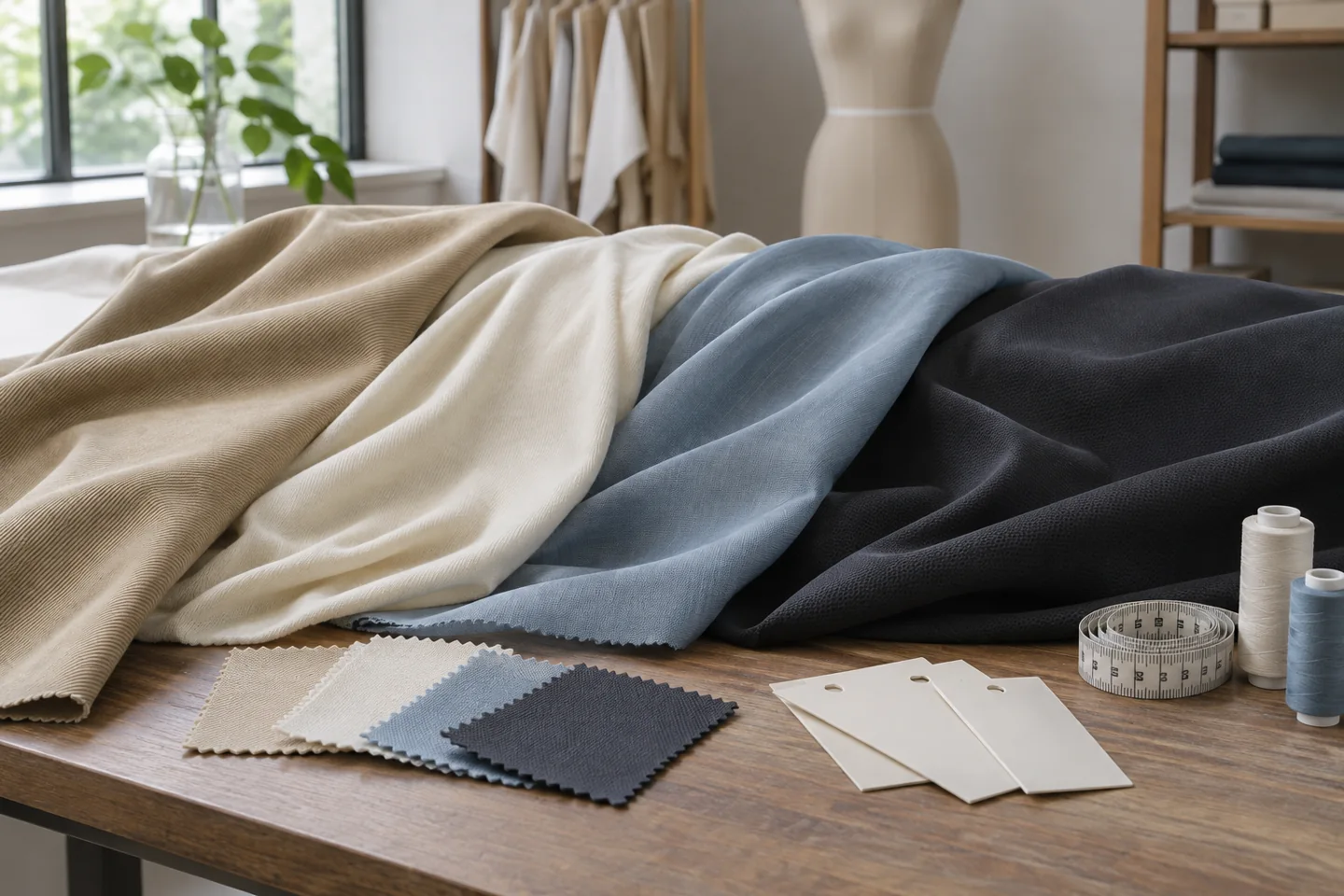
Give the supplier a fabric specification they can quote
Tell us what the fabric will become: a shirt, dress, uniform, lining, activewear garment or another apparel product. Include the intended composition, construction, weight and width, together with a physical reference if you have one. Explain which features of that reference you want to match.
If the specification is still open, identify the decisions your designer needs help comparing. A soft handle, a particular drape or a firm structure should be discussed against samples. We can collect supplier proposals and record the differences, so the fabric is selected for its intended use rather than the most attractive swatch photograph.
Compare cotton, synthetics and blends on the same basis
A fibre name does not describe the entire fabric. Cotton can be offered in different woven and knitted constructions, weights and finishes. Synthetic and blended materials also need a complete description. Keep composition separate from construction in the enquiry and ask the supplier to state both.
For stretch materials, define the direction and performance requirements your garment team has approved. For linings or flowing apparel fabrics, record the required weight, opacity and finish. If your designer specifies cupro or another particular fibre, keep that exact requirement visible in the quote. A similar-looking alternative should be presented as an option for review, never assumed to be an approved substitute.
Approve colour and finish with physical references
Agree how the supplier will develop and submit colour samples before bulk dyeing. A screen image is useful for discussion but should not be the only reference for an exact colour decision. Your approved sample should identify the fabric, colour, finish and date.
For prints, check the artwork scale, repeat, position where relevant and the intended appearance on the actual material. For finished fabrics, record the treatment you have approved and any performance evidence required. Ask how shade differences between production lots will be handled. If several colours belong to one collection, review them together and make clear which combinations need to match.
Check the fabric in the garment before bulk commitment
Plan enough sample material for the garment maker to evaluate cutting, sewing, fit and the intended care routine. Ask whether that sample represents the proposed production fabric or a nearby stock alternative. Keep the distinction in the sample record.
Your team should set the acceptable results for measurements, appearance and any required performance checks. Shrinkage, colour transfer, stretch recovery or other concerns should be included where relevant to the product. We can coordinate samples and separately commissioned testing, then follow the supplier’s response to the findings. Connect this work to the garment approval process described in our textiles and apparel buying guide.
Understand the quantity and pricing assumptions
Ask whether the price is per metre, yard, kilogram or another agreed unit, and make sure the comparison uses the same basis. Confirm usable width, quantity per colour, roll length expectations and the treatment of short rolls. Your garment maker should calculate consumption using the material actually being considered.
Separate stock fabric from made-to-order production. Stock may help with an early sample or a limited run, but repeat availability needs to be checked. Custom colours, finishes and prints bring their own minimums and setup costs. Ask for these separately, together with the approval dates that the supplier needs before committing to production timing.
Make the rolls easy to receive and use
Agree the identification on each roll: fabric reference, colour, production lot, quantity and any other details the receiving factory needs. Decide how inspection findings, marked defects and shade groups will be communicated. The garment maker should know what is arriving before it schedules cutting.
We can coordinate delivery to your appointed factory or arrange shipment preparation for an overseas destination. Confirm the packing method, protection and supporting roll list as part of the order. For reorders, keep the approved references and previous supplier feedback together. Our apparel and textile quality guide helps frame the discussion about the checks you want included.
What to include in your enquiry
Send the details you already have and identify any decisions still open. This helps us focus the supplier questions on your actual order.
- Garment type and intended use
- Composition, construction, weight and usable width
- Physical swatch or approved colour reference
- Quantity and colour split
- Required sample and evaluation plan
- Receiving factory or delivery destination
Before you start
Your questions, answered
Can you help when I only have a fabric swatch?
Yes. Tell us what you like about it and how it will be used. We can ask suppliers to identify possible matches and explain their differences. Any composition or performance requirement still needs to be defined and approved rather than guessed from appearance.
Do you source cotton and synthetic fabrics?
We can discuss cotton, synthetic and blended apparel fabrics against your brief. Suitability depends on the construction, finish and intended garment. Send the specification or reference so supplier research can focus on the right material.
What minimum quantity should I expect?
The supplier minimum depends on whether the fabric is in stock or requires weaving, knitting, dyeing, printing or finishing. Colour splits also matter. We obtain the actual terms for the specification instead of applying one minimum to every fabric.
Can fabric be sent directly to my garment factory?
Yes, delivery coordination can be included. Confirm the receiving location, fabric references, quantities and the information required on each roll. Agree who checks the fabric on arrival and how any discrepancy will be reported.
How do you keep repeat fabric orders consistent?
A repeat order needs a fresh confirmation of material availability and the agreed approval process. Keeping physical references, specifications and production-lot records helps the supplier understand the required match. We coordinate that review before the next order is released.
Your next step
Let’s discuss your requirements.
Send your garment brief, fabric specification and colour quantities. We can discuss suitable supplier enquiries, sampling and the handover to your garment factory.
Planning and product research start at US$500. Guangzhou sourcing visits cost US$400 per day and are booked separately. Full order management is for factory goods orders of US$30,000 or more, with our service fees charged separately. We agree the exact scope and fees before work begins.