
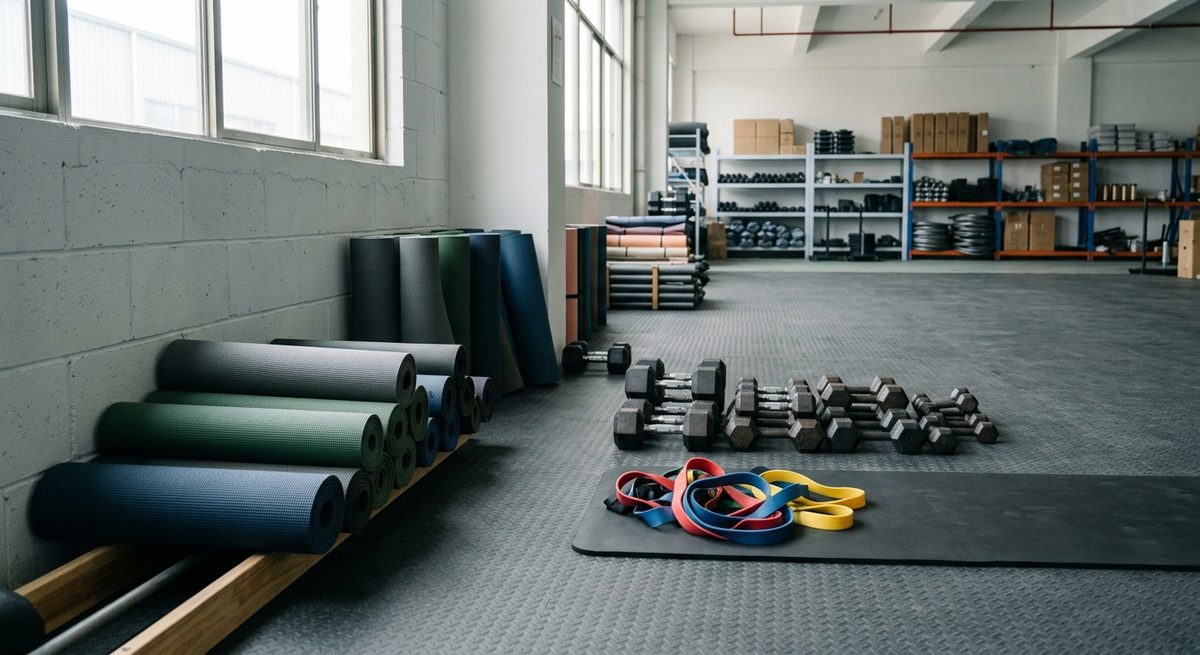
A natural rubber mat fresh off the curing line smells like the inside of a tyre shop. Sharp, sulphurous, impossible to miss. That smell is the first thing that hits you in a rubber mat plant, and it’s the reason good factories rest finished mats on open racks for days before boxing them. If your supplier skips that step to hit a deadline, the smell rides inside the carton all the way to your customer’s living room.
I open with that because it makes a bigger point. Yoga mats aren’t one product. They’re four or five different products that happen to share a shape, and each material comes out of a different kind of factory, usually in a different city. Learning that map is most of the homework if you want to import yoga mats from China at proper wholesale prices rather than reseller prices.
The material decides the city
TPE mats, the light two-tone ones that dominate the entry and mid market, come mostly out of foam plants in Dongguan and Shenzhen. These are chemical foam specialists. Many of them were making shoe midsole material or protective packaging foam long before yoga was a category, so the extrusion knowledge was already sitting on the shop floor when demand arrived.
PVC mats, the classic sticky studio mat, come from a wider spread of factories because PVC calendering is old, well understood technology across Guangdong. Natural rubber and PU-topped rubber mats sit at the premium end. They need curing presses, ventilation and patience, and fewer plants do them well. Cork mats are usually a lamination job: cork sheet from one supplier, glued onto a rubber or TPE base made by another.
So the town you buy from follows the material you pick. Choose TPE and you’ll probably end up in a Dongguan industrial park. Choose rubber and the shortlist changes completely.
Inside a foam line
A TPE line is quieter than you’d expect. Granules go in at one end, a warm continuous sheet comes out the other, and the loudest thing in the room is the cutting station punching mat shapes out of the ribbon. The two colour layers meet inside the die itself, which means a proper blue-over-grey mat was never two sheets glued together. It was born that way. Cheaper laminated versions delaminate at the corners after a few months of rolling and unrolling, so I ask every new supplier whether their two-tone mats are co-extruded or bonded, and then I test the edge with a thumbnail anyway.
Rubber plants are the opposite experience. Hot, loud, heavy with that cure smell. Presses hiss open, a worker peels the mat off the platen with gloves, and each piece has spent real minutes under heat and pressure. Daily output is lower than a foam line by a wide margin, and the unit price honestly reflects that.
Where Guangzhou fits into a mat order
Guangzhou itself doesn’t make many mats. It makes everything around them. Box printers, hang tag printers, webbing weavers for carry straps, sewing shops for mat bags, and the export teams who get the whole lot onto a vessel. Most mat orders we handle involve at least three factories in three different places, which surprises buyers who assumed one supplier would cover it all.
That’s why consolidation matters more in this category than people expect. We work as a shipping agent in Guangzhou, pulling mats out of Dongguan, bags out of a sewing town, printed boxes out of a local workshop, and loading everything as one shipment under one set of export documents.
Picking the right mat for your market
The honest way to choose is to start from your retail price and work backwards to a material, not the other way round.
- TPE around 6mm: light, cheap to ship, comfortable for beginners. The workhorse of online stores.
- PVC studio mats: heavier and very hard wearing, the pick for gyms that wash mats aggressively.
- Natural rubber with a PU top: the grippy premium mat serious practitioners request by name. Heavy, so freight eats into margin.
- Cork over rubber: photographs beautifully, needs careful lamination checks before you commit.
- Printed kids and travel mats: thin and foldable, sold on design more than performance.
If I were building a small brand this year, I’d skip the crowded 6mm TPE segment and open with a rubber PU mat plus a cork option. Fewer factories can match that quality bar, and the customer who buys one tends to add a strap and a bag in the same basket.
Checks worth doing before the balance payment
Weigh the mats. Density is the spec that quietly drops when a price has been pushed too hard, and a scale tells you in ten seconds what a spec sheet hides. Roll a sample tight, leave it overnight, and see if it lies flat by morning. Rub the print with a damp cloth. Pull at the corner of anything laminated. None of this needs a lab, and all of it catches real problems.
Beyond the kitchen table tests, we inspect at the plant before loading, check carton drops, and verify the airing time on rubber orders. Have a look at who we are if you’d like the background on how the team operates and how long we’ve been on the ground here.
Three things mat buyers keep asking us
Does the rubber smell actually go away?
Mostly, yes. A properly rested and aired natural rubber mat loses the sharp edge of that tyre shop note within days of unboxing. A mat that still smells strong weeks later usually left the factory too quickly. It’s a scheduling problem, not a chemistry problem, and a decent supplier will build airing time into the plan if you ask for it early.
What minimum should I expect for custom printed mats?
It varies by factory and technique. Laser engraved logos on rubber commonly start at a few hundred pieces per design, while full surface printing tends to need more because of setup waste. Stock mats with your own label and box can go lower. Treat any quoted figure as an opening position, not a wall.
Can mats, straps and bags ship as one order?
Yes, and they should. The pieces come from different factories, so somebody has to receive them, match quantities, and pack sets together properly. That’s exactly what a consolidation warehouse is for, and it spares you three separate international freight bills.
We’ve been sourcing in Guangdong since 2007, and our office sits in Guangzhou, about an hour from the foam plants that matter. If a mat line is on your roadmap, send a message through the contact form or on WhatsApp. And if you’d rather smell the rubber for yourself, fly over. We’ll pick you up at the airport and walk the factories with you, press by press.
Read next
The Defects We Catch in Tennis Dress Orders Before They Ship
See the defects inspectors catch before you import tennis dresses from China: fabric shading, seam cracks, print bleed,…
What You’re Really Paying For in a Bottle of Guangzhou Perfume
Break down the real unit cost before you import perfume from China: fragrance oil, glass, pumps, boxes, filling labour and…
From First Email to Full Container: A Storage Box Order, Step by Step
Follow one order from enquiry to loading day and see how to import plastic storage boxes from China: moulds, samples,…