
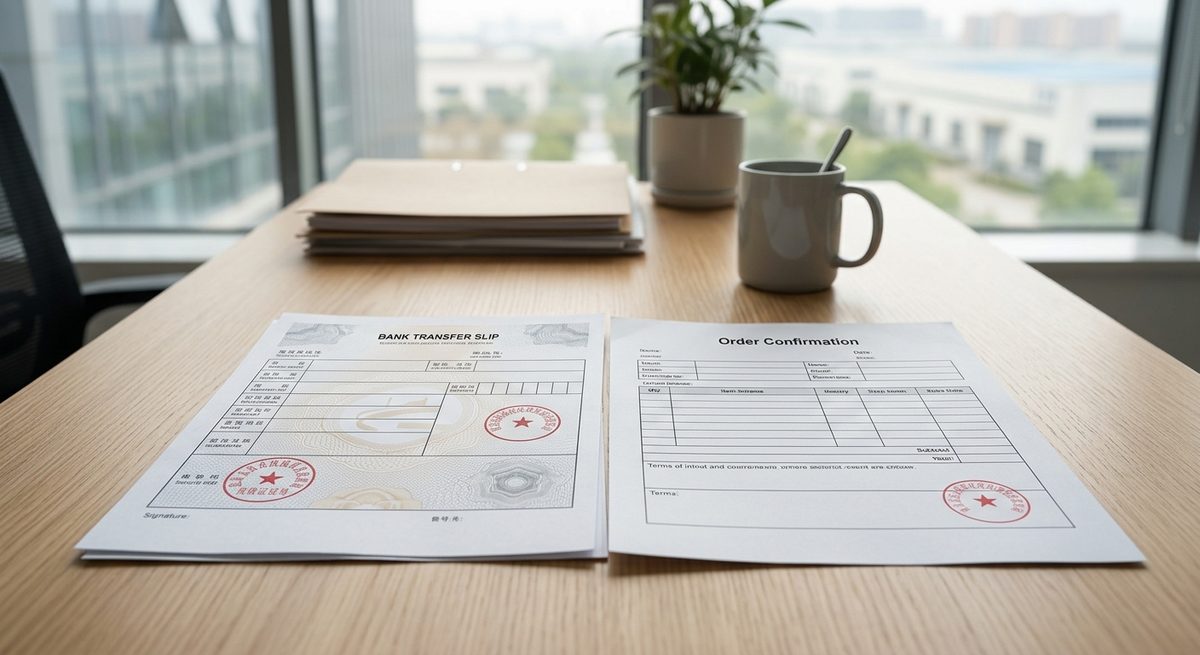
The moment most new importers remember isn’t the factory visit or the container arriving. It’s the evening a PDF lands in their inbox with the words “Proforma Invoice” at the top and a bank account in a city they’ve never heard of. That document is where a first order from a Chinese supplier stops being a conversation and starts being a commitment, and it deserves a slower read than most people give it.
The proforma invoice is the actual contract
Plenty of buyers think of the PI as a payment slip. It’s more than that. In practice it’s the document everyone points at later when something is disputed, so every detail you care about should be printed on it. Product name and model. Materials. Colours. The packaging spec. The incoterm, which decides who pays for what leg of the journey. The lead time, counted from receipt of deposit, not from the day you said yes.
We tell clients to treat the PI as a quiz. If you can’t find the carton marking, the sample reference or the balance payment trigger on the page, ask for a revised version before any money moves. A supplier who updates the PI cheerfully is telling you something good about how they’ll handle the rest of the order. One who says “don’t worry, we know what you want” is telling you something too.
Money moves, and then it goes quiet
The standard first-order structure is a deposit by bank transfer, commonly around thirty percent, with the balance before shipment. Once the deposit lands, most factories go silent. This unnerves first-time buyers badly. Nothing is wrong. The factory is buying materials, slotting your job into a production plan and, honestly, working on the orders that arrived before yours.
What the silence actually contains
Behind that silence there’s a sequence: raw materials ordered, then incoming material checks, then production setup, then the run itself, then packing. A thirty-day lead time might contain only eight or ten days of your product actually being made. The rest is queueing and materials. That’s why pushing a factory to “start tomorrow” rarely changes the delivery date. The bottleneck is usually a fabric mill in Foshan or a fittings shop two districts away, not the assembly line you spoke to.
Ask for two things during this stage. A photo of materials when they arrive, and a message when production actually starts. Reasonable factories agree without fuss. If you want more structure than that, a local team can check in person, and that’s part of What a China Agent Actually Does for a Wholesale Buyer.
The inspection window nobody plans for
There is a short gap between “production finished” and “goods sealed in cartons” when a proper quality check is easy and cheap. Miss it, and inspecting means cutting tape on packed export cartons, which factories hate and which slows everything down. First-time buyers miss it constantly because nobody told them the window existed.
Book the inspection when you pay the deposit, not when the factory says goods are ready. Put it in writing that the balance is paid after the check. Nothing rude about it. Chinese factories deal with this arrangement every week, and the ones worth working with expect it. When we walk a line in Dongguan, half the job is done before we open a single carton, because the state of the workshop floor and the rework table tells you plenty.
Shipping is a separate project, start it early
New importers often discover freight three days before goods are ready. Too late. Booking space, confirming documents and arranging the export declaration takes time, and the paperwork must match the PI exactly. A misspelled consignee name can hold a shipment longer than a production delay.
Decide early whether you’re shipping by sea or air, get the carton dimensions and gross weight from the factory while production runs, and have your forwarder quote from real numbers. Stand at a freight counter in Guangzhou on a Friday afternoon and you’ll see the queue of people who left it late, all holding the same slightly desperate expression and a folder of documents printed an hour ago.
Documents you should see before the ship sails
- Commercial invoice and packing list that match the PI line by line.
- Bill of lading or air waybill draft, checked before it’s issued.
- Any certificate your product category needs at destination, confirmed with your own customs broker.
What the first order is really for
Here’s an opinion we’ve formed over many years of hosting buyers: the first order’s job is to teach you, not to make you rich. Keep it small enough that a mistake stings instead of wounds. Use it to learn how this supplier communicates under pressure, how their quality holds when nobody’s watching and how honest their lead times are. A supplier who performs well on a modest first order is worth far more than a stranger quoting ten cents less.
And if you can, come see the place. Two days on the ground beats two months of messages. We wrote up how to do that efficiently in How to Visit Factories in Guangzhou Without Wasting Days, because a badly planned trip burns time you don’t have.
Things first-time buyers ask us
How long does a first order usually take, start to finish?
From deposit to goods on the water, thirty to sixty days is common for made-to-order products, though it varies a lot by category and season. Add the sailing time and customs clearance at your end. If someone promises a custom product in a week, ask what exactly they’re skipping.
Should I pay the balance before or after shipping?
Before shipment but after inspection is the healthiest pattern. The goods are finished, you’ve had them checked, and the factory is paid before it releases them. Everyone’s risk stays balanced, and it’s a structure factories here accept every day.
What’s the most common first-order mistake you see?
Vague specifications. The buyer says “good quality,” the factory hears “standard export grade,” and both sides are sincere. Write down measurements, materials, colours with codes, and packaging, and attach a signed sample. Almost every painful story we’ve been asked to fix started with a spec that lived in someone’s head.
If you’d rather not learn all this the expensive way, we’re based in Guangzhou and this is our daily work. We can vet the supplier, sit in the negotiation, check the goods before you pay the balance, and put you in front of the factory in person if you fly over. Reach us through the contact form or WhatsApp and tell us what you’re planning to order.
Read next
Top Guangzhou Wholesale Markets and What Each Sells
Guangzhou is famous for its wholesale markets. The city hosts over a thousand specialized markets covering more than forty…

Visiting Picture Frame and Wall Art Factories Around Guangzhou
Planning to import picture frames from China? What to check in person at Guangzhou framing factories, from mitre joints to…
Samples, Minimums and Money: Ordering Branded Gifts in China
Understand sampling, minimums and payment before you import promotional gifts from China: blank samples, plate fees,…