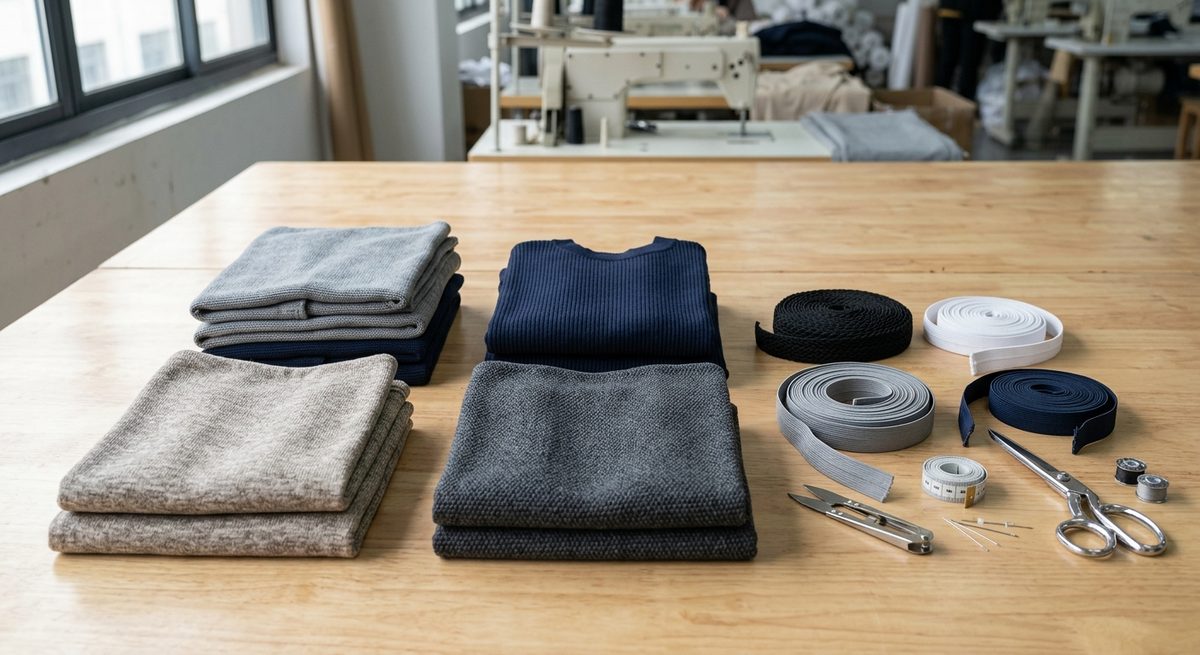
A buyer we hosted last spring landed in Guangzhou with a rail of swimsuits she’d collected on beach holidays, every one flagged with a sticky note. This cup shape. That strap. This lining, but softer. By Friday she had a sample plan for her own line, and honestly, that’s how most labels begin: not with a logo, with a pile of references. If you mean to import swimwear from China under your own name, the useful question isn’t where to find a factory. It’s how much of the product you want to make truly yours.
Three doors into private label
Factories generally offer three of them. Door one is stock design with your label: you pick from patterns the factory already runs, add your woven label and hangtag, and production moves quickly because the grading work was done years ago. Door two is modified stock. Same base pattern, but your colours, your print, maybe a higher leg line or a different strap. Door three is full custom, built from your tech pack, with new patterns, new grading and a much longer sampling road.
Each door trades speed for ownership. Stock moves fast but stays generic under the label. Full custom takes patience and a real fit process, and in return you get a product nobody else can order next season. My advice for a first collection? Start at door two. Grow into door three once sales prove the direction, not before.
Prints, and where sublimation earns its keep
Print is where a swim line finds its personality, and the fibre decides the method. Polyester blends take sublimation, which bonds dye into the fibre itself and allows photographic detail, small repeat runs and fast print changes. Nylon blends usually get dyed as solids, deeper in colour but with bigger dye lot minimums. Plenty of collections mix both: printed polyester for the statement pieces, solid nylon for the basics that pay the bills.
Visit a print house in production and you’ll know the sublimation calender by smell before you see it, a sweet scorched-paper note hanging over the machine while the transfer sheets peel away from the fabric. Ask for strike offs made on your actual production cloth, never on paper. The same artwork reads differently on a textured knit. Recycled stretch fabrics are a common request now and most Guangdong knitters will quote them, though sampling should confirm the hand feel and recovery match the standard version. One more discipline: a motif engineered to sit on a side seam raises cutting waste, and the price follows. Decide early whether the design really needs placement or whether an all over repeat does the job for less.
The parts you can’t see
Most of the engineering hides inside the suit. Moulded cups come from metal tooling: stock shapes cost nothing extra, while a proprietary cup means a tooling fee and a wait for the mould. Removable pads need pocket construction that survives washing. Rings, sliders and hooks should be checked for corrosion, because salt water and sunscreen chew through cheap plating fast.
Elastic is the quiet hero. Chlorine resistant rubber elastic keeps a bikini alive through a season of pool use; standard elastic just slowly gives up. Linings matter the same way, since a front lining that turns sheer when wet ends up in the reviews. Write all of it into the tech pack. A factory left to choose will choose whatever’s on the shelf, and you won’t find out until the goods are wet.
Xingcheng, Guangdong, and picking your ground
Swimwear production in China isn’t one place. Xingcheng, a coastal city in the northeast, is widely known as a swimwear cluster and handles high volume programmes with deep experience in basics. The knitters around Guangzhou and Foshan suit fashion led lines better: smaller runs, quicker sampling loops, and the print houses and trim markets sit close by.
Smaller labels often choose to import from Guangzhou for one practical reason. When the factory is an hour from your agent’s office, a fit problem found on Monday can be fixed on a new sample by Friday. Distance is measured in sampling rounds, not kilometres. Early stage brands burn through sampling rounds.
Artwork, labels and the box on the shelf
Once the product settles, the identity work starts. A swimsuit needs a care label with fibre content, a hygiene liner on every bottom, a hangtag that won’t wilt in humid transit, and packaging that photographs well for your store. Prepare artwork as vector files with outlined fonts, and check printed colours against a physical proof, never a screen.
This is also where design help pays for itself. Our brand building support covers logo and packaging design, label artwork and the web store side, so the product coming out of the factory and the brand presenting it grow up together instead of being stitched together at the end.
A short checklist keeps this stage honest:
- Vector artwork with outlined fonts for every printed item.
- Care label content confirmed for the destination market.
- Hygiene liners specified on all bottoms and one piece styles.
- A physical packaging proof approved before bulk printing.
- One master carton label format agreed with the factory.
Three things new swim labels ask us
What minimum order should I expect for custom printed bikinis?
It varies by factory and fabric, but custom prints commonly start at a few hundred pieces per print design, because the printer has a minimum metreage per artwork. Stock fabrics with your label can start lower. Treat any quoted minimum as an opening position, then talk about mixing sizes and colourways inside it.
Do I need to pay for a cup mould to start a line?
Usually not, and I’d argue against it early on. Factories hold libraries of stock cup shapes in standard sizes, and most first collections use them happily. A custom mould makes sense once a shape becomes central to your brand and the volumes justify the tooling fee. Sample with stock cups first. See if customers even notice.
How can I be sure prints survive chlorine and sunscreen?
Ask for colourfastness testing on the production fabric, including chlorinated water, sea water and perspiration, and rub a sunscreen sample on a swatch yourself. Sublimated polyester generally holds up well, but every fabric and dye lot pairing deserves its own check before bulk.
We’re a sourcing team on the ground in Guangzhou, working with swim and knit factories across Guangdong since 2007. Want to import swimwear from China under your own label? Send us a note through the contact form or WhatsApp. We’ll meet you at the airport, walk the sample rooms with you and take you into the factories in person, interpreter included.
Read next
Sourcing Yoga Clothing and Studio Equipment in Guangzhou: A Practical Guide to Quality, Manufacturing and Importing
A practical guide for yoga studios and brands sourcing clothing, mats and accessories through Guangzhou, with advice on…
What Drives the Price of a Cap? Cost Anatomy from Guangzhou Factories
Understand the real unit cost before you import caps from China: fabric, embroidery stitch counts, tooling and freight,…
Inside a Footwear Factory Visit: Checking Sneaker Suppliers in Person
Planning to import shoes from China? Here is what to check in person on the factory floor in Dongguan and Jinjiang, from…