
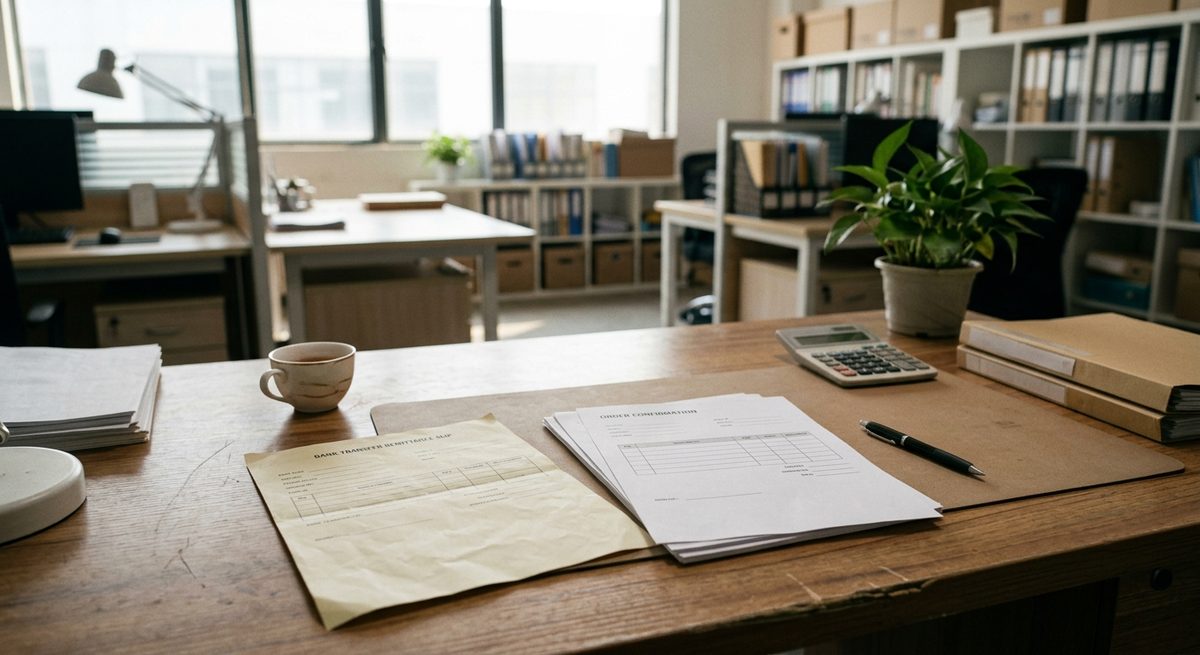
The transfer confirmation comes back from your bank, and for a strange week or two your order exists only as a PDF and an act of faith. Wiring a deposit to a Chinese supplier for the first time does something to a buyer’s sleep. We know because our phone shows it: the messages arrive at 2 a.m. our time, always some version of “haven’t heard anything in six days, is this normal?” It almost always is. But “normal” deserves a proper description rather than a pat on the shoulder, so here’s what your money is actually doing during those quiet weeks while your inbox stays stubbornly empty.
Week one: your order becomes a purchasing list
The first thing a factory does with your deposit isn’t production. It’s shopping. Your order explodes into a bill of materials, and the purchasing clerk starts ordering: fabric from a mill two cities over, zips from Guangdong’s hardware belt, cartons from a converter down the road. For many products the materials take longer to assemble than the product does. A garment order might wait two weeks for dyed fabric and then sew up in four days.
A word about the transfer itself, since it’s the step people rush. The beneficiary name on your bank form should match the company name on the contract, letter for letter, and if the account details ever change by email at the last minute, stop and verify by phone or video before sending anything. Two minutes of checking, every time. It’s the cheapest insurance in this whole business.
This is why the silence happens. There’s genuinely nothing photogenic to report. It’s also why your first checkpoint shouldn’t be “has production started?” but “have materials been ordered, and when do they arrive?” A factory that can answer with dates has a plan. One that answers “soon, soon” may not have scheduled you at all, which brings us to the uncomfortable part.
The queue nobody mentions
Your lead time includes an invisible item: the queue. A factory quoting 35 days isn’t planning 35 days of work on your goods. It’s planning perhaps ten, positioned behind orders that arrived before yours. This is fine and universal. What varies is honesty about the queue’s length, and season decides everything. A deposit paid in a quiet month can jump the line. One paid in the pre-holiday crush, especially the weeks before Chinese New Year, joins a long one, and the trade-fair cycle piles on extra load around the autumn, as anyone who has read What is the Canton Fair in Guangzhou will recognise.
Checkpoints worth writing into the order
- Materials arrival, confirmed with photos of the actual material, ideally showing your colour or print.
- Production start, with a line photo or short video, not a stock image.
- Mid-production, around the halfway mark, where drift is still correctable.
- Completion, before packing, which is when an inspection belongs.
Four messages across a month. No serious factory refuses this, and asking at deposit time costs you nothing. Asking in week three reads as panic, and panic gets managed rather than answered.
What the photos can and can’t tell you
Progress photos are reassurance, but read them a little coldly. A photo shows that something is being made, at some time, somewhere. It doesn’t prove quantity, and it doesn’t show the hundred units behind the photographed one. We’ve walked into workshops where the daylight through one window told us the “yesterday” photo was taken weeks ago, the shadows all wrong for the season. Rare, but it happens.
The stronger version of a checkpoint is a person. A mid-production visit, even a brief one, verifies what photos only suggest: real quantities, your actual material on the cutting tables, the pace of the line. This is bread-and-butter work for a local team, and it’s a fraction of the order’s value. The broader shape of that role is described in What a China Agent Actually Does for a Wholesale Buyer.
The endgame: inspection, balance, release
The order’s most important sequence happens at the end, and the sequence itself is the protection. Goods finished. Inspection done, against the sealed sample, while cartons are still open. Problems fixed, if found. Then, and only then, the balance payment. Then the goods release to your forwarder.
Hold that order of operations and both sides stay safe. The factory holds the goods until it’s paid in full. You hold the balance until the goods pass. Neither side has to trust blindly, which is exactly how commerce between strangers should be built. Pay the balance early, out of friendliness or scheduling pressure, and you’ve converted your strongest position into a polite request.
The paperwork running alongside
While the line runs, the documents should too. Confirm the shipping marks, the packing list format, and any certificates your product needs at destination, checked with your own customs broker rather than assumed. Document errors discovered after goods are sealed cost days. The same errors caught during production cost one email.
The three questions behind every 2 a.m. message
How much silence is too much?
Past an agreed checkpoint date with no response for several working days, escalate calmly: a call rather than a message, and a request for a specific photo. Complete silence for two weeks around a promised milestone deserves someone at the factory gate. Nine times out of ten it’s disorganisation, not disaster, but you want to know which one you’re in.
Can I change the order after paying the deposit?
Before materials are bought, often yes, sometimes free. After materials, every change costs money and days, priced fairly or not depending on the factory’s mood. After production starts, changes mean rework or a supplementary order. Ask “where exactly are you in the process?” before requesting anything, and get revised terms in writing.
What if inspection fails and the factory says it’s fine?
This is why the balance matters. With payment still in your hands the conversation stays practical: rework, replacement, or an agreed discount that matches the defect’s real cost. Keep the tone commercial, keep the sealed sample on the table, and most factories meet you somewhere reasonable. It’s a negotiation, and you’re holding the strong end.
Between deposit and delivery is where our clients sleep best, because our office is an hour from most of their factories, from the Baiyun garment district out to Dongguan, and a checkpoint visit is a morning’s drive rather than an international flight. If you’ve just paid a deposit and the silence is getting loud, or you’d like the checkpoints handled before the next order, message us through the contact form or WhatsApp.
Read next
How to Brief a Chinese Supplier So You Get What You Pictured
Learn to brief a Chinese supplier properly: reference samples, tolerances, packaging and the golden sample, from a sourcing…
What Buyers Get Wrong About Prices in Guangzhou
Prices in Guangzhou confuse first-time buyers: market stalls, factory tiers and quotes that move. A local sourcing team…