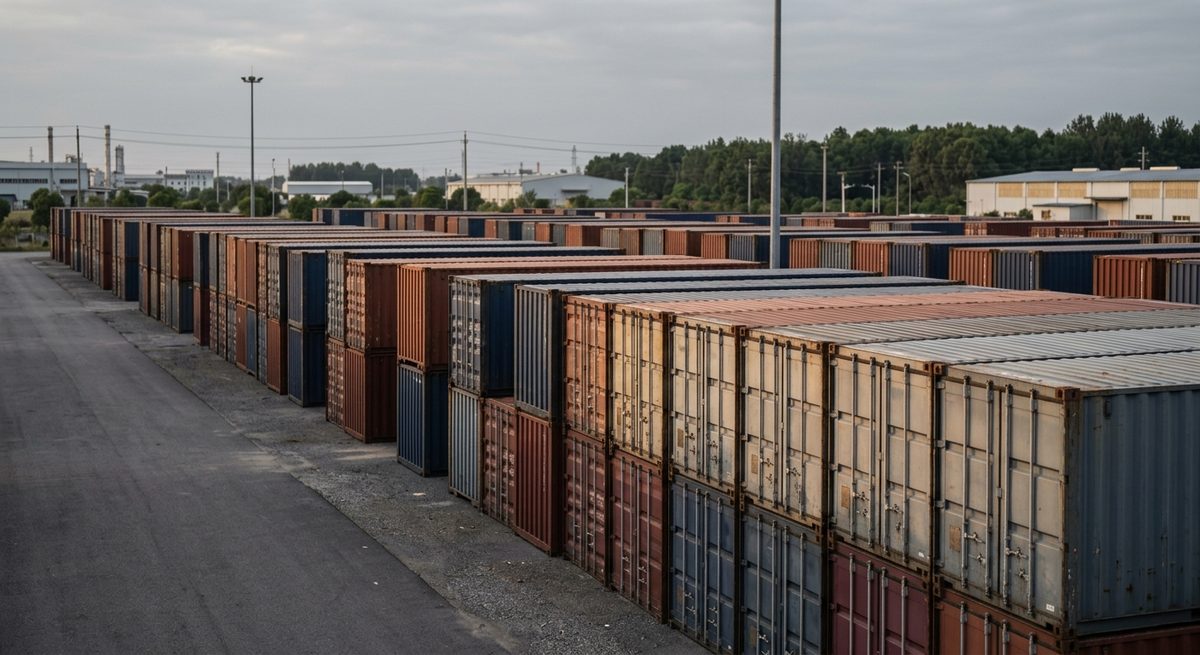
Stand at the gate complex outside Nansha port around dusk and you’ll see a line of container trucks stretching back further than seems reasonable, engines off, half the drivers asleep across their cabs with the doors open for air. Every one of those boxes is “finished” as far as some buyer abroad is concerned. Finished and not moving. The factory sent its happy photo of loaded cartons days ago, and yet the tracking still says nothing. This gap between goods ready and goods gone is where most schedules die, and almost none of it is anyone lying to you. It’s just a chain of small waits that nobody warned you to add up.
Goods ready is not gate in
The phrase “goods ready” starts a sequence, it doesn’t end one. A booking has to be confirmed against an actual vessel, an empty container collected, a truck scheduled, and export clearance filed. Each step normally takes a day or two, and they mostly happen in order, not in parallel. So even a smooth shipment spends the better part of a week between the factory floor and the ship’s deck. Buyers who plan from the sailing date backwards, rather than from “goods ready” forwards, stop being surprised.
Lined up, the ordinary sequence looks like this:
- Booking confirmed against a named vessel and sailing date.
- Empty container collected from the depot and trucked to the factory.
- Loading, sealing and the drive to the port.
- Export clearance filed and released.
- Container gated in before the cut-off, then loaded aboard.
Then there are cut-offs. Miss the container yard’s deadline by three hours and you haven’t lost three hours. You’ve lost a week, because the next sailing is the schedule now. This single mechanism explains more shipping delays from China than any dramatic cause, and it’s why we treat a late afternoon truck breakdown as an emergency rather than an inconvenience.
Paperwork mismatches, the quiet week-eater
Documents move the goods. When a weight on the packing list disagrees with the verified weight, or an invoice value looks inconsistent with the product description, or the consignee name is spelled two ways across the set, someone stops the file and asks questions. Fixing it might take a phone call. It might take three days of a factory clerk, a forwarder and a buyer in three time zones passing PDFs in a circle.
The fix is boring and it works
One person owns the document set. All names, values and weights are cross checked against each other before anything is filed. We do this as a matter of routine, and the difference is visible: shipments with clean, consistent files barely ever stall on the export side. It’s clerical work. It’s also the highest return hour anyone spends on a shipment.
Inspection, congestion and other things you can’t control
A share of export containers get pulled for physical inspection. It’s routine, it’s random from the shipper’s point of view, and it can add days. Nothing was wrong with any of our clients’ cargo the last several times it happened. The box simply waited its turn, got opened, got resealed and moved on. Budget for the possibility instead of treating it as a crisis.
Weather closes ports for days at a time in typhoon season, roughly summer through early autumn on this coast. Vessels arrive late and “roll” bookings to the next sailing. Transshipment hubs miss connections exactly the way airline passengers do. None of this is anybody’s fault, and none of it responds to angry emails. What it responds to is buffer.
The buffer rule we give clients
Take the transit time your forwarder quotes and add ten days before you promise anything to your own customers. In busy season, add more. If everything runs clean you’re early, which costs you nothing. The reverse arrangement costs you customers.
The destination leg belongs to you
Some of the slowest miles are the last ones. Import clearance waits on documents only you or your broker can provide. A missing certificate, an unpaid fee, an unanswered query from your own customs authority, and the container sits at your port racking up storage charges that make Chinese warehouse rent look quaint. Appoint your customs broker before the goods sail, send them the full document set the same week, and answer their questions the day they ask. The buyers who do this collect their goods days ahead of the ones who start the paperwork when the ship docks.
What a good agent actually changes here
An agent can’t make a vessel sail on time. What we do is compress the parts that respond to attention: booking early, chasing the factory for true ready dates instead of optimistic ones, checking documents against each other before filing, and telling you the moment a date slips instead of hoping it recovers. If you’re weighing whether that’s worth paying for, What a China Agent Actually Does for a Wholesale Buyer lays the role out honestly, including the parts you can do yourself.
And whoever you appoint, check them the way you’d check a factory. How to Verify a Reliable Agent in Guangzhou covers the licence, the references and the office visit. An agent who can’t show you how they track a shipment isn’t tracking it.
Quick answers on late shipments
My factory says goods shipped but tracking shows nothing. Who’s wrong?
Probably neither. “Shipped” from a factory often means “left our dock”. The container may be waiting at the yard for its vessel, and tracking only wakes up once the box is gated in and loaded. Ask for the booking number and check with the forwarder directly rather than relaying questions through the factory.
Is airfreight the answer when a sea shipment slips?
Sometimes, for a slice of the order. Flying the whole load usually costs more than the delay does. Fly the items your customers are actually waiting for and let the rest float. Do the sums per product, not per shipment.
Do delays get better once I’ve shipped a few times?
Noticeably. Your documents become templates, your forwarder knows your cargo, your factories learn your real deadlines, and your own buffer stops being guesswork. The chain doesn’t get faster. You get better at riding it.
We watch this gate to vessel gap every week for clients, from our office here in Guangzhou, and we’re glad to look at your last late shipment and show you exactly where the days went. Message us through the site or WhatsApp, and if you visit, we’ll drive you past that truck queue at Nansha so the schedule makes sense forever after.
Read next

Holding Back the Balance Payment: When It Works
The 30/70 structure for paying Chinese suppliers only protects you if the balance waits for inspection. When holding back…
Top Guangzhou Wholesale Markets and What Each Sells
Guangzhou is famous for its wholesale markets. The city hosts over a thousand specialized markets covering more than forty…
What Buyers Get Wrong About Prices in Guangzhou
Prices in Guangzhou confuse first-time buyers: market stalls, factory tiers and quotes that move. A local sourcing team…