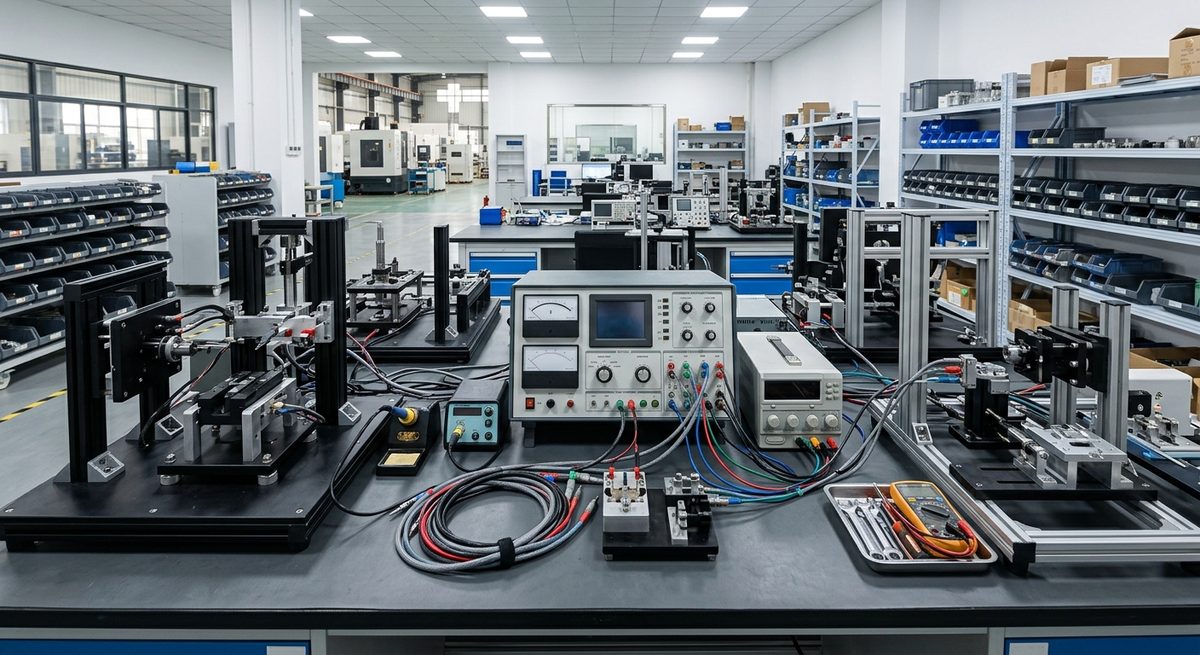
The worst spec I’ve ever seen contained the phrase “stitching must be of good quality”. Four hundred duffel bags later, that sentence cost a week of arguments, because the factory’s good and the buyer’s good disagreed about thread tails, and both sides could point at the contract and be right. The best spec I’ve seen was for a cheap silicone spatula, and it included a photo of a burr with a caption: “this size, reject. Smaller, accept.” One line. Zero arguments across six orders. The difference between those two documents is the whole craft of setting quality standards for Chinese suppliers, and it has almost nothing to do with being strict.
A standard is a measurement, or it’s a mood
Factories don’t fail vague standards. They interpret them, in whatever direction their process already leans. So the first job is converting every adjective in your head into something a line worker in Shunde can check in four seconds.
- “Sturdy” becomes a load: holds this many kilograms for this many minutes.
- “Matches our brand colour” becomes a Pantone reference and a tolerance, checked under a stated light source.
- “Smooth finish” becomes a photographed boundary: this texture passes, this one fails.
- “Accurate dimensions” becomes a drawing with tolerances on the dimensions that matter, and looser ones where nobody cares.
That last clause is doing real work. A drawing with tight tolerance on every line reads as a drawing by someone who didn’t decide what matters, and factories price it, or quietly ignore it, accordingly.
Write the defect list with the factory, not at them
Here’s the step most buyers skip. They write a defect classification alone, in their own office, and email it as an attachment to the purchase order. Legally fine. Practically weak, because the people who have to hit the standard never examined it.
We do it as a meeting, ideally at the factory with production present, not just sales. Walk through the list: what counts as critical, major, minor. Put real rejected units on the table. Watch where the factory pushes back, because the pushback is data. When a production manager in Foshan says that scratch limit will fail thirty percent of a normal run, you’ve just learned what their process actually produces, months before an inspection would have told you.
Then you choose, with open eyes. Tighten the process, at a price. Loosen the limit, knowingly. Or find another factory whose normal is your standard. All three are respectable outcomes. Discovering the mismatch at final inspection is the only shameful one.
Boundary samples end arguments before they start
The pass line needs a physical edge
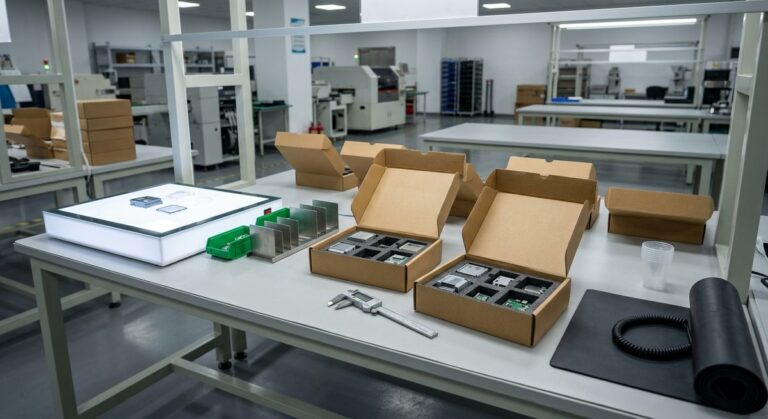
A golden sample shows perfection, and perfection is the easy part. Disputes live at the boundary, the scuff that might be acceptable, the shade slightly off. So alongside the approved sample, we build boundary samples: real units marked “worst acceptable” and “reject”, signed by both sides. When inspection day comes, the question stops being an aesthetic debate and becomes physical comparison. Hold the unit next to the boundary. Better or worse? Done.
Where the comparison happens matters
Colour work needs controlled light. Any serious factory here has a light box, a grey metal booth with switchable tubes, and the D65 tube is the one your colour agreement should name. I’ve watched a shade dispute evaporate when the parts moved from the office window to the booth: under afternoon Guangdong sun the two greens looked like cousins, under D65 they matched. Name the light in the spec or the window wins.
Refresh the physical standard
Samples age. Silicone yellows, textiles fade, coatings dull. A boundary sample two years old has quietly become a different standard. Date them, and replace them on a schedule, with both signatures again.
Calibrate the bar to the product, and admit it
Now the opinion part. Buyers who demand watchmaking tolerances on a two-dollar item aren’t protecting quality, they’re breeding dishonesty. The factory can’t hit the number at the price, so the number becomes decoration, and once one line of your spec is decoration, the factory decides which other lines are too. A standard only protects you while every line of it is real.
So set the bar where your customer actually lives. A promotional tote and a surgical mask deserve different paperwork, different limits and different testing depth, and the regulated end of that range has its own rules that start long before the defect list, as we laid out in How to Order Medical & PPE Products from Guangzhou Factories. Meanwhile some categories punish looseness brutally: a cosmetic flaw on a phone charger is minor, a wiring flaw is not, and knowing which failures are which is half the game in that category, one we mapped in Electronics in Guangzhou: QC Risks and Golden Rules.
The sign-off that makes it stick
Paper the agreement properly. The spec document gets a version number and a date. The defect list, the boundary samples, the sampling plan and the acceptance limits all get named in the purchase contract, so a failed inspection has contractual teeth instead of moral ones. Both sides keep the signed samples. Any change later, and there will be changes, produces a new version number, never an edit in a chat thread.
It sounds bureaucratic. It’s the opposite. Every hour spent here is an argument that never happens, and the factories respect it, because a buyer with boundary samples and version numbers is a buyer whose inspections mean something.
Questions that come up in these meetings
What if the factory just agrees to everything instantly?
Worry. Instant agreement usually means the standard wasn’t read as a commitment, it was read as a formality on the way to a deposit. We trust the meetings with friction, the ones where production argues over two limits and wins one. That’s a factory planning to actually live with the document.
How strict should my first order’s standard be?
Exactly as strict as your market requires, no stricter, but enforced completely. A modest standard enforced every time beats an impressive one waived under schedule pressure. Factories remember which kind of buyer you are by order two.
Who should own the standard over time?
One named person on your side owns the document and its versions. Factories change staff, and so will you, and the standard has to outlive everyone’s memory. When the file is the authority, a new production manager inherits your bar intact. When memory is the authority, your bar resets with every staff change.
We sit in these standard-setting meetings around Guangzhou, Foshan and Shunde most weeks, usually as the side holding the boundary samples. If you’d like your next spec to end arguments instead of starting them, send it over through the contact form or WhatsApp and we’ll tell you honestly which lines a factory will respect.
Read next
Inspecting Before, During and After Production
Quality control services in China come in three stages, and most buyers only need one or two. A Guangzhou team explains what…

What an Inspection Report Should Tell You, and Often Does Not
A good inspection report China side proves how the goods were checked, not just that they passed. Here's what to demand in…