
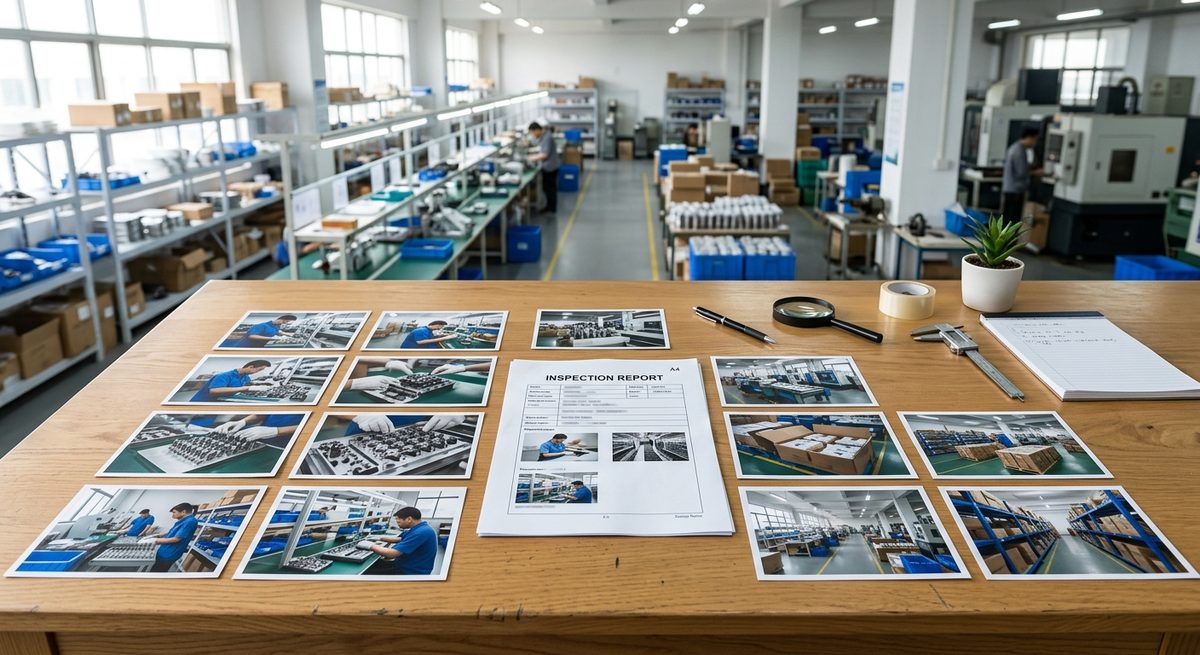
Two reports were open on my desk last week, both for the same client, both for kettles. One ran six pages, every line a green PASS, every photo shot on a clean table under white light. The other ran thirty pages and included a photograph of a dent, a measurement that sat at the edge of tolerance, and a note that carton 47 had been repacked after checking. The client asked why she should trust the messy one. Because mess is what checking looks like. A perfect report describes a perfect inspection or a lazy one, and after enough years reading an inspection report China factories have hosted, you learn the two are hard to tell apart from the outside. So you make the report prove itself.
The report has to prove the sampling happened
Start at the beginning: which cartons were opened? A real report names them. Carton numbers pulled at random from the full lot, listed, with a photo of each selected carton showing its shipping mark before it was cut open. That photo matters more than most buyers realise. It ties the sample to the pile.
If the report doesn’t say how many units were drawn, from how many cartons, against which sampling standard, then whatever else it says, you don’t know what was checked. You know what was written. Those aren’t the same thing. The arithmetic behind sample sizes isn’t mysterious, we walked through it in AQL Explained: Sampling Plans for Pre-Shipment Inspections, and any report worth its fee states the plan on page one.
One more tell. Look at the floor in the photos. Our inspectors work on a spread tarp or the factory’s own packing tables, surrounded by opened cartons, kraft paper, and whatever chaos the day produced. Goods photographed floating on a spotless white background were photographed somewhere else, or at some other time, and either way you should ask.
Measurements beat verdicts
The single biggest upgrade you can demand: numbers instead of judgements.
- Not “dimensions OK” but the measured value, the spec value, and the tolerance, unit by sampled unit.
- Not “colour matches” but which reference it was compared against, under what light.
- Not “function OK” but which tests ran, for how long, and what happened.
- Not “packaging acceptable” but the measured carton weight and the drop height if a drop test was agreed.
Verdicts hide drift. A handle length can be inside tolerance and creeping toward its limit for three orders running, and “PASS, PASS, PASS” will never show you the creep. Three recorded numbers will. When a client reorders, we put the old measurements beside the new ones, and that single column comparison has caught more slow-motion problems than any dramatic factory-floor discovery.
Defects need names, counts and classes
A good report sorts every defect found into critical, major or minor, using definitions agreed before the inspection, and then counts them against the limits you set. Each defect gets its own photo with something for scale. A blurry group shot captioned “some scratches found” is not information, it’s an alibi.
The distribution matters as much as the total
Eight minor scratches spread across eight units is a finishing process running rough. Eight scratches on one unit is a dropped carton. Same count, different problem, different fix. The report should let you see which one you have, which means defects mapped to unit and carton, not just totalled.
Ask where the borderline calls went
Every inspection produces judgement calls, the scuff that might be a major, the gap that might matter. We tell our inspectors to photograph borderline cases and classify them severe. A factory-friendly inspector classifies them lenient, and the report still looks complete. The photos are your appeal court. No borderline photos in a report usually means no borderline calls were recorded, and that’s not because none existed.
The honest section nobody includes
Here’s what separates the reports we respect from the rest: a section on what was not checked. Every inspection has limits. A one-day visit can’t verify plating thickness, battery cycle life, or whether the insulation survives a year of use. Those need lab work, which is a different tool for a different question, the territory we covered in Lab Testing 101: CE, UKCA, FCC, RoHS & REACH.
A report that says “material composition: not verifiable on site, certificate attached, recommend lab confirmation for first order” is telling you the truth about its own edges. A report with no edges is claiming the inspector tested everything in eight hours. Nobody does. Distrust completeness.
Reading one in ten minutes
You won’t read thirty pages per shipment forever, so here’s our short routine. Check the sampling plan and the pulled carton numbers first. Then jump to the defect table and compare counts against your limits. Then flip photos only for the defects classed major or critical. Then read the remarks field at the end, slowly, because inspectors bury their doubts there in careful language. “Factory repacked several cartons during inspection” is a sentence you should never skim past. Ten minutes. Do it before the balance payment, never after. The order of those two events is the entire point of the exercise.
What buyers ask us about reports
The factory offers me their own QC report free. Is it worthless?
Not worthless, just unverified. Good factories run real internal QC and their data can be useful context. But the person signing it answers to the factory’s boss, not to you. Use it as background. Pay someone who answers to you for the report that releases your money.
What should I specify before the inspection so the report is useful?
Three things: your defect classification list with photo examples, the sampling level you want, and the specific measurements and function tests that matter for your product. Send the approved sample or make sure the factory’s sealed one is available for comparison. An inspector without your standard can only apply a generic one.
The report failed the lot. Now what?
First, don’t panic, a failed inspection with the balance unpaid is the system working. Agree the rework with the factory, in writing, with a date. Then re-inspect the reworked lot, ideally the same inspector, and only the defects that failed plus a fresh random draw. Pay when the second report clears. Most factories handle this professionally. It’s routine for them too.
Our team inspects around Guangzhou, Foshan, Dongguan and beyond, and we’ll happily send you a sample of our own report format before you commit to anything, so you can judge the pages the way this article suggests. Contact form or WhatsApp, and if you’re ever in Guangzhou, come watch an inspection happen. Buyers who’ve seen one read reports differently forever.
Read next
What an Agent Sees on a Factory Floor That You Would Miss
On a factory visit China rewards trained eyes. A Guangzhou agent lists what we check on the floor, from rework corners to…