
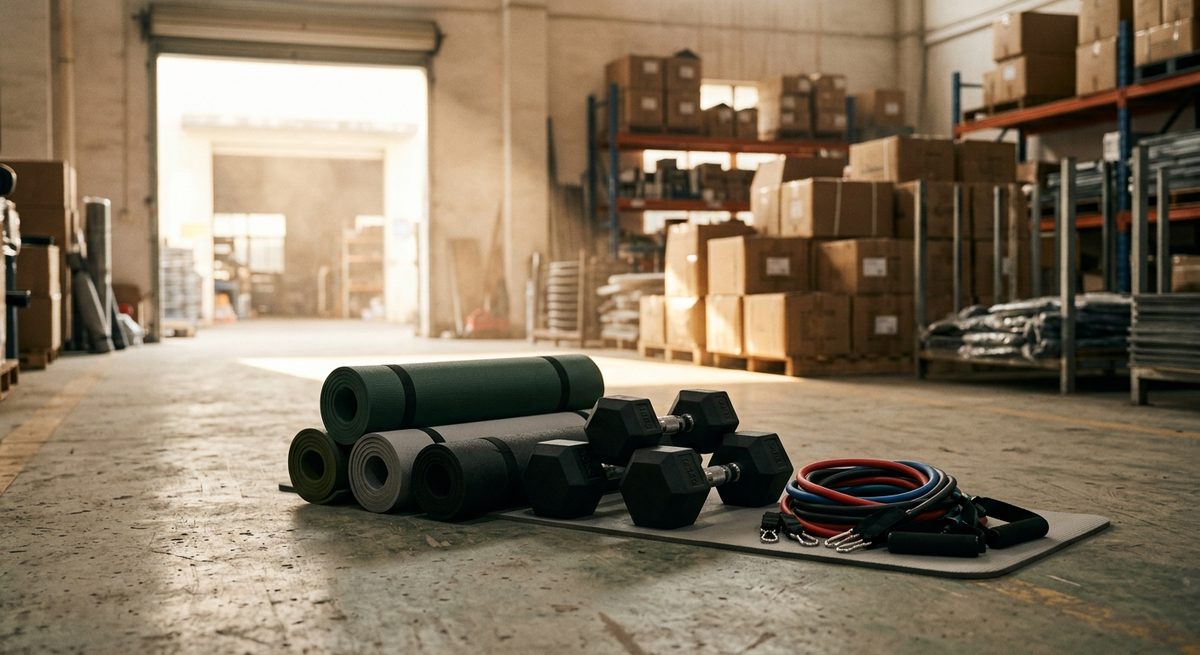
You can hear a weight plate factory before you see it. The tumbling drums that knock casting sand off fresh iron run all day, a low rolling thunder that carries across the yard. It’s a useful sound. It tells you the plant casts its own iron rather than buying blanks from someone else, and for anyone putting a brand name on gym gear, that difference decides what you can customise and what you can’t.
Plenty of buyers contact us wanting to import fitness equipment from China with their logo on it, and the first real conversation is about where that logo can physically live. Cast into the iron? Moulded into rubber? Etched into a bar? Or stuck on as a label that peels off in a sweaty garage within a year? The answer changes product by product, and it drives the budget more than most people expect.
Where a logo can actually live
Rubber bumper plates are the friendliest product to brand. The logo sits in the mould as a brass insert, so every plate comes out with your name raised in the rubber itself. One thing I check on every plate order is how worn that insert is. A tired insert prints a soft, blurry logo, and no factory volunteers that information unless you raise it first.
Barbells and racks take laser etching or silk screen printing on the steel. Bench upholstery takes embroidery, which looks far more expensive than it costs. Neoprene dumbbells can be moulded or pad printed. Resistance bands and skipping ropes usually get screen print on the product and rely on packaging to do the heavy lifting. Stickers exist too. Don’t use them.
Tooling, or paying for steel to shape steel
Anything moulded means a mould, and moulds cost money before a single piece is produced. Charges vary widely by size, cavity count and complexity, so I won’t pretend there’s a standard figure. What is fairly standard is the negotiation around it: factories commonly offer to offset tooling costs against a volume commitment, or refund them in stages as reorders land. Get the ownership question in writing. Whose mould is it, and can other customers run product from it? We’ve sat through that exact conversation in a lot of meeting rooms, and having it early is always cheaper than having it late.
The steel side of a range, racks, benches, cable stations, comes out of fabrication clusters in Guangdong and further north around Nantong, where tube laser cutters and welding cells run in long bays. Plate casting and rubber moulding happen elsewhere again. Your brand will span several cities whether you planned that or not.
Colour is harder than it sounds
Powder coating sounds simple: pick a RAL code, done. In practice the same code sprayed in two plants at different gloss levels won’t look like a match on a shop floor, and matte finishes show the gap worst. Rubber has its own trap. Black hides flow marks and filler, while coloured bumpers show every swirl in the material. Ask each factory for a coated sample chip or a moulded colour plaque before bulk, then keep the approved piece in a drawer as your reference. Arguments end quickly when the reference exists.
Walk a coating line once and you’ll understand the variables. Parts hang from a moving overhead conveyor, get sprayed, then roll through the curing oven and come off the line still warm to the touch. Oven temperature, powder batch and hanging density all nudge the final colour.
Packaging that survives thirty kilos
Branding dies at the doorstep if the box arrives crushed. Heavy fitness goods need double or triple wall cartons, moulded foam or honeycomb board corners, and an honest drop test before you approve anything. Keep the artwork simple. One colour printed on kraft looks deliberate and hides scuffs, while a glossy full colour box shows every scrape from six weeks of handling.
Think past the carton, too. The assembly manual, the hardware bag labelling, a QR code linking to a fitting video: these are branding surfaces that cost almost nothing and shape how the product review reads.
Building a range without owning a factory
No single plant makes plates, bars, benches, bands and flooring well. A home gym brand is really an assembly job across four or five factories, and the hard part is making the colour, logo quality and packaging feel consistent across all of them. That coordination is the core of our brand building support, which runs from product selection through packaging design to the store you sell on.
The decisions also go faster in person. Put three factories’ sample plates side by side on a table and the differences in rubber smell, bounce and logo sharpness are obvious in minutes. You can meet us in China and visit the factories yourself; we handle the pickup, the hotel, the interpreter and the schedule.
What matters most in this category
- Confirm logo method and mould ownership before you talk price.
- Approve physical colour references, never a screen photo.
- Drop test the packed carton, loaded, from real handling height.
- Match knurling and finish samples on bars, since feel sells.
- Plan the whole range’s look at the start, even if you launch with two products.
That last point is my strongest opinion here. Brands that design product three to match product one look intentional. Brands that pick whatever each factory had in stock look like a warehouse clearance, and customers sense it.
Questions from buyers who are branding gym gear
How much should I budget for moulds?
Honestly, it depends on the product and how many cavities the mould needs, and quotes differ a lot between plants. Simple debossing on an existing mould can be cheap, while a new housing for an adjustable dumbbell is serious tooling. Ask every candidate factory to quote tooling separately from unit price, then negotiate the offset terms.
Can products from different factories share one container?
Yes. That’s normal practice for this category. Everything routes through a consolidation warehouse, gets checked and relabelled if needed, and loads as one shipment. You pay one freight bill instead of four and the paperwork stays clean.
Will factories take a small first order from a new brand?
Some will, some won’t, and the answer often depends on whether your first order looks like the start of a relationship. A modest trial order with a clear plan for reorders gets a warmer reception than a one-off request for the moon. We’ll tell you frankly which plants are worth approaching at your volume.
Our team is based in Guangzhou and spends real weeks each year inside these fabrication shops and moulding plants. If you’re sketching out a home gym line, get in touch through the site or on WhatsApp, and when you’re ready, come over. Watching your first sample plate come out of the mould is worth the flight.
Read next
Yoga Mat Country: Mapping the Pearl River Delta’s Foam and Rubber Plants
Where yoga mat production really happens, from Dongguan foam plants to rubber curing lines, and how to import yoga mats from…
The Defects We Catch in Tennis Dress Orders Before They Ship
See the defects inspectors catch before you import tennis dresses from China: fabric shading, seam cracks, print bleed,…
What You’re Really Paying For in a Bottle of Guangzhou Perfume
Break down the real unit cost before you import perfume from China: fragrance oil, glass, pumps, boxes, filling labour and…