Drawings, materials and approved samples
Custom Rubber and Plastic Component Sourcing in China
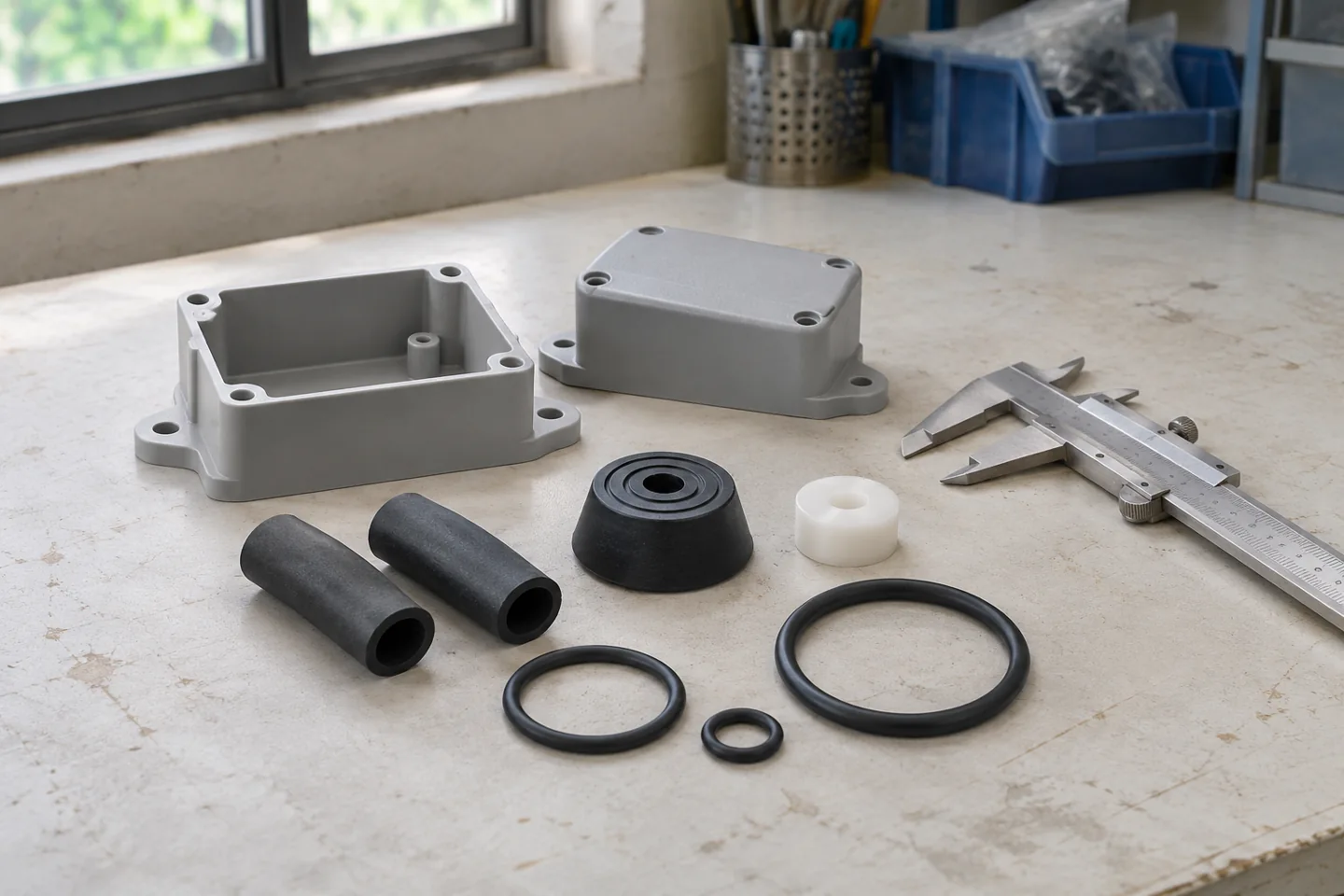
A small moulded part can hold up a much larger order. The shape may look simple, but material choice, fit and consistency still need careful attention. Our Guangzhou team coordinates custom rubber and plastic component sourcing for buyers working from approved drawings or a clear product brief. We help compare manufacturers, clarify quotations, organise samples and follow agreed production checks. The assignment is built around your application, quantities and technical approval process. Factories are selected for the work they can do, with visits and specialist evaluation agreed as part of the scope.
Describe the job the component has to do
Send the drawing and explain where the component sits in the finished product. A rubber foot, gasket, protective sleeve, plastic housing or moulded cover may need to meet several requirements at once. Identify the surfaces it touches, the way it is assembled and any movement or exposure that your technical team considers relevant.
If you only have a sample, explain which features must be retained and which may change. Ask the supplier what information is still needed to quote accurately. We can organise those questions and supplier discussions, while the design and application decisions stay with the person you appoint to approve them.
Name the material, not just the colour
“Black rubber” or “strong plastic” leaves too much open. Provide the specified material grade and any requirements for hardness, finish, colour or composition. If you need the manufacturer to propose a material, give them the application details and have the proposal reviewed before treating it as an approved specification.
Ask which material the quotation and sample use, where it comes from and what supporting records are available. A supplier may offer more than one material at different prices. Keep those options separate in the comparison. Any proposed change during production should come back for written approval, including a change that leaves the part looking the same.
Make the drawing useful for inspection
Mark the drawing revision and the dimensions that matter to assembly. Identify the measurement method and tolerances your team requires. If the part fits another component, provide the mating drawing or an agreed reference so the supplier understands the relationship.
Clarify the acceptable appearance as well: flash, seams, gate marks, surface texture and colour variation may need a written reference. Decide which faces are visible in the finished product. We can request the manufacturer’s response and record the agreed points before tooling or production starts. A quote that simply says “according to sample” may leave important details unresolved.
Separate tooling from the unit price
Ask whether the manufacturer plans to use an existing mould, modify a tool or make new tooling. The quotation should explain what the tooling charge covers, the proposed sample stages and the work included after the first trial. Agree how design changes will be priced before they become urgent.
Record ownership, storage, maintenance and access to tooling you pay for. Discuss how it is identified and what happens if you move production. Compare the total order assumptions, including quantities, material, packaging and expected repeat demand. Our supplier quote comparison service can help organise these commercial differences without reducing the decision to the cheapest unit price.
Use trial parts to close the open questions
Agree what the first samples are intended to prove. An early shape sample may be useful for discussion while still using a different material or process from production. Label that limitation clearly. The final reference should identify the approved drawing, material and manufacturing route.
Your technical reviewer should assess fit, function and any required performance evidence. We can arrange sample collection, coordinate comments and follow the supplier’s corrective actions. Keep each revision separate and identify the sample that authorises production. Agree the sample checks and reporting requirements in advance through our sample approval process.
Keep the specification attached to every batch
Confirm how the manufacturer will identify the production batch and record any material or process changes. Where several part versions look similar, provide a practical identification method for cartons and inner packs. Receiving staff should be able to distinguish them without guessing.
Agree packing that suits the shape, surface and storage needs of the component. Parts may need separation, support or protection from contamination before they reach your assembly operation. Tell us whether delivery is to another factory in China or to your overseas warehouse. We can coordinate that handover, the packing list and the supplier follow-up included in the agreed scope.
What to include in your enquiry
Send the details you already have and identify any decisions still open. This helps us focus the supplier questions on your actual order.
- Drawing files with revision numbers
- Part function and intended application
- Material grade and finish requirements
- Critical dimensions and agreed tolerances
- Quantities by part and expected repeat demand
- Sample, tooling and delivery requirements
Before you start
Your questions, answered
Can you source a component from a sample without a drawing?
We can review the sample and ask prospective manufacturers what information they need. A sample alone may not define the material, tolerances or intended application. Any drawing or specification developed from it needs your approval before it is used for production.
What is the minimum order quantity?
It depends on the component, material, manufacturing process and tooling. Ask for the supplier minimum and the assumptions behind it. We can compare suitable options after reviewing the part and your expected order quantities.
Can we own the mould?
Tool ownership and access should be agreed with the manufacturer in writing. The discussion should cover the tooling charge, identification, maintenance, storage and the process for transferring it. Paying a tooling invoice should not leave these points unclear.
Do you approve the engineering or material selection?
Our service is supplier research and purchasing coordination. Your designated technical reviewer approves the design, material and acceptance criteria. Specialist engineering or testing can be discussed separately where the project needs it.
Can you work with a manufacturer we already use?
Yes. Send the current drawings, order details and the issue you want help with. We can scope sample coordination, supplier communication, inspection or shipment preparation around an existing supplier relationship.
Your next step
Let’s discuss your requirements.
Send your drawings or part references, material requirements and quantities. We can review the manufacturer search, tooling questions and sample coordination your order needs.
Planning and product research start at US$500. Guangzhou sourcing visits cost US$400 per day and are booked separately. Full order management is for factory goods orders of US$30,000 or more, with our service fees charged separately. We agree the exact scope and fees before work begins.