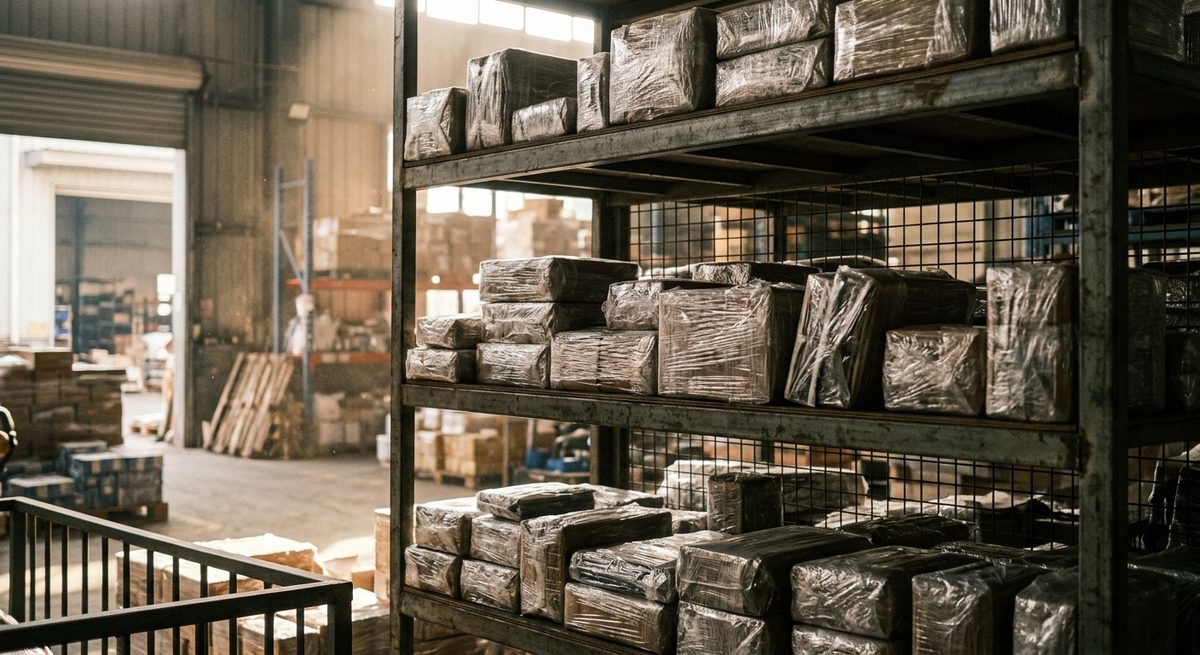
There’s a steel shelf in our Guangzhou office that visitors always ask about. Rows of zip-seal bags, each holding one product, each closed with a strip of masking tape carrying two signatures and a date in marker. A garlic press. A bluetooth speaker. A child’s raincoat, folded exactly as it was in 2024, its tape gone the colour of weak tea. Clients call it the museum. It’s actually the referee bench. Every bag on it has settled at least one disagreement without a single angry email, because when two people argue about what was agreed, the bag gets opened and the object answers.
What the reference sample actually is
Strip the jargon and it’s this: one physical unit, approved by the buyer, signed by both sides, held as the definition of correct for all production that follows. Not the prettiest unit ever made. The agreed unit. Photographs argue, memories improve with age in whoever’s favour is convenient, and specs, however good, can’t capture the way a hinge is supposed to feel. An object captures everything at once, including the things nobody thought to write down.
The trade calls it a golden sample, and getting a golden sample China side and its twin abroad signed on the same afternoon is one of those small rituals that separates orders that run quietly from orders that run on dispute. Factories take the ritual seriously. In our experience they often take it more seriously than buyers do, because they’ve been burned by buyer memory more often than buyers have been burned by theirs.
Making one properly takes an afternoon
Here’s our routine, refined by the times we skipped a step and regretted it.
- Approve from the final pre-production run, never from an early prototype. The sample must come from the process that will make the order, same tooling, same materials, same operators if possible.
- Make it plural. Minimum three identical units: one for the buyer, one sealed at the factory, one with us. Twins expose tampering and survive couriers, office moves and staff changes.
- Sign across the seal, both parties, with a date. The tape-over-bag method looks amateur and works precisely because opening it is visible.
- Photograph it beside a ruler and a colour card before sealing, and attach the photos to the contract.
- Write down what the sample does not define. This is the step everyone skips.
That last one deserves its own paragraph. A sealed object defines shape, colour, finish, feel. It cannot define what’s inside a sealed housing, the grade of a resin, the cycle life of a switch, or whether the material meets your market’s chemical rules. Those live in documents and lab reports, the territory of Lab Testing 101: CE, UKCA, FCC, RoHS & REACH, and a golden sample gives no cover there. Write the boundary down so nobody pretends otherwise later.
How the referee gets used between signings
At every inspection
The factory’s sealed sample comes off its shelf and sits on the inspection table all day. Drawn units get compared against it directly, which turns a hundred small judgement calls into physical comparisons. The sampling maths decides how many units get drawn, a subject with its own rules that we unpacked in AQL Explained: Sampling Plans for Pre-Shipment Inspections, but the sample decides what drawn units are measured against. Plan and object, together. Either one alone is half an inspection.
At the reorder
Months later, someone at the factory quotes the new run. Material prices moved. A component went obsolete. A helpful engineer found a cheaper clip. The sealed sample is what makes every one of those changes a conversation instead of a surprise, because the factory knows the new run will be held against the old object. Most substitution stories die right there, unspoken.
At the dispute
And when something does go wrong, the sample turns a fight about memory into a comparison of objects. We’ve watched a tense call about “the colour was never this dark” end in ninety seconds: bag opened on camera, units held together, done. The buyer was wrong, as it happens. He took it well, and he signs his tape more carefully now.
Samples age, and the system has to know it
The raincoat on our shelf isn’t the colour it was in 2024. Whites yellow, silicone dulls, adhesives crystallise, plated finishes shift. An aged reference quietly becomes a wrong reference, stricter in some dimensions, looser in others. So date every sample and treat the date as an expiry question: for colour-critical or material-sensitive products, re-approve a fresh unit from a good production run every year or so, old sample retired but kept. The retired ones stay useful, by the way. A row of them in age order is a record of drift no spreadsheet matches.
Store them decently too. Not in a sunny window, not in a car boot in a Guangdong summer. We keep ours in the office at ordinary room conditions, which is roughly what your product will live in anyway. And keep custody boring: a list of who holds which sample, updated when staff change. The referee only works while everyone knows where the referee is.
Questions buyers ask about the sealed bag
What does a proper reference set cost?
Usually just the sample fees and couriers, since the units come from runs being made anyway. Compared with any single dispute it prevents, it’s the cheapest insurance in the entire process. There’s no honest reason to skip it on cost grounds, and we’d say that even if we charged for arranging it, which we don’t as a separate line.
Can the factory’s sealed sample be swapped?
The double signature over the seal, the twin held by you, and the contract photos make a useful swap somewhere between difficult and pointless. In nearly two decades we’ve seen plenty of aged samples and exactly zero convincing swaps. It’s the kind of risk buyers worry about in inverse proportion to how often it happens.
My product changes slightly every order. Does the idea still work?
Yes, but version it. Each agreed change produces a new signed sample with a new date, and the contract names which version governs which purchase order. The overhead is one afternoon per change. The alternative is that “current version” lives in different heads on different continents, which is how drift starts.
If you’re placing an order through us, the sealed-sample ritual is simply part of how we work, and if you’re managing your own supplier, borrow the routine wholesale, it needs no agency to run. Visitors to our Guangzhou office get the museum tour on request, weak-tea tape and all. Contact form or WhatsApp, and we’ll show you how the quiet referee earns its shelf.
Read next
The Defects That Get Through a Standard Inspection
Even careful product inspection in Guangzhou lets certain defects through. We list the escape routes, from time-delayed…
How Buyers Set Quality Standards a Factory Can Actually Hit
Quality standards for Chinese suppliers fail when they're vague or impossible. Here's how we agree defect lists and limits…
Inspecting Before, During and After Production
Quality control services in China come in three stages, and most buyers only need one or two. A Guangzhou team explains what…