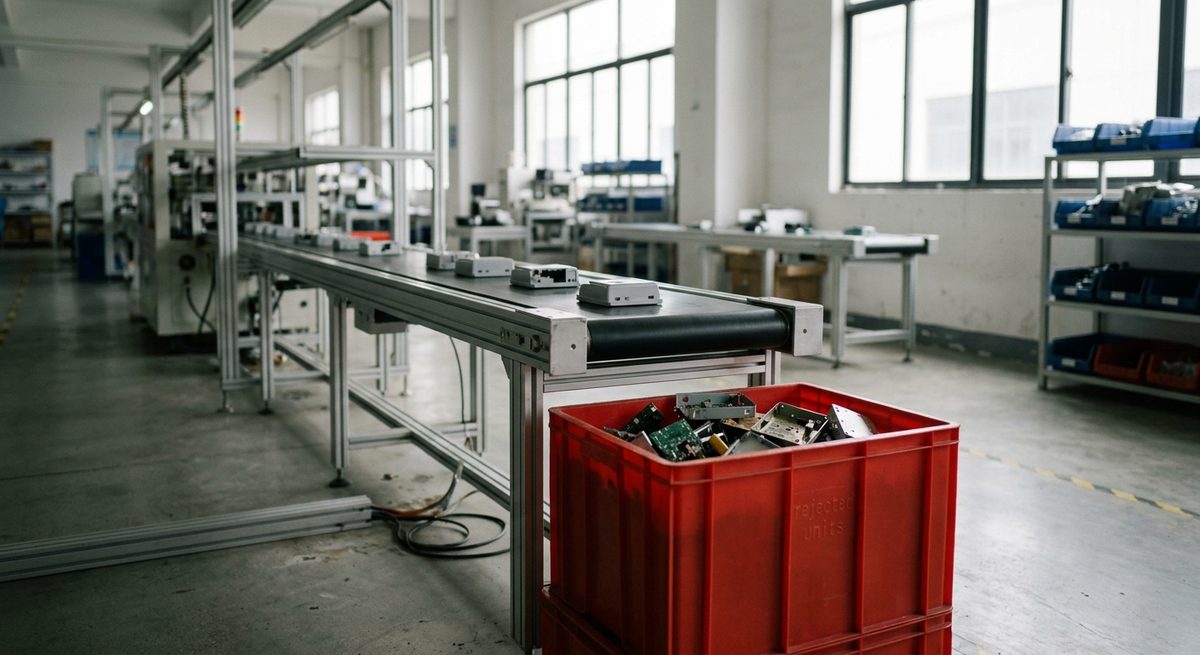
An inspection passed, the goods shipped, and four months later the client called: pump heads on her lotion bottles were cracking on shelves in Lyon. Our inspector had pressed dozens of those pumps. Every one worked. The crack came from a stress that needed weeks of tension against a slightly overtightened cap to appear, and no one-day visit on this earth would have caught it. We tell every client the same thing before their first booking: product inspection in Guangzhou is a sample of a moment. It’s powerful, it’s worth every dollar, and it has escape routes. Knowing them is how you close them.
Escape route one: time
The biggest class of escapes are failures that need weeks to develop. Adhesive that grips at the factory and lets go after a humid sea crossing. Coatings that pass a tape test and start lifting after two months of handling. Batteries that hold charge on day one and sag by month three. Springs and clips that work for fifty cycles and fail at five hundred.
An inspector’s afternoon can’t compress time. What closes the gap is different tooling: accelerated aging in a lab for materials you’re worried about, cycle-test rigs for moving parts, and, cheapest of all, your own habit of keeping retained samples and abusing them for a month while the goods sail. The vessel takes four weeks anyway. Use them.
Escape route two: the units nobody draws
Sampling maths is honest about this: check a few hundred units from ten thousand and defects concentrated in one corner of the lot can miss the draw entirely. And defects do concentrate. Production isn’t uniform. Friday’s units differ from Tuesday’s, the night shift differs from the day shift, and the batch made after the material substitution differs from everything before it.
Factories know which cartons get opened, too, or think they do. Goods stacked for inspection sometimes arrive with the best-packed rows facing out. Our standing rule: pull from the bottom rows, from the back, and from cartons taped differently from their neighbours. A carton at the bottom of a stack in a wet Guangdong summer warehouse tells you things the display row never will, its board softened, its corners already crushed a centimetre. If packaging survives only in the show row, you want to learn that before the container does its own drop test at sea.
Mixed lots hide in plain sight
The nastiest version is the mixed lot: most of the order made in-house, a rushed final chunk subcontracted to a workshop you’ve never heard of. If the sample happens to draw lightly from the subcontracted cartons, the report is clean and a third of your goods are strangers. The defence isn’t more sampling, it’s traceability, date or batch codes on cartons, and an inspector briefed to notice when carton 300 suddenly uses different tape.
Escape route three: things the checklist doesn’t name
Inspectors verify against the standard they’re given. Whatever your spec doesn’t mention, the inspection doesn’t protect. We’ve seen it bite in odd places: the product perfect, the retail box perfect, and the instruction leaflet inside printed for the previous customer’s brand. Nobody had put leaflet on the checklist.
Software and firmware are the modern version. A device can pass every physical check running last month’s firmware with last month’s bug. Regional plugs, voltage labels, barcode scannability at the till, carton weight against your freight booking, all of these escape any inspection that wasn’t told to look. The fix costs nothing: before each booking, spend ten minutes asking what changed since last time, and add it to the list. The checklist should grow a line for every scar.
Escape route four: the borderline call under pressure
Inspection day has a mood. The factory wants to ship, the buyer wants to ship, the vessel is booked, and the inspector stands in the middle holding a unit that’s almost fine. Classify it minor and everyone’s day gets easier. Multiply that little mercy across forty borderline units and a lot that deserved rework sails clean.
We handle it structurally rather than morally. Borderline units get photographed and classified severe by default, and the client decides, not the room. It’s also why boundary samples and a written defect list matter so much: they take the decision away from the mood. The same pressure applies to quantity, by the way. Short shipments get discovered at final count more often than anyone admits, which is one reason the count belongs in the report with the carton map, not as a verbal reassurance.
What this means for how you buy inspections
None of this argues against inspecting. It argues for aiming the tool honestly.
- Let the inspection do what it’s good at: workmanship, function now, quantity, packaging, assortment.
- Send time-dependent worries to a lab, and keep retained samples yourself.
- Buy traceability and unpredictability: random draws from the bottom rows, visits the factory can’t schedule around.
- Grow the checklist after every incident, yours and other people’s.
Category changes the mix. Cosmetics packaging lives and dies on the time-delayed failures, pumps, seals and label adhesives, which is why the QC section of Ordering Beauty & Personal Care Products from Guangzhou leans so hard on compatibility testing. Paper goods fail differently, mostly in printing consistency and moisture warp across a long run, a rhythm we described in Sourcing Stationery & Office Products from Guangzhou. Know your category’s favourite escape route and spend your extra attention there.
The questions this article usually triggers
So how many defects should I expect to reach customers?
More than zero. That’s not cynicism, it’s statistics: any sampling plan accepts a lot containing some defects, and time-delayed failures add their share. Set your acceptance limits from your real returns tolerance, keep spares in the shipment for warranty swaps, and treat a low steady defect rate as normal commerce rather than betrayal.
Would checking every single unit solve it?
It removes the sampling escape and leaves every other one open, at many times the cost, and checker fatigue quietly caps how good full checks really are. We recommend full checks narrowly: high-value units, a rework verification, or one critical feature checked on every unit while the rest stays sampled.
What’s the single cheapest improvement?
Retained samples with a torture habit. Keep units from every shipment, live with them, stress them, note what fails and when. It costs nearly nothing, and after three shipments you own failure data about your own product that no factory and no inspector could sell you.
We run inspections across Guangzhou, Foshan and Zhongshan every week, and we’d rather explain the limits of the tool before you buy it than after something ships. Tell us your product through the contact form or WhatsApp and we’ll tell you its likeliest escape route, and how we’d block it.
Read next
How Buyers Set Quality Standards a Factory Can Actually Hit
Quality standards for Chinese suppliers fail when they're vague or impossible. Here's how we agree defect lists and limits…
Inspecting Before, During and After Production
Quality control services in China come in three stages, and most buyers only need one or two. A Guangzhou team explains what…
What an Inspection Report Should Tell You, and Often Does Not
A good inspection report China side proves how the goods were checked, not just that they passed. Here's what to demand in…