
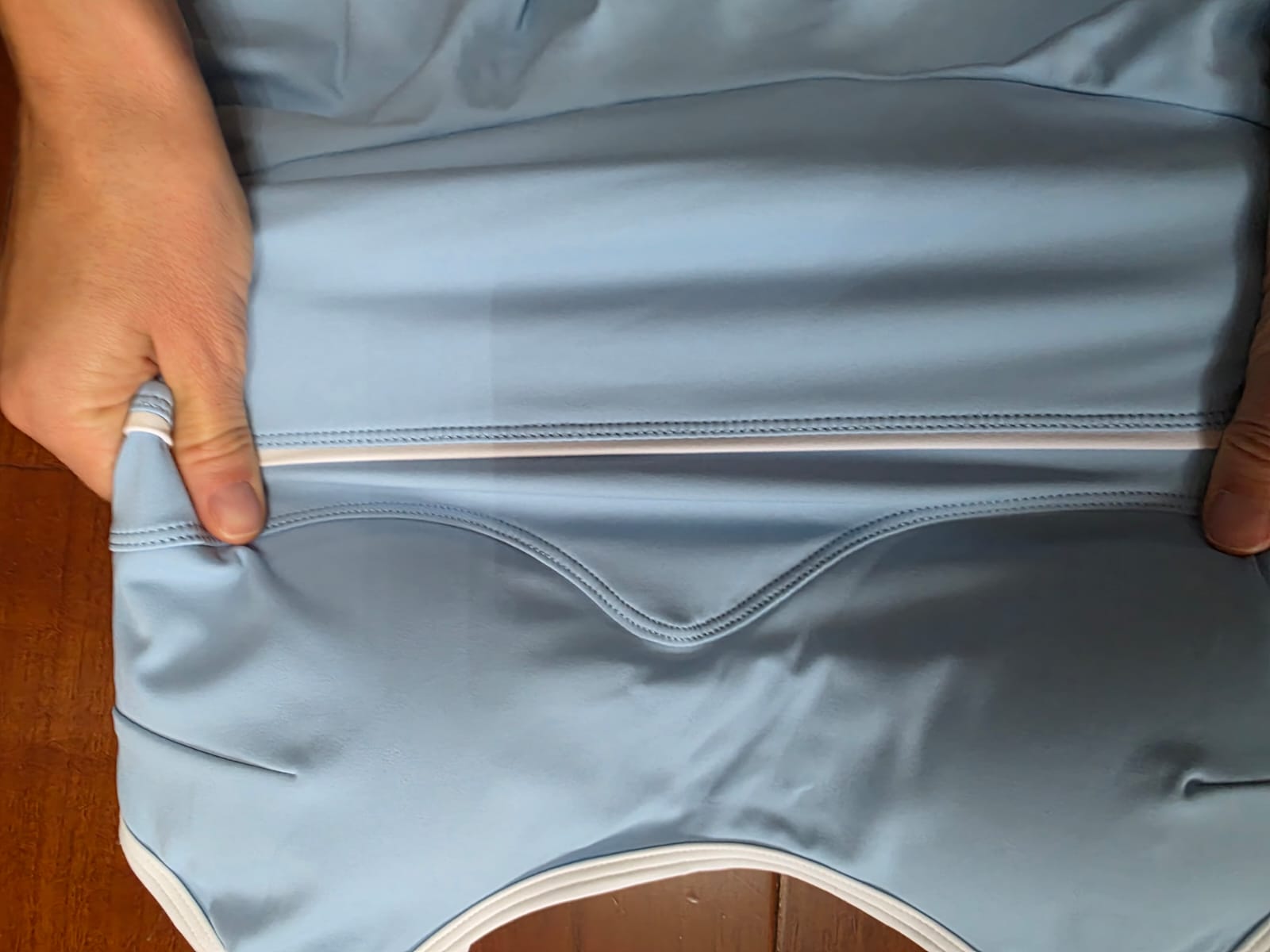
When you buy products for a yoga business, you are choosing things people will wear, touch and use throughout their practice. A student may spend an entire class on one mat. A pair of leggings may move through hundreds of stretches before the customer decides whether to buy from your brand again. A studio bolster may be used several times a day, cleaned regularly and expected to keep its shape.
Those everyday details should guide your purchasing decisions.
Guangzhou is a useful place to begin. You can compare fabrics, meet suppliers, examine samples and organise visits to production facilities. With the right preparation, a sourcing trip can help you make decisions that are difficult to make through photographs and messages alone.
At Agent Guangzhou, we help businesses source products, coordinate manufacturing, inspect orders and arrange shipping from China. For yoga projects, our CEO also brings a personal understanding of the practice. She spent years practising yoga professionally and speaks, reads and writes fluently in five languages.
That background is relevant when a buyer needs to explain how a garment should feel during movement, why a particular prop matters or what students expect from equipment they use every week. It gives product discussions a practical starting point.
Buying well still requires careful specifications, suitable manufacturers and proper checks. This guide explains how those pieces come together, whether you are equipping studios, developing a yoga clothing label or importing accessories for retail.
Guangzhou’s textile trade is particularly useful for clothing development. The Zhongda textile area in Haizhu is an established trading district where buyers can examine fabrics and compare colour, texture and construction in person. The city’s own information describes it as a major textile business cluster. Guangzhou municipal information on Zhongda
For a yoga brand, being able to handle several fabrics side by side helps make preferences clearer. You might discover that the material you liked in a photograph feels too heavy, too slippery or too warm for your intended collection. Another fabric may feel comfortable but need further checks for coverage and recovery.
A market visit gives you options. It does not, by itself, establish that a material is suitable for production.
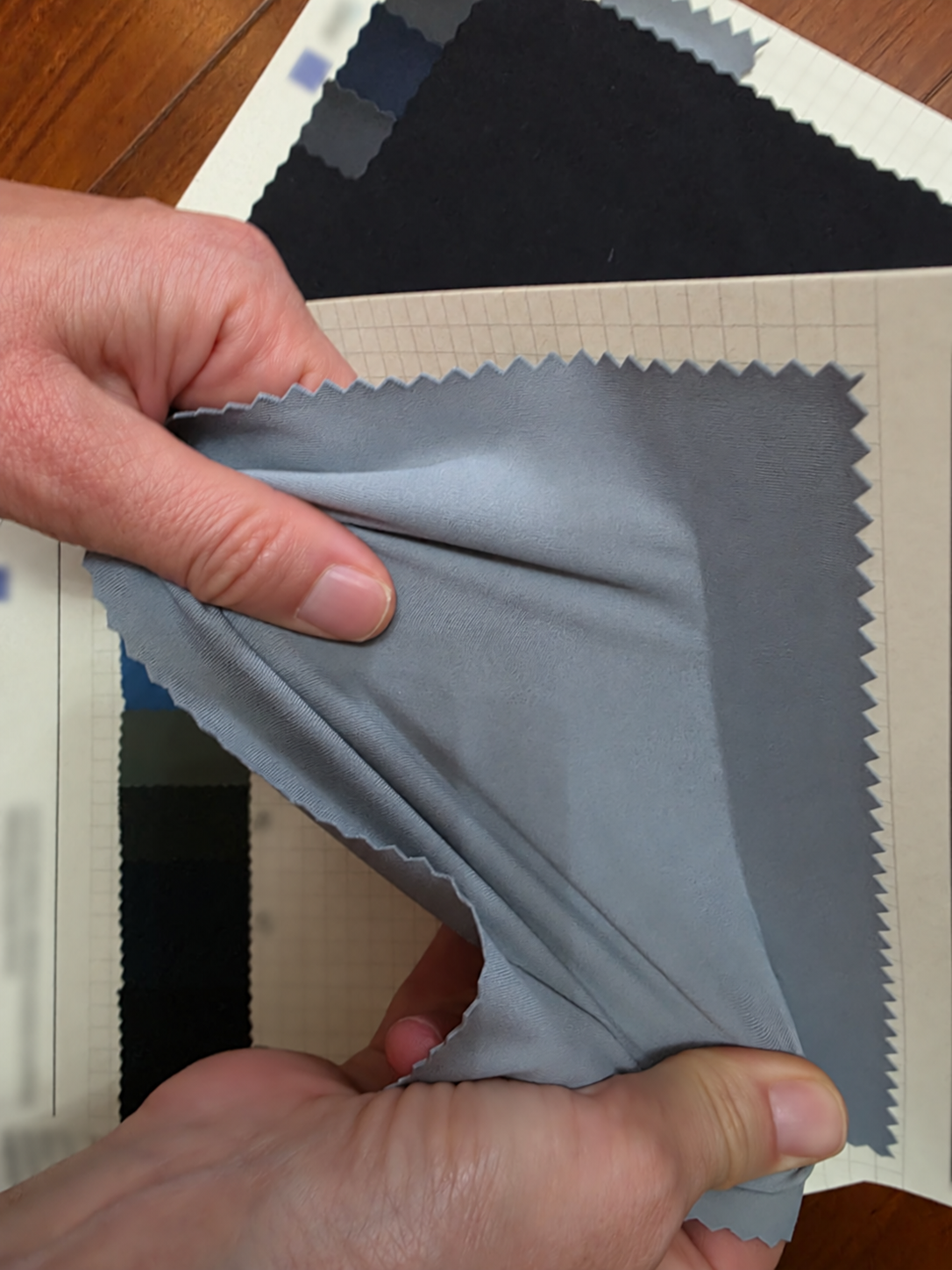
Record the supplier, fabric reference, stated composition, available colours and quoted terms for every sample you seriously consider. Ask whether the material is part of a continuing range or a limited stock lot. If you expect to reorder the same leggings six months later, availability matters.
It is also worth understanding how the supply chain is arranged. A showroom in Guangzhou may represent production elsewhere. A clothing supplier may purchase fabric from a mill and send it to a separate sewing factory. A business offering mats, blocks, towels and bags may work with several manufacturers.
These arrangements can be perfectly workable when you know who is responsible for each part of the order. Ask where your products will be made, which processes are subcontracted and who will deal with a problem if the goods do not match the approved sample.
We use Guangzhou as a base for coordinating that work. The location of a supplier matters, but its ability to produce your particular product matters more.
Before approaching factories, take time to describe your business and how the products will be used. A studio buying shared equipment has different needs from a retailer selling individually packaged accessories. A hot yoga business has a different cleaning routine from a retreat offering occasional restorative classes.
Start with a simple purchasing list:
| What you are buying | What to decide first |
|---|---|
| Studio mats | Class type, floor surface, cleaning routine and storage |
| Blocks and straps | Intended use, dimensions, construction and quantities |
| Bolsters and blankets | Support, care requirements, storage and spare covers |
| Yoga clothing | Customer, fit, size range, fabric and expected activity |
| Towels | Size, washing frequency, drying arrangements and intended use |
| Retail accessories | Packaging, instructions, branding and reorder plans |
Discuss the list with the people who will actually use or manage the products. Instructors may have preferences about block dimensions or bolster firmness. Staff may know that the current mat racks are too narrow or that towels do not dry quickly enough between classes.
These conversations can save you from ordering products that look right but create extra work every day.
For studio quantities, calculate around your timetable. Twenty students do not necessarily mean that twenty of everything will be enough. Some items may be in use, being cleaned or waiting to dry. You may also need spare equipment and replacements.
As an illustration, a studio with twenty places might consider twenty working mats plus spares and, where the teaching programme calls for them, two blocks per student. The number of bolsters, blankets and towels should follow the classes you actually offer. There is no single purchasing formula that suits every studio.
Yoga clothing deserves a particularly careful sample process. A garment can look attractive when someone stands still and become uncomfortable as soon as they move.
With leggings, pay attention to the waistband during forward folds and seated positions. Check coverage at the seat and thighs when the fabric stretches. Look for seams that pull, twist or feel uncomfortable against the body.
Try tops with the arms raised and during floor movements. Assess whether the garment stays where the wearer expects it to stay. For bras, establish the intended activity and level of support before accepting a supplier’s description.
A useful sample review includes movement, washing and another fitting afterwards. The person testing the garment should be able to explain what happened: the waistband rolled, the hem lifted, the fabric bagged at the knees or a seam became irritating.
Specific feedback gives the factory something it can correct.
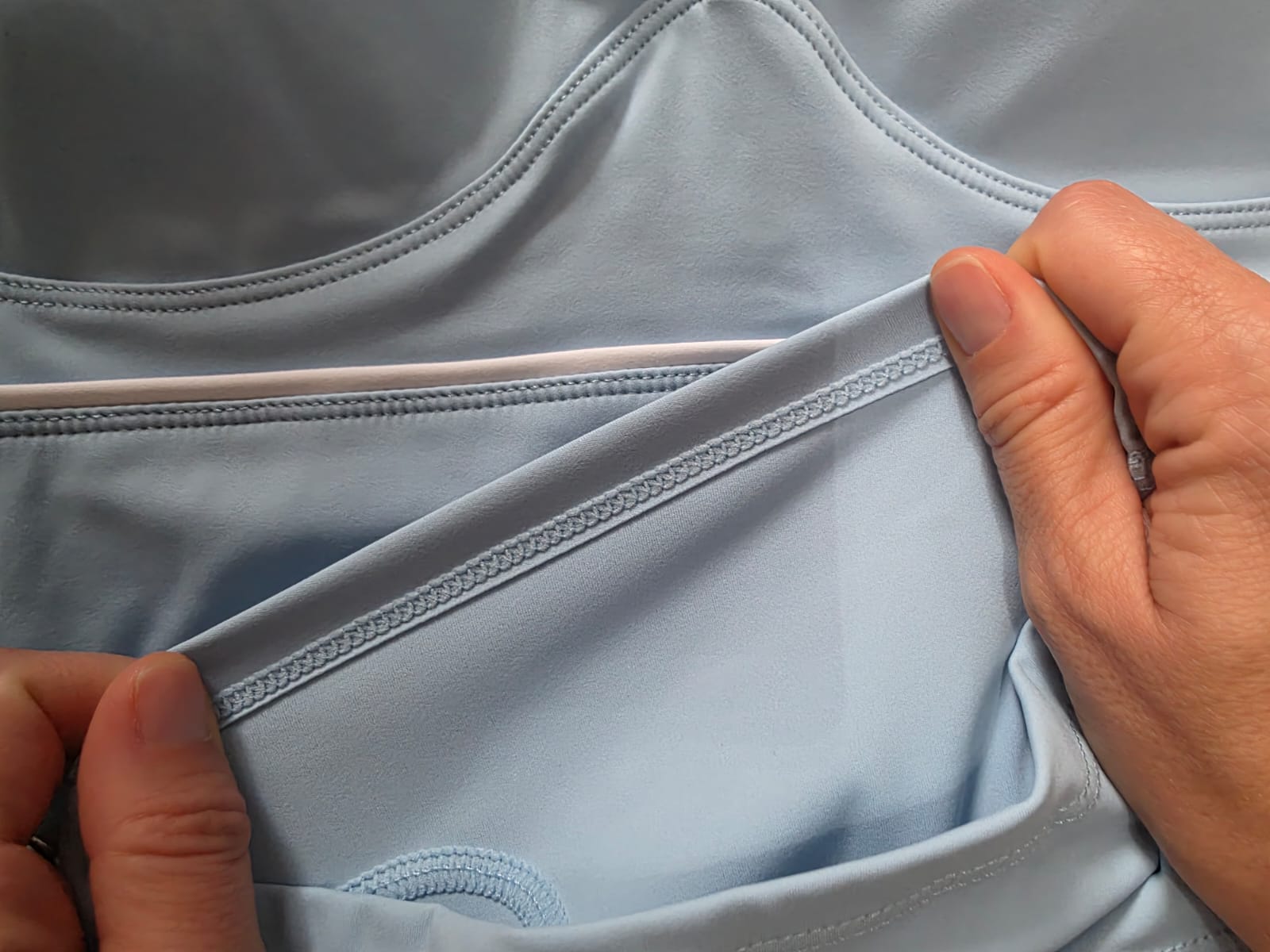
Size labels are not enough to control fit. A medium from one supplier may be quite different from a medium made by another. Agree on garment measurements and tolerances, then review representative sizes across the range.
Do not approve an entire collection because one sample fits one person well.
Fabric composition also needs context. Two fabrics described as the same nylon and elastane blend can feel and perform differently because of their construction and finishing. Fabric weight alone will not tell you whether leggings provide adequate coverage.
Choose materials through a combination of physical comparison, wear trials and appropriate testing. Pilling, colourfastness and moisture management are among the properties that textile laboratories can assess. The test programme should reflect what you intend to promise your customers. SGS textile testing services
If you plan to describe clothing as quick drying, for example, ask what evidence supports that claim. If your priority is a soft garment that holds its appearance through regular washing, make those expectations part of development.
Keep the first collection manageable. Each extra style, colour and size adds another variation to produce and inspect. Three styles in four colours and five sizes already create sixty combinations.
A focused range gives you more opportunity to establish fit and consistency before expanding. It can also make stock planning less complicated.
For matching sets, examine the pieces together. Different fabrics may show the same colour differently. Approve the actual combination under agreed lighting conditions, rather than assuming that matching colour names will produce a matching outfit.
When it comes to yoga mats, begin with the practice and the room. Think about how the mat will behave under the user’s hands and how its underside will behave against the floor.
Thickness is only one part of that decision. A mat may feel comfortable when pressed with a hand but provide an unsuitable balance of firmness and cushioning during use.
Ask what the complete mat is made of, including its surface, backing and any bonded layers. A cork or PU surface description does not identify the material underneath it. Record the agreed construction, dimensions and weight so later samples and production can be compared against the same specification.
For a closer comparison of mat materials, dry and damp grip, thickness, cleaning, blocks, straps and bolsters, read our yoga mats and accessories buying guide for Guangzhou sourcing. It includes a sample approval checklist and practical questions to ask before ordering.
Compare samples under consistent conditions. Check them dry and with the amount of moisture relevant to the intended class. Observe whether the mat moves on the floor, whether its edges curl after unrolling and whether the surface shows wear or colour transfer.
For a layered mat, inspect the edges and the bond between the materials. If there is printed branding, examine how it feels and whether it remains intact after use and cleaning.
Write down your observations. Otherwise, several similar samples can become difficult to distinguish after a busy day of supplier meetings.
Cleaning deserves attention before the order is placed. Shared studio mats have to fit your actual routine, including the time available between classes.
Ask for care instructions for the exact mat construction. Do not assume that all rubber mats, all cork mats or all mats sold under the same material description can be cleaned in the same way.
Manufacturer guidance shows why this matters. Manduka, for example, gives different care instructions for its PRO and natural-rubber eKO ranges, including product-specific restrictions on soaking and exposure. Those instructions are useful evidence that care depends on construction, but they should not be copied onto an unrelated product. Manduka mat care guide
Try the supplier’s proposed cleaning method on your sample. Check the surface afterwards and establish how long the mat needs to dry before storage or use.
If that routine is impractical for your studio, find out during sampling.
Yoga blocks and straps may be simpler products, but they still need clear requirements. Compare blocks for consistent dimensions, flat surfaces, sound edges and suitable support during their intended use. Watch for damage, loose particles or excessive deformation.
With straps, examine the webbing, stitching and buckle. Check how the adjustment works and whether the finish is comfortable to handle. Ask the supplier to explain any performance claims.
A standard stretching strap should not be treated as suspension equipment. If your business needs aerial yoga products or other load-bearing equipment, that requires a separate specification and appropriate specialist assessment.
For bolsters, look beyond the cover fabric. Compare firmness and shape before and after repeated compression. Examine seams, handles and closures, and consider whether the dimensions suit the classes you teach.
If removable, washable covers are part of your specification, test them. Remove a cover, wash and dry it according to the proposed instructions, then refit it. Check for shrinkage, colour changes and difficulty closing it again.
Spare covers can be a useful part of the original order. So can an agreement about replacement availability.
Towels and blankets need similar attention to washing, shedding, colour transfer and storage. For eye pillows and other filled accessories, record the filling material and have the destination requirements checked where relevant.
The aim is to understand how the products will behave after they arrive, not just how they look when unpacked.
Our CEO’s years of professional yoga practice help bring these questions into the sourcing conversation. She understands why a waistband, seam or prop can affect someone’s comfort during a class.
Her fluency in five languages, including reading and writing, also helps with detailed communication across international projects. A buyer needs to explain more than a product name. They may need to describe a particular feel, a problem with an earlier order or the expectations of customers in their market.
That understanding works alongside specifications and testing. It helps us identify what to examine and communicate the buyer’s priorities more clearly.
If you plan to visit Guangzhou, send your brief before you travel. Include the products, approximate quantities, reference images, destination, budget range and intended launch or delivery date.
Explain which decisions you want to make during the visit. You may need to choose a fabric, compare mat constructions, approve packaging or meet a shortlisted manufacturer. A clear purpose makes it easier to arrange useful appointments.
For clothing development, part of the trip may involve materials and trims. For equipment, it may be more useful to spend time reviewing samples and visiting relevant production facilities.
Allow enough time between appointments. Factory addresses should be confirmed in advance, and the schedule should account for travel rather than simply counting the number of meetings.
A sensible visit gives you time to:
- Review the brief and identify unresolved decisions.
- Compare relevant materials and finished samples.
- Discuss quotations and production details with shortlisted suppliers.
- Visit suitable manufacturing sites where arranged.
- Record decisions, sample changes and the next approval steps.
At the end of each day, organise your notes. Match photographs to supplier names and product codes. Record what was quoted and what remains uncertain.
It is easy to return home with a suitcase of samples and incomplete information. A clear record makes the trip useful after you leave China.
Through our Guangzhou sourcing service, we help coordinate supplier meetings, factory visits, translation, production follow-up, quality inspections and shipping. Buyers who cannot travel can discuss having us carry out the agreed local work on their behalf.
Supplier selection should be based on the processes your products need. A factory experienced in stretch garments may be a suitable choice for leggings but have no role in manufacturing mats. A supplier offering a broad range may be coordinating several producers.
Ask which work is done directly, which is subcontracted and where your order will be made. Discuss current capacity and the process for checking materials and finished goods.
Relevant experience matters. Ask to see comparable construction and discuss the difficulties involved in your design. A useful supplier conversation should get more specific as it progresses.
When comparing quotations, send the same brief to each business. Otherwise, you may be comparing different products without realising it.
One price may include labels and retail packaging; another may cover only the item. A cheaper mat may use a different construction. A garment quote may assume a fabric you have not approved.
Request written confirmation of what is included and ask suppliers to identify any proposed substitutions.
For private-label products, the scope of customisation affects cost and timing. Adding a logo to an existing item is different from developing a new garment pattern or changing a product’s dimensions and construction.
Minimum quantities may also apply separately to styles, colours, materials, printed designs and packaging. Ask about those requirements before building a large range of variations.
Approve the branding on the actual product. A logo that looks good in a digital file may be too large on a garment, uncomfortable on a mat surface or difficult to reproduce clearly.
For clothing, check whether the application survives stretch and washing. For accessories, check its position, finish and durability under the intended conditions of use.
Packaging needs its own review. A bag must fit the mat that will go inside it. A sleeve must fit the rolled product. Labels and instructions must describe the goods accurately.
Before production, keep an identified approval sample and a written specification. Make sure the supplier and inspection team know which version is final.
Quality control should follow the order as it develops. For garments, early checks may confirm the bulk fabric, measurements and construction before a large quantity has been sewn. For accessories, they may focus on materials, assembly, dimensions or surface finish.
A final inspection should check the agreed product requirements alongside quantities, variations, labels, packaging and carton identification.
Agree on the scope and method in advance. A sampled inspection provides information about a shipment, but it does not prove that every unit is free from defects. Laboratory testing, factory assessment and shipment inspection answer different questions.
Certificates should also be checked carefully. OEKO-TEX STANDARD 100 addresses testing textiles for harmful substances. It does not establish fit, comfort or grip. Verify the certificate and whether its scope covers the product you are buying. OEKO-TEX STANDARD 100
For recycled-content claims, request the relevant evidence and check the current certification and labelling requirements. Textile Exchange uses certification and traceability controls to support material claims. A supplier’s general statement about using recycled materials is not enough to establish what you can claim about a particular order. Textile Exchange standards
Import arrangements should begin while products are still being developed. Your destination may affect labels, documentation, testing and packaging.
Yoga clothing, mats, bags and blocks can fall under different customs classifications. Their shared use does not mean they share a duty rate.
Give your customs broker accurate product descriptions, materials and construction details. Confirm the applicable treatment before shipping. In the United States, CBP explains that importers must exercise reasonable care in classification and valuation. CBP importing guidance
Clothing labels also need to meet destination requirements. The US Federal Trade Commission explains that most textile products require fibre content, country of origin and responsible-business identification, while clothing care instructions are covered by its Care Labeling Rule. FTC apparel and labelling guidance
For goods covered by the EU General Product Safety Regulation, safety, traceability and economic-operator obligations must also be considered. Review the requirements for the actual products and sales arrangement before finalising production. EU product safety guidance
Your sourcing partner can help obtain information from suppliers and coordinate export preparation. The destination importer and broker should confirm the requirements for entry and sale in the intended market.
Freight can make a substantial difference to the cost of yoga equipment. Mats, bolsters and blocks take up space. Ask for carton dimensions, gross weight, units per carton and total shipment volume early enough to compare transport options.
Avoid making a purchasing decision from the factory price alone. Include development, branding, testing, inspections, service fees, collection within China, freight, insurance, destination charges, duties, applicable taxes and final delivery.
For a mixed order, consolidation may make shipping easier to manage. It also needs coordination. If mats are ready but clothing is delayed, decide whether everything should wait or whether separate shipments are justified.
Check that the proposed packaging protects the products during transport. Excessive compression may affect shape, while inadequate protection may leave damaged surfaces or retail packaging.
Once the order arrives, keep records of how it performs. Ask instructors and customers for specific feedback. If something changes after cleaning or repeated use, record the conditions and batch details.
That information helps with reorders and corrections.
Keep your approved samples, specifications, colour references, measurement charts and artwork. Before ordering again, ask whether any materials, processes or subcontractors have changed. The same product code does not always establish that everything underneath it remains the same.
For an established yoga business, reliable repeat orders can be as valuable as a successful first shipment. Students expect familiar equipment. Retail customers expect the size and feel they liked before.
Agent Guangzhou works with established businesses placing substantial wholesale and manufacturing orders. If you are sourcing for a studio group, developing a yoga brand, supplying retreats or importing for distribution, share the full project with us so we can assess whether our service is a suitable fit.
Tell us what you want to buy, how it will be used, your expected quantities, destination and timing. If you are coming to Guangzhou, include your travel dates and the decisions you hope to make here.
Contact Agent Guangzhou to discuss your yoga sourcing project. Our team can help organise the work in China, supported by our CEO’s years of professional yoga experience and her ability to speak, read and write fluently in five languages.
Read next
The Guangdong Knitwear Map Behind Every Pair of Leggings
Learn where to import activewear from China. We map the Guangzhou and Dongguan knit belt, from fabric mills to cut and sew…

Leather Handbag Orders from China: Problems Buyers Hit and Fixes
Import handbags from China with fewer surprises. The leather, hardware and colour problems that hit handbag orders, and how…
Test Reports That Matter for Underwear and Sock Imports
Before you import underwear from China, know which lab tests, fibre labels and shipping documents buyers usually need.…