Connections specified before production
Industrial Cable Assembly Sourcing in China
Two cable assemblies can look identical and have different conductors, terminals or pin connections. For an industrial order, the drawing and approved parts list need to describe the assembly precisely enough that a factory can quote, build and check the same product. AgentGuangzhou helps business buyers research manufacturers and coordinate quotations, samples and production from Guangzhou. Your technical team selects the components, electrical requirements and acceptance criteria. We help make sure the purchasing instructions reflect those choices and that proposed changes come back to you for approval.
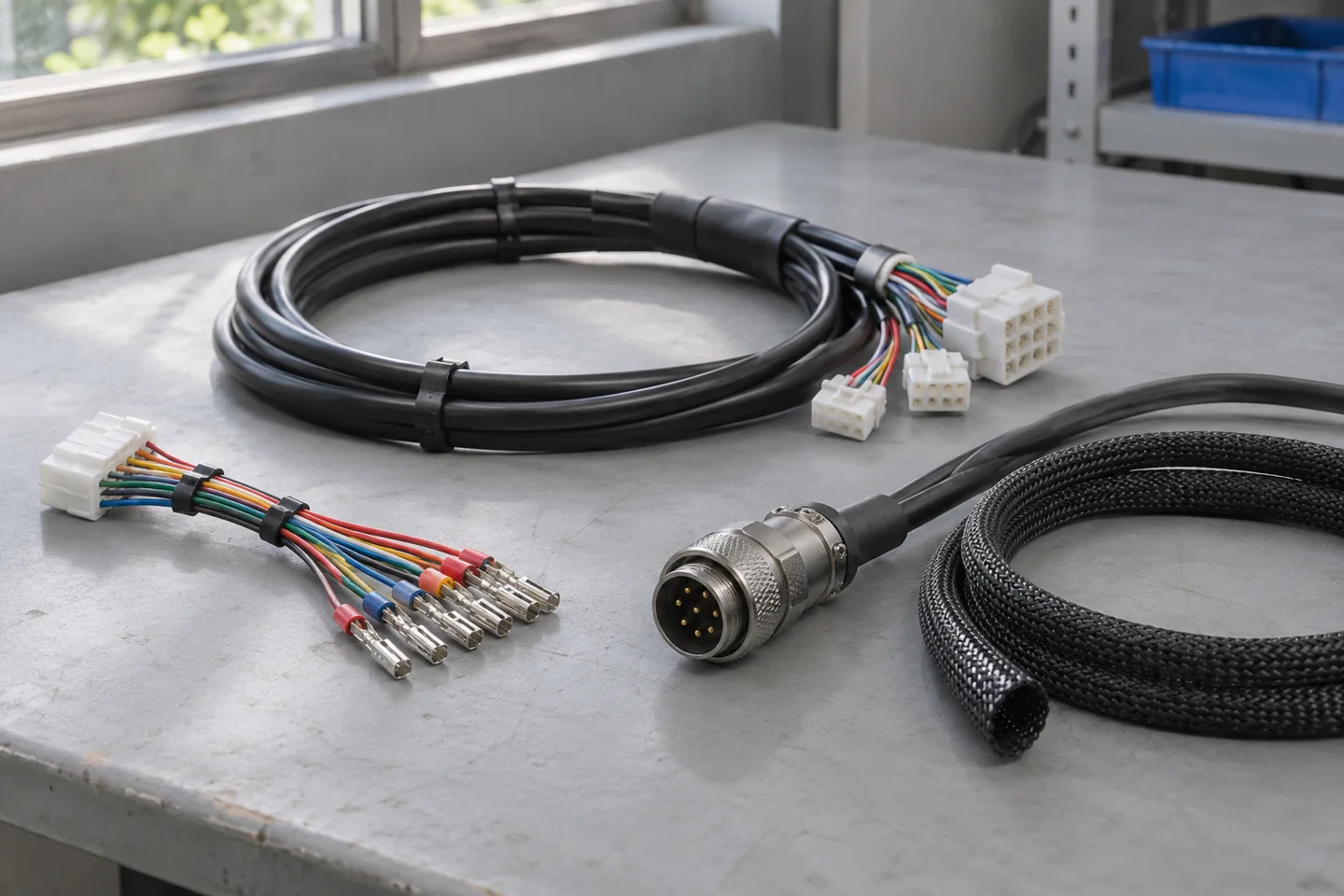
Start with the drawing, the mating parts and the application
Provide an assembly drawing showing overall length, branch positions, connector orientation, cable identification and any critical dimensions. State the reference points used for measurements. A length measured from the end of a connector is different from a length measured from its mating face.
Where possible, include the part that the assembly must connect to, or its controlled drawing and part number. Tell the supplier how the cable will be installed and used. Your technical team should identify requirements arising from movement, temperature, moisture, abrasion or electrical conditions rather than leaving the manufacturer to infer the application.
Specify connectors and terminals beyond their appearance
A matching-looking connector is not enough. Identify the manufacturer and part number where the design requires them, along with the housing, terminal, seal, locking arrangement and mating component. State whether alternatives may be proposed and who is authorised to approve them.
We ask suppliers to separate their original quotation from any alternative construction. If the buyer permits an alternative, arrange a sample and the checks your team requires before release. Keep the approved combination on the parts list so a later order does not quietly return to a cheaper connector or different terminal.
Put the wire and cable construction into the enquiry
The enquiry should identify the conductor specification, wire size, insulation, jacket, shielding and colour requirements relevant to your design. Include required markings and documents. If the assembly contains several wire types, give each one a clear reference on the drawing and material list.
Ask which cable the supplier intends to use and whether it will be purchased for your order or drawn from existing stock. We coordinate material questions and records. Your qualified team decides whether the proposed construction suits the intended electrical duty, movement and operating environment.
Make pinout and workmanship requirements unambiguous
Supply a connection table or pinout that identifies each end, cavity and wire. Define the viewing direction used in the drawing. Ambiguity at this stage can produce a neat-looking assembly that connects the wrong points.
Specify the acceptance requirements for stripping, crimping, soldered connections where used, heat-shrink placement, shielding and strain relief. Ask the factory how it controls those operations and what checks it can record. We help organise the responses and proposed sample plan, while your technical team confirms the methods and limits suitable for the product.
Check samples in the equipment they will actually fit
A desk inspection can confirm dimensions and appearance, but the sample should also be checked in the intended equipment. Verify connector engagement, routing, branch reach, access for assembly and whether the cable is pulled tight at any point. Include the normal range of movement where that matters.
Record the result against the sample revision and photograph approved routing where useful. If your team changes a length or connector orientation, update the drawing before production. An informal message about a sample is easy to lose; a controlled revision gives both sides a clear instruction.
Agree the production test plan and records
Depending on the assembly, your team may require continuity, connection mapping, dimensions, retention checks or other electrical and mechanical tests. The test method, equipment, limits and sampling or unit-test requirement should be agreed before the production price is finalised.
Clarify who provides test fixtures and how they are identified and maintained. Decide what a failed result means for the batch and what evidence you want with the shipment. We coordinate the agreed checks and follow up on missing records. We do not replace the buyer’s engineering approval or independently certify the assembly for its application.
Compare the assembly cost, tooling and material minimums
Connector purchases, cable minimums, cutting and termination work, fixtures, identification and testing can all affect the quoted price. A small assembly order may still require buying a larger quantity of a particular component. Ask who owns the surplus and how long it will be stored.
Our quotation comparison can separate recurring unit costs from tooling and setup. It can also show whether the quoted quantity is per drawing, cable length or colour variation. This matters when several similar assemblies are ordered together: a combined total does not automatically make each variation meet the supplier’s production minimum.
Protect the connectors and keep variants identifiable
Agree how the assemblies will be coiled or bundled without stressing the cable, terminals or connectors. Specify protective caps where needed and keep similar-looking variants clearly labelled. The carton list should match your part numbers, revisions and quantities.
For repeat orders, confirm that the cable, connector and manufacturing process remain as approved. Ask the supplier to report a component shortage or proposed substitute before production. We maintain the purchasing record and organise new sample approval when a change requires it.
What to include in your enquiry
Send the details you already have and identify any decisions still open. This helps us focus the supplier questions on your actual order.
- Assembly drawings, part numbers and revision details
- Connector references, mating parts and pinout
- Wire, cable, identification and operating requirements
- Prototype quantity, order quantities and variant breakdown
- Test requirements, packing instructions and delivery destination
Before you start
Your questions, answered
Can you source from a physical cable sample?
A sample can help a supplier understand the construction, but it may not reveal the conductor, insulation or electrical requirements. Your technical team should confirm the specification and pinout. We arrange sample examination and collect supplier questions before the drawing is approved.
Is this the same service as buying standard USB cables?
This page covers industrial connectors, harnesses and assemblies made to a buyer specification. Standard consumer cables are covered by our existing electronics guides. For a custom assembly, the drawing, component approval and test requirements need to be settled for that particular product.
Can a supplier use equivalent connectors?
Only when the buyer permits and approves the alternative. Ask for the proposed part details, sample and relevant evidence before accepting a change. A supplier's statement that a connector is equivalent should not replace the checks required by your design.
Do you approve electrical designs or safety applications?
No. Our work is supplier research and purchasing coordination. Your qualified team specifies and approves the design, operating conditions and acceptance criteria. Projects involving medical, aviation, automotive safety or other specialist applications require an appropriate separate technical and compliance process.
Your next step
Let’s discuss your requirements.
Send the assembly drawings, connector references and order quantities. We can discuss the supplier enquiries, sample work and purchasing checks needed for your assemblies.
Planning and product research start at US$500. Guangzhou sourcing visits cost US$400 per day and are booked separately. Full order management is for factory goods orders of US$30,000 or more, with our service fees charged separately. We agree the exact scope and fees before work begins.