From engineering files to an agreed build
PCB Assembly Sourcing in China
The board files are only part of a PCB assembly enquiry. A supplier also needs to know which components are approved, what substitutions are allowed, how the assembly will be tested and which revision is ready for production. AgentGuangzhou helps buyers organise that information, research suitable manufacturers and coordinate quotations, prototypes and production follow-up. We work from your engineering files and your team's acceptance requirements. The aim is a purchase that can be checked against a defined build, with questions and changes resolved before they become hundreds of assembled boards.
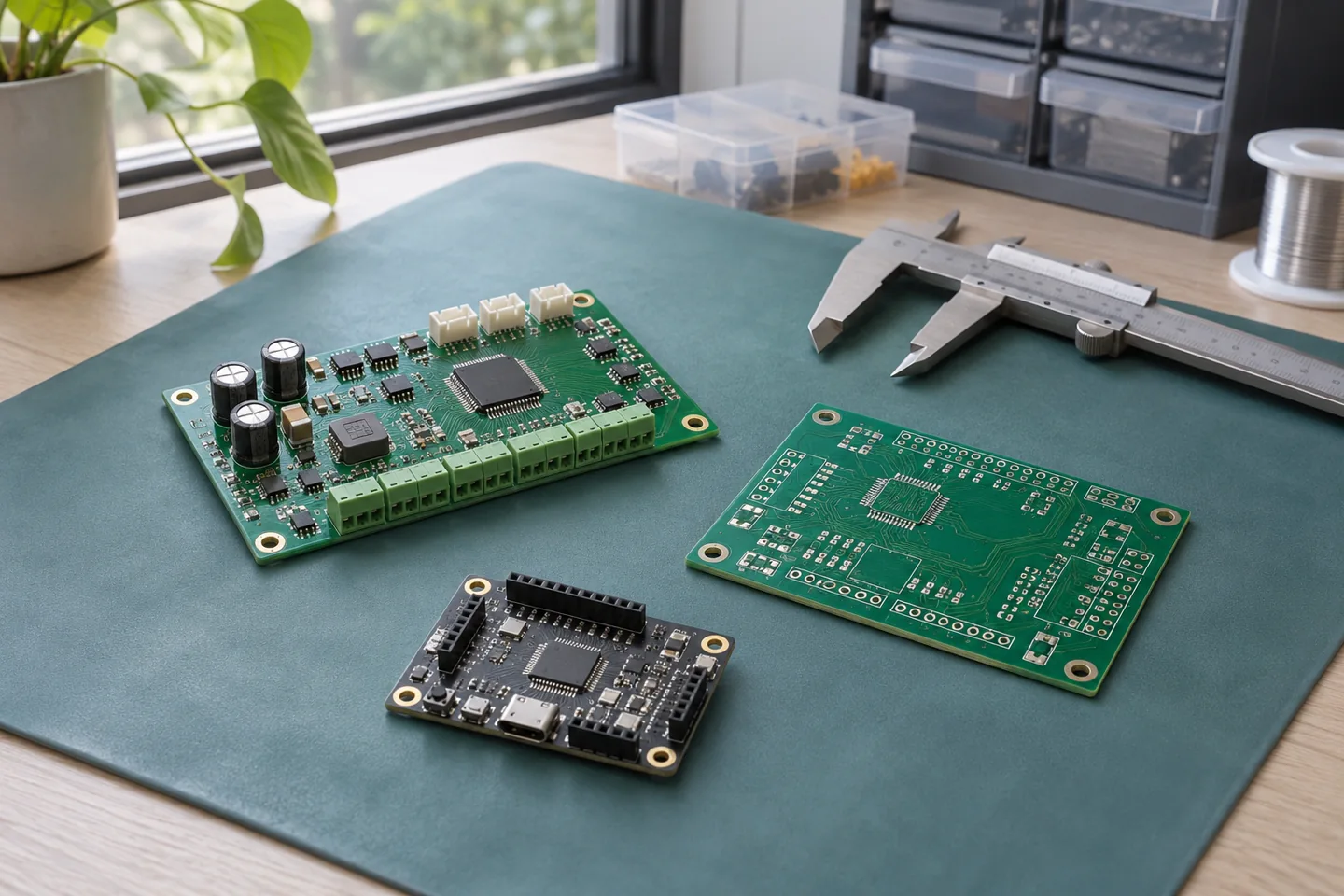
Decide whether you need bare boards or a completed assembly
PCB fabrication and PCB assembly are different orders. A bare-board enquiry concerns the board construction and manufacturing files. An assembly enquiry also covers the components, placement, soldering, programming and tests required before delivery. Some buyers need both from one supplier; others already have a nominated board factory or components they will supply themselves.
State which arrangement you want at the start. We clarify each supplier’s proposed scope and identify work they would subcontract. Your team then approves whether that arrangement fits the product, schedule and level of traceability required.
Send one controlled set of production files
For a quotation, provide the available fabrication files, board outline, stack-up requirements, assembly drawings, placement data and bill of materials. Identify the current revision and flag anything still under development. Requirements such as board thickness, finish, copper weight and special handling should come from your engineering team rather than a supplier’s default settings.
Keep an issue list for questions raised by the factories. Once your team releases the build, the approved file set should be identifiable by revision and date. We help keep quotation notes, sample orders and production instructions tied to that release.
Make the bill of materials usable for purchasing
A useful BOM identifies the manufacturer part number, quantity, reference designators and any approved alternatives. It should also distinguish supplied parts, items the assembler must purchase and components that are not fitted. A description such as ‘equivalent sensor’ leaves a decision open that may affect the finished product.
We ask suppliers to identify unavailable or long-lead items and show proposed alternatives separately. Your engineering team approves a substitution before it is bought or fitted. If a price depends on changing a component, that change needs to be visible in the quotation, not hidden inside a lower total.
Ask what component traceability the supplier can provide
Agree the sourcing route and records required for the components in your build. Depending on the part and project, this may include supplier invoices, packaging labels, manufacturer details, lot or date codes and records connecting received material to a production batch. Ask what the assembler normally retains and what requires a separate arrangement.
Documents should support the actual parts being supplied. We collect the requested documents and flag inconsistencies for your review. We do not treat a photograph, a test report or a trading company’s assurance as a blanket guarantee that every component is authentic or suitable.
Separate unit cost from the costs of starting the build
A PCB assembly quotation may include board fabrication, component purchases, assembly, setup, stencils, fixtures, programming and packing. Ask which costs recur on every order and which belong to the first build. Component minimums and unused quantities also need an owner and a storage arrangement.
We help align quotations around the same quantity, revision and test scope. A low assembly price is not a complete comparison if the supplier has excluded programming or functional testing. Confirm what happens to tooling, remaining components and test equipment if you later move the work to another manufacturer.
Use prototypes to settle the build before volume production
Agree how many prototype assemblies you need and what they are intended to prove. Your team may need to review fit, connector positions, firmware loading, electrical behaviour and the finished assembly in its enclosure. Give the supplier a clear route for reporting questions instead of making unapproved adjustments on the line.
After testing, record the findings and the revision approved for the next stage. If your team changes a component or layout, identify whether another sample is required. We coordinate the samples and feedback; product design decisions and approval remain with you.
Define testing and fixture responsibility
Inspection and functional testing answer different questions. Agree which checks are required, who supplies the procedure and fixture, what equipment is needed and how results will be recorded. Your engineering team should define pass and fail limits and the action required when a board fails.
If a supplier is asked to make a test fixture, confirm the specification, cost, ownership and approval process. Decide whether every assembly requires a recorded result and whether units need serial identification. We help coordinate the arrangement so the production quotation and delivery records reflect the test scope you approved.
Keep the delivered batch identifiable
Before shipment, reconcile the board revision, quantities, programming version where relevant, test records and any open nonconformities. Agree appropriate protection for the assemblies during storage and transport, including handling requirements supplied by your technical team. Carton labels should let your receiving team identify what is inside without opening every package.
For reorders, ask the supplier to confirm component availability and any proposed process or material changes. A previously approved sample does not authorise a new substitution. Keeping a clean revision history makes it easier to investigate problems and compare later production with the build you originally accepted.
What to include in your enquiry
Send the details you already have and identify any decisions still open. This helps us focus the supplier questions on your actual order.
- PCB fabrication files, assembly drawings and revision number
- BOM with manufacturer part numbers and approved alternatives
- Prototype and production quantities
- Programming, test procedure and fixture responsibilities
- Required records, packaging and delivery schedule
Before you start
Your questions, answered
Can you design our PCB or write its firmware?
This service covers supplier research and purchasing coordination. You provide the engineering files, firmware requirements and technical approval. If development work is still needed, identify the designer responsible before releasing an assembly order. We coordinate questions with that person and the proposed manufacturer.
Can we supply some of the components ourselves?
The chosen assembler must agree to accept supplied parts. Its quotation should identify the parts, delivery condition, quantities, inspection responsibility and treatment of shortages or unused stock. The supplier also needs to confirm whether your material can be handled within the proposed production schedule.
What happens if an approved component is unavailable?
Ask for the shortage and proposed options in writing. An alternative part, a schedule change and a different purchasing route are separate decisions. We coordinate the information, but your technical team must approve any change affecting the board before it is fitted.
Can you help with an existing PCB assembly supplier?
Yes. Share the files, purchase order and the issue you need addressed. A defined assignment might cover revised quotations, sample coordination, production follow-up or the collection of agreed inspection and test records. We first establish the scope and what the supplier will make available.
Your next step
Let’s discuss your requirements.
Send the board specification, build quantities and the files your team is ready to share. We can discuss supplier research, sample coordination and the production follow-up you need.
Planning and product research start at US$500. Guangzhou sourcing visits cost US$400 per day and are booked separately. Full order management is for factory goods orders of US$30,000 or more, with our service fees charged separately. We agree the exact scope and fees before work begins.