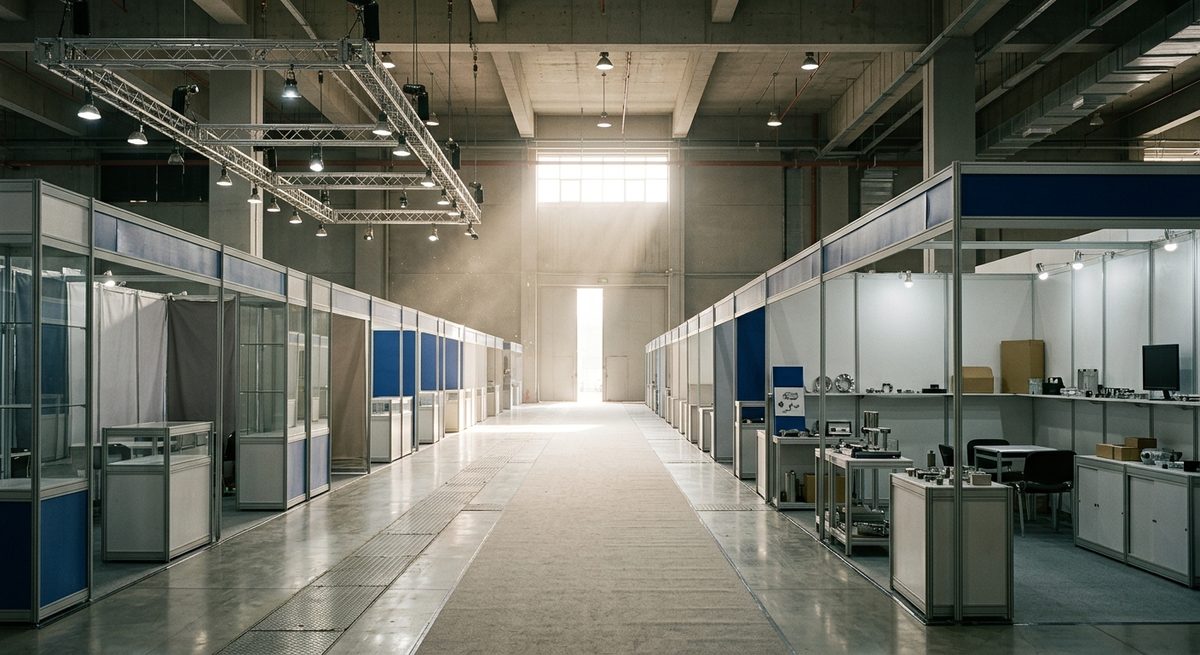
A buyer once messaged us from the airport arrivals hall, jet lagged and cheerful, asking where he could register for the fair “tomorrow morning”. He hadn’t uploaded a badge photo, hadn’t booked a hotel for the second week, and had no idea the product category he came for was showing in a phase that had ended four days earlier. We fixed what could be fixed. The phase, we could not. His story is why we tell every client that canton fair preparation starts a month before the flight, and why the work you do at your desk decides most of what happens in the halls.
First, learn the shape of the thing
The fair runs twice a year, spring and autumn, at the Pazhou complex on the south bank of the river. It’s not one event. It’s three phases, each about five days, each showing different categories: broadly, machinery and electronics first, then home goods, gifts and decoration, then textiles, garments, shoes, office and health products. Confirm which phase carries your category on the official site before you book anything at all. Every session, we meet somebody standing in the wrong week.
The venue itself is enormous, split into areas connected by walkways that look short on the map and aren’t. Between the outdoor heat and the arctic air conditioning inside the halls, you’ll cross ten degrees of temperature every time you step through a door. Dress in layers. Your throat will thank you by day three.
The desk work that has to happen early
Badge and paperwork
Register online in advance, upload a proper photo, and carry your invitation confirmation plus passport. The buyer badge is valid across sessions for years, so guard it. Registering on-site is possible but eats an hour you’ll want for the halls.
Hotels, honestly
Rooms near Pazhou double or triple in price during the fair and sell out early. Booking six weeks ahead is normal. Our usual advice is to skip the immediate fair zone, stay one metro line away in Tianhe or along Line 8, and ride in each morning. Fifteen extra minutes of metro buys a better room and calmer evenings.
Your product homework
Come with a written specification for each product you’re hunting: target materials, sizes, certifications, order quantity, target price band. Booth conversations last minutes. The buyer who can hand over a one-page spec gets a real quotation; the buyer who says “something like this, maybe” gets a polite brochure. If your products need certificates for your market, read up before you go, and our Lab Testing 101: CE, UKCA, FCC, RoHS & REACH guide covers what those letters actually require, so you can ask booth staff the sharp version of the question.
Pack for the job, not the holiday
- Business cards, more than you think, two hundred isn’t silly. Cards still rule here
- Comfortable shoes you’ve already worn in. You’ll walk further than you would on a hiking day
- A power bank, because your phone becomes camera, notebook and translator all at once
- WeChat installed and working before you land, since every supplier will ask for it within a minute
- A small stapler or clips, to pin business cards to the matching brochure and price sheet
- Samples or photos of your current products, if you’re looking for an upgrade or a second source
That stapler suggestion sounds fussy. It isn’t. By the second evening you’ll have forty catalogues and a hundred cards, and unstapled they merge into an anonymous pile that no memory can rescue.
Work the halls with a system
Walk your priority section first, before your feet and attention fade. Photograph every booth you talk to, starting with the booth number sign, then the product, then the card. Rate each conversation immediately, one to five, in your notes app. In the evening, spend one hour turning the day’s photos into a shortlist while it’s all still fresh. Buyers who skip that hour spend a confused fortnight at home instead.
Two small logistics notes from repeat attendance. Eat lunch before noon or after two, because the food courts inside the complex jam solid in between and the queue eats your best hall time. And drink more water than feels natural; the air conditioning dries you out faster than the walking tires you, and fair throat is a real thing by day three.
Be a little sceptical of the booth itself, in the friendliest way. A beautiful booth proves marketing budget, not production capability, and some of the sharpest workshops send two engineers and a folding table. Talk to both kinds. Ask who actually owns the factory, in which town it sits, and whether you could visit it this week. The answers sort your pile fast, and a factory an hour away in Foshan or Dongguan can often be visited between phases, which is the single best use of a rest day we know.
After the handshake comes the real filter
The fair gives you introductions, nothing more. The suppliers who reply crisply within a week, send samples that match what the booth showed, and answer technical questions without wobbling are the ones worth developing. Expect your list of forty to shrink to five. That’s success, not failure. If your plan is to put your own brand on the goods, the sampling and tooling conversation starts right here, and Private Label Manufacturing in China: How It Really Works lays out the road from fair handshake to branded carton.
What first-time visitors ask us
Can I place orders at the fair itself?
You can, and for stock items some buyers do, but we rarely recommend signing anything in the hall for a custom product. Collect, compare, sample, then order from home with a proper contract and an inspection plan. The good suppliers won’t vanish in the meantime.
Is the fair worth it if I only need one product?
Maybe not, honestly. For a single narrow product, a planned week of factory visits often teaches you more than a giant general fair. The fair shines when you’re scanning a whole category or hunting new lines you haven’t imagined yet.
How full should my schedule be during fair week?
Halls in the morning and early afternoon, sorting in the evening, one supplier dinner every second night at most. The people who book breakfast meetings, full hall days and late dinners for ten days straight stop absorbing anything by day four. Pace wins.
We’re thirty minutes from Pazhou and we attend every session, so if you want a hand, from badge questions to an interpreter walking the halls with you to factory visits on your rest days, get in touch through the site or WhatsApp before you book the trip. Planning together beats repairing later.
Read next
Buying at a Guangzhou Market Versus Ordering From a Factory
Guangzhou wholesale buying explained by an agent on the ground: when market stock is the smart move, when a factory order…

Guangzhou, Dongguan and Shenzhen: Which City Makes What
A ground-level map of the Pearl River Delta for buyers: what Guangzhou trades, what Dongguan and Shenzhen factories build,…
Metro, Taxis and Timing: Moving Around Guangzhou on a Buying Trip
How to move around the city on a Guangzhou buying trip: the metro lines that matter, when a DiDi beats the train, and how to…