
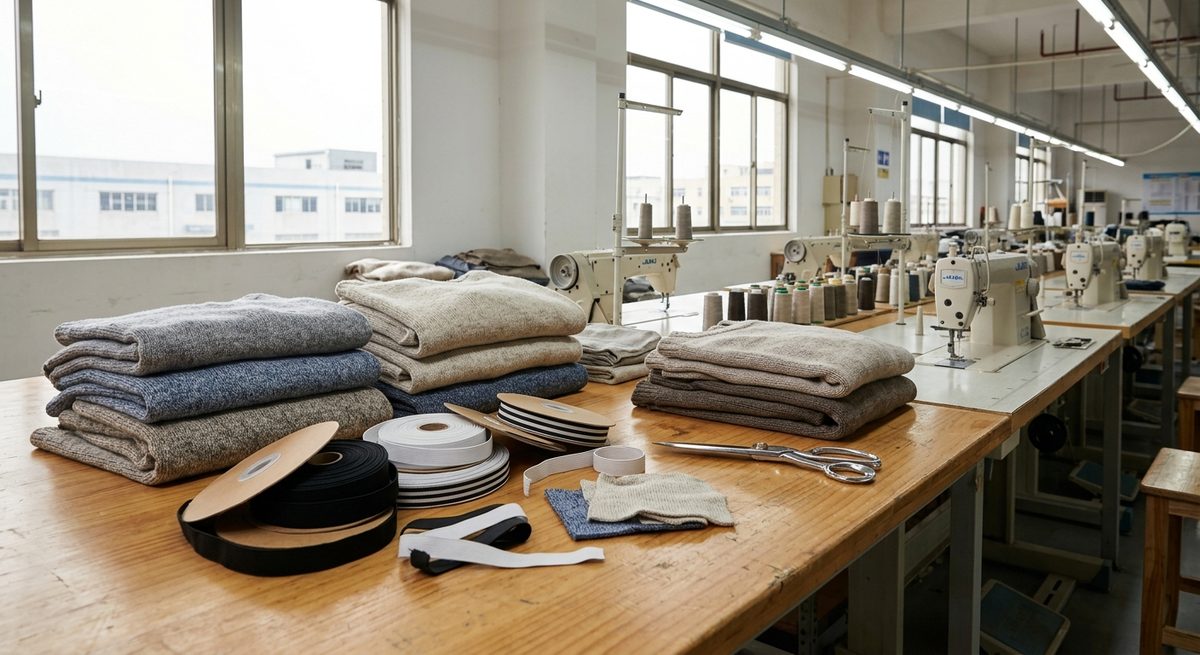
Every serious lace mill in Guangzhou keeps a grey metal booth in the corner of the QC room. It’s a light box. Fabric goes in, and the inspector flicks between simulated daylight, store lighting and a warm household bulb, because a nude lace that matches its cup fabric under one light source can drift green under another. Buyers who skip that check find out about it later, in customer photos.
The light box is a fair way into this whole subject. Intimates live or die on details a product photo can’t show: what the fibre label claims, how the dye behaves against skin, what the metal hardware releases. Anyone planning to import lingerie from China for retail should give the testing and paperwork side the same attention as the design side. It’s less glamorous work. It’s also what keeps a shipment moving through customs and a listing from being pulled.
What the label has to say
Fibre content comes first. A garment sold as silk must declare its actual composition, and the gap between real silk and a satin-weave polyester is a legal problem in most markets, not a marketing nuance. Care instructions, size conversion and country of origin follow, each in the format your destination market requires. Get the label artwork approved before bulk cutting, because relabelling thousands of finished pieces is miserable work that somebody has to pay for.
There’s a trade habit worth knowing on the silk question. A snipped thread of real silk burns with the smell of singed hair and crumbles to brittle ash, while polyester melts into a small hard bead. Factories know buyers do this test. The honest ones hand you the lighter.
The test reports worth paying for
Not every order needs every test, but this is the menu that matters for this category:
- Fibre composition verification, so the label matches the fabric on the machine.
- Colourfastness to washing, rubbing and perspiration. Perspiration fastness matters more here than in any other garment type.
- Azo dye and restricted substance screening for the EU and UK markets.
- pH testing, since the fabric sits directly against skin for hours.
- Nickel release testing on hooks, sliders, rings and underwires for European buyers.
Many mills in the Yanbu knitting district of Foshan hold OEKO-TEX certificates on their standard fabric ranges, which saves buyers real testing money. The catch is scope. Ask for the certificate number and confirm it covers the actual fabric and colourway you’re ordering, not something the mill certified two seasons ago. It’s a five minute check that we do on every fabric nomination.
Silk runs on its own rulebook
Silk is graded by momme weight, and the number changes the garment completely. A light charmeuse drapes and slips; a heavier momme feels substantial and resists snagging at the seams. Inspectors check silk over a backlit table, looking for slubs and weaving faults that only show against light. If a supplier claims mulberry silk, request the composition report rather than accepting the word, and make sure your care label says what the fabric can genuinely survive. Silk that’s labelled machine washable without a proper wash test is a returns programme waiting to start.
Hardware, trims and the small metal parts
The metal bits cause a disproportionate share of trouble. Hook and eye tape, strap sliders and underwires all touch skin, so nickel limits apply in Europe, and a coating that chips exposes the base metal. Run a fingernail along underwire tips and check the end caps. Lace edges deserve a scratch test against the inside of your wrist, because a scalloped edge that feels sharp in the showroom feels worse after a full day of wear. Guangzhou’s lace mills can run the same pattern in different yarn blends, and the softer blend is usually worth the small upcharge.
If you’re building an own-label line rather than buying stock designs, this is the stage where fabric, trims and fit get locked together. You can build your own brand with our team, from lace selection through labelling artwork to the packaging your customer unboxes.
One more habit from the inspection floor. Check hardware on the finished garment, not just as loose trims, because the plating can get scratched during sewing and a chipped slider on a sample tray tells you nothing about the two thousand sets already bagged. It’s a ten minute check per style. We build it into every pre-shipment inspection for this category as a matter of routine.
Paperwork that travels with the goods
The documents matter as much as the garments. Commercial invoices should describe composition accurately and match the declared customs classification; confirm the tariff code and applicable rate with your own customs broker before the goods ship, since we don’t guess at that and neither should a supplier. File the test reports by style number, because a buyer for a retail chain will ask for them years later. Polybags need suffocation warnings where required. Outer cartons for this category are best kept plain and professional, with style and size breakdowns on the packing list rather than product descriptions printed across the box.
When fabric comes from one mill, finished sets from a second factory and packaging from a third, the pieces meet at our warehouse. Our consolidation and export handling puts everything into one clean shipment with documents that agree with each other, which is exactly what a customs inspection wants to see.
Straight answers on lingerie compliance
Do I really need lab tests for a small first order?
It depends on where you sell. EU and UK retail effectively requires the substance and nickel side, and large marketplaces increasingly ask for reports on request. My honest advice: test the fabric platform once, then reuse those reports across styles cut from the same fabric. A failed screening discovered after arrival costs far more than the test ever did.
How do I know a silk percentage is real?
Two layers. The burn test on a sample thread gives you a quick field answer, and a fibre composition test at an accredited lab gives you the number your label depends on. Do the lab test on the bulk fabric, not the sample yardage, since the two often come from different lots.
Is an OEKO-TEX certificate enough on its own?
No, but it’s a strong start. It covers harmful substances in the certified material, and it doesn’t cover your labelling accuracy, your fit, or hardware sourced outside the certificate’s scope. Treat it as one document in the folder, not the folder.
We’re based in Guangzhou, within easy reach of the Foshan knitting towns and the lace mills, and we’ve been walking these floors since 2007. If you’re weighing up an intimates line, write to us through the contact form or WhatsApp. Come over if you can. An afternoon at a light box with real fabric in hand settles more questions than a month of samples in the post.
Read next
Putting Your Own Name on Iron: Private Label Home Gym Equipment
What it takes to import fitness equipment from China under your own brand: moulds, logo placement, powder coat colours and…
Yoga Mat Country: Mapping the Pearl River Delta’s Foam and Rubber Plants
Where yoga mat production really happens, from Dongguan foam plants to rubber curing lines, and how to import yoga mats from…
The Defects We Catch in Tennis Dress Orders Before They Ship
See the defects inspectors catch before you import tennis dresses from China: fabric shading, seam cracks, print bleed,…