
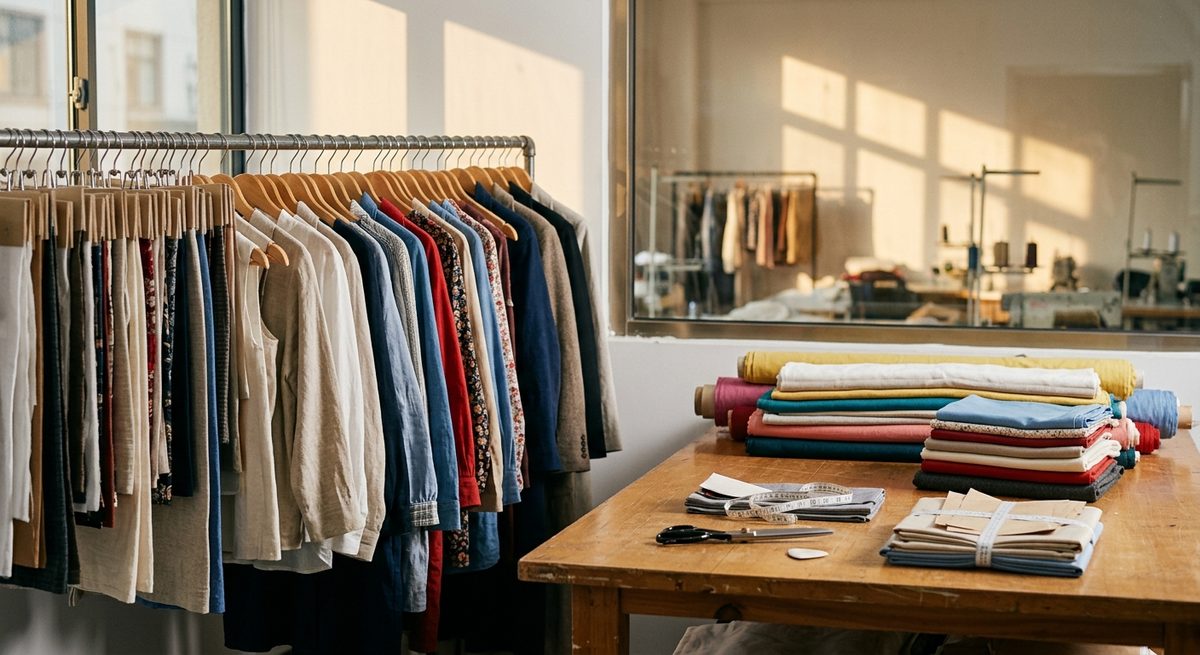
Stretch fabric hides its sins until somebody wears it. A tennis dress can hang beautifully on a rail, pass a glance from three metres, and then split a seam on the first overhead serve a customer hits. That’s the whole character of this product: it lives under tension, gets soaked in sweat, and goes through the wash twice a week all season. Quality control for it has to be just as physical, and ours is.
The dresses we inspect mostly come out of the sportswear workshops around Humen in Dongguan, with fabric bought an hour away at the Zhongda textile market in Guangzhou. Before you import tennis dresses from China at any real volume, it’s worth knowing exactly what goes wrong with them, because the defect list for performance knitwear is its own animal.
Trouble starts at the fabric roll
Two rolls of “the same” fabric are often not the same. Weight drifts between dye lots. Spandex content shifts, and with it the recovery, which is the difference between a dress that snaps back and one that bags at the seat by the third wear. Shading is the sneakiest problem: panels cut from different rolls can differ by a breath of colour that nobody sees indoors and everyone sees on a sunlit court.
Good workshops manage this at the start. They rest the rolls flat for a day or more after delivery so the stretch relaxes before cutting, they cut each garment’s panels from a single roll, and they keep the dye lot number pinned to every bundle moving through the floor. When I walk a cutting room in Humen, that trail of lot tickets is the first thing I look for. No tickets, no order.
Seams that have to survive a serve
Performance knits are sewn with stretch stitches, flatlock and coverstitch mostly, and there’s a crude, reliable way to test them. Our inspectors stretch each sampled seam hard over their fingers and listen. Healthy stitching gives silently. A dry crackle means threads are breaking inside the seam, and that dress will open up on court within weeks. You can hear a bad seam before you can see it.
Needle damage is the other knit killer. A blunt or oversized needle cuts the fabric loops as it sews, leaving tiny punctures along the seam that grow into runs after a few washes. It’s invisible at packing and infuriating a month later, which is why we check seam edges under magnification on sampled pieces.
Sublimation prints, up close
Most patterned tennis and padel dresses are sublimation printed, and the press room is unmistakable: rows of heat presses hissing open every half minute, the sweet smell of hot polyester, transfer paper curling off finished panels. It’s a lovely process when it’s controlled. When it isn’t, you get ghosting where the paper shifted, white flashes at seams where printed panels didn’t quite meet, and colours that wander from the approved strike-off.
The check that matters most is stretch-testing the print. Pull the fabric the way a body will and look for white base peeking through the design. On the rail it’s perfect. On a customer mid-lunge it can look faded and cheap, and that’s the photo that ends up in your reviews.
Pads, liners and the parts players feel
A tennis dress is really three garments: the shell, the built-in bra, and usually an undershort with a ball pocket. Each brings its own defects.
- Removable bra pads that twist or fold inside their pocket after one wash. We wash test samples rather than take anyone’s word.
- Elastic under the bra band that’s cut too short, which measures fine flat and digs in on a body.
- Ball pockets sewn to the liner with a plain stitch that pops the first time a ball is jammed in. They need bartacks.
- Care labels that scratch. Players notice, and printed labels solve it cheaply.
None of these show up in a photo of a folded dress. All of them show up in returns.
Sizing drift and the measuring table
Knits are measured relaxed, on a flat table, against a tolerance chart agreed before production. Drift creeps in when cutting speeds up late in an order or when a fabric batch relaxes differently, and a chest measurement wandering out of tolerance turns a size M into something nobody ordered. Our inspection measures sampled garments across every size, not just the middle of the run, because the extremes are where patterns misbehave.
Shading gets its own moment here too. We hold panels of sampled dresses against a daylight tube in the inspection room, seam by seam, because that’s where a mixed-roll garment confesses.
Where the inspection fits your order
For a first order with a new workshop I’d want three touches: a fabric check when rolls arrive, an inline visit once the first size runs, and a final random inspection against a standard sampling plan before cartons seal. Established relationships can relax to a final inspection only. Buyers who import from Guangzhou with our team get the inspection scheduled into the order timeline from day one, so it never becomes the thing delaying the shipment.
And once the product itself is stable, the conversation usually turns to labels, hang tags, packaging and a proper identity for the line. That’s what our brand building support exists for, and activewear brands lean on it more than most.
Three quality questions from activewear buyers
When exactly should the final inspection happen?
When goods are at least mostly packed, with the rest finishing, and always before the balance payment. Inspecting a half-sewn order tells you little, and inspecting after payment removes your power to have defects reworked. The sequencing is the protection.
Can the print colours match my brand palette exactly?
Close, honestly, rather than exact. Sublimation on polyester shifts colour slightly with heat, time and base fabric, so we approve a printed strike-off on your actual fabric and seal it as the master. Judge production against that physical standard, never against a screen.
What wash tests should samples pass before I approve?
Run pre-production samples through repeated domestic washes and look for pad twisting, print fading, seam recovery and any bagging at the seat. Dimensional stability after washing matters more for knits than almost anything else on the spec sheet. It’s tedious. Do it anyway.
Our team is based in Guangzhou, an easy drive from the Humen workshops and the Zhongda fabric market, and we walk buyers through both on the same day. Reach us on the contact form or WhatsApp, and if you’re planning a collection, come over and see the press room hiss for yourself.
Read next
What You’re Really Paying For in a Bottle of Guangzhou Perfume
Break down the real unit cost before you import perfume from China: fragrance oil, glass, pumps, boxes, filling labour and…
From First Email to Full Container: A Storage Box Order, Step by Step
Follow one order from enquiry to loading day and see how to import plastic storage boxes from China: moulds, samples,…
Door Orders From Foshan: The Problems Buyers Actually Hit
Learn what ruins door shipments before you import doors from China: sizing mismatches, wrong handing, warping, glass damage…